
Vandaag of morgen in huis

Kwaliteit gegarandeerd

Welkomstaanbiedingen ontgrendelen: GRATIS bezorging | Tot 80% korting | Gratis 30 dagen JoyPlus-proefperiode
Download de app
A solar-powered outdoor light with a motion sensor can illuminate an entrance, garden path, balcony or driveway without an electricity cable. However, some buyers find that the light does not last as long as expected, the sensor responds poorly or rust appears after just a few weeks. The product name alone does not tell you everything.
Look out for these three common pitfalls:
An LED outdoor light with a motion sensor usually switches on when it detects movement. A dusk or darkness sensor determines whether the light only activates when ambient light levels are low. This combination prevents the light from switching on unnecessarily during the day.
Before buying, check:
For example, the Philips Fyns features a motion sensor, a dusk sensor and two modes: Auto and On. The product description also lists a light output of 1000 lumens and a colour temperature of 3000 K.
The IP code consists of two digits. The first indicates protection against solid particles; the second indicates protection against water.
So, waterproof solar light is an imprecise search term: always check the specific IP rating and the installation instructions. An IP44 solar wall light may be sufficient for a sheltered patio. For a completely exposed exterior wall or a driveway, IP65 offers more protection.
2700 K to 3000 K generally produces warm white light. This suits an entrance, patio or garden where ambience matters. 4000 K to 5000 K looks cooler and may be suitable for a driveway or security-focused use. Do check the official product specifications, though: the product title and technical table may sometimes use different descriptions.
The battery will only charge properly if the panel receives enough daylight. So, do not install a solar wall light outdoors directly under a balcony, close to a tall fence or in a north-facing spot with lots of shade. Clean the panel regularly with a soft cloth. In winter and during several consecutive cloudy days, the light may not stay on for as long.

Why it suits this profile: This outdoor solar wall light is designed for anyone who wants to illuminate an exterior wall, entrance or patio without wiring, using straightforward controls.
The motion sensor, dusk sensor and two lighting modes make it easier to use than a light with just an on/off switch. IP44 is suitable for a sheltered outdoor spot.
1000 lumens, warm white light at 3000 K, integrated LED and installation without a mains connection.
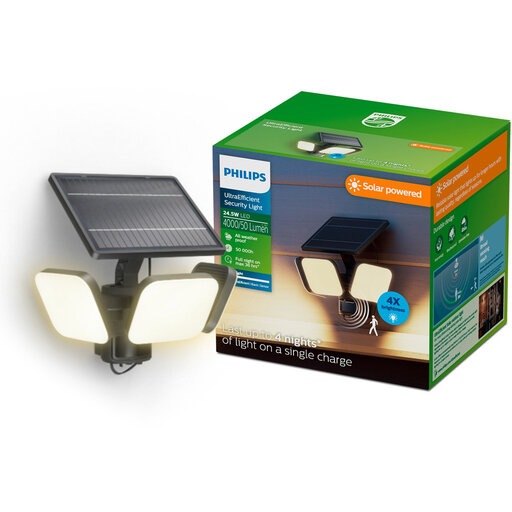
Why it suits this profile: This solar security light is well suited to a driveway, large garden or dark exterior wall where a wide detection range and plenty of light are needed.
The stated IP65 rating makes it more suitable for an exposed location than IP44. Check that the wall is strong enough to support its weight of around 1.51 kg.
4000 lumens, an adjustable light head and, according to the product description, a detection range of 8 metres for direct approaches and 16 metres for movement from the side.

Why it suits this profile: The three light heads and wide coverage are practical for a large garden, garage area, patio or driveway.
The IP65 rating and independently adjustable heads help overcome the limitations of a small, fixed beam. Point the panel towards the sun with no obstructions, and aim the heads at the area you want to light.
302 LEDs, a stated light output of 3000 lumens, three lighting modes and a detection angle of 180 degrees, according to the product information.
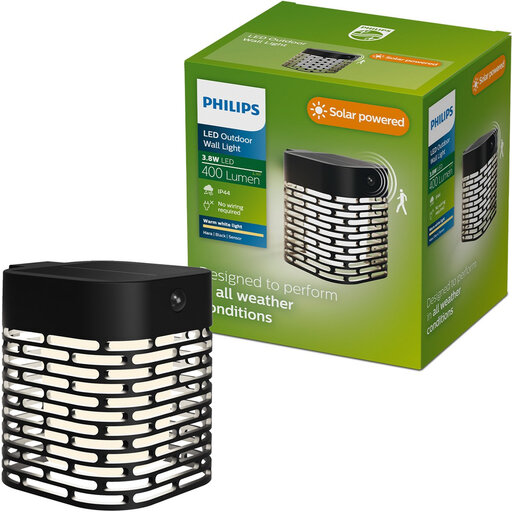
Why it suits this profile: This compact light with warm white illumination is ideal for a balcony, front door or sheltered patio where you want practical lighting that is not too bright.
The stated IP44 rating makes its limitations clear: use the light outdoors, but not somewhere it could be exposed to direct water jets or submerged.
Warm white light at 2700 K, two lighting modes and installation without a mains connection, according to the product description.
We’ve put together a complete, up-to-date list of products that meet these strict selection criteria and comply with current European safety regulations.
A wire-free outdoor light is easy to install, but its position affects how well it works. Keep the following points in mind:
A stated lifespan of, for example, 20,000 or 25,000 operating hours is a manufacturer’s product specification. The actual lifespan also depends on charging cycles, temperature, moisture, installation and maintenance. Brand claims about efficiency or the number of hours of light per night should therefore be treated as information from the brand, not as a guaranteed result.
Yes, but performance may be lower due to shorter days, cloudy weather and the low angle of the sun. Position the panel away from shade and keep it clean. A fully charged battery will not provide the same run time in every type of weather.
It varies depending on the battery, charging cycle, LED module and weather conditions. Check the stated LED lifespan and the warranty terms. A light with an integrated LED is not always designed to let you replace the light source yourself.
The light does not use mains electricity during normal operation. The battery charges via the solar panel during the day. However, you may have costs for the initial purchase, maintenance or replacement parts.
