
Vandaag of morgen in huis

Kwaliteit gegarandeerd

Welkomstaanbiedingen ontgrendelen: GRATIS bezorging | Tot 80% korting | Gratis 30 dagen JoyPlus-proefperiode
Download de app
Want to light your garden, balcony, patio or party venue without needing a socket? Solar-powered outdoor lighting may seem like a simple solution. However, some purchases can be disappointing. The light may only stay on for a short time, the string lights may not be long enough, or the solar garden lights may not work well during dark Dutch days.
So don’t just look at the number of LED bulbs or an attractive product photo. In practice, the light colour, IP rating, charging capacity and position of the solar panel matter much more.
A product may be described as waterproof without making clear what conditions it can withstand. So check the IP rating. For outdoor lighting, the first digit indicates protection against solid particles and the second indicates protection against water.
No IP rating means you shouldn’t leave a light in standing water for a long time. Even with IP65, don’t submerge the solar panel.
A 10-metre solar light string sounds generous, but also check the number of LEDs and the distance between them. A long cable with just a few bulbs gives a more spread-out effect. For an even line of lights along a balcony or fence, the distance between LEDs and the total length are important.
A copper-wire string with 160 LEDs over 10 metres will look different from one with 75 LEDs over a similar length. So consider the combination of length, number of LEDs and spacing, rather than focusing on just one figure.
Run time depends on sunlight, the season, shade and the condition of the battery. A product listing may, for example, state a run time of up to 12 hours. That’s no guarantee for every winter’s day in the Netherlands.
So position the solar panel somewhere it will get as much direct daylight as possible. A panel under a canopy, behind glass or among tall plants will charge less efficiently. Also check whether you need to switch on a button before the panel can charge.
Warm white outdoor lighting usually creates a soft ambience on a patio, beside a lounge set or at a garden party. Cool white, such as 6500K, looks brighter and more like daylight. It can work well for a path, entrance or decoration where you want a brighter effect.
Warm white and adjustable colour settings are often good choices for atmospheric garden and patio lighting. For coloured lights, check whether the product actually supports multiple colours, rather than just different flashing patterns.
Look out for:
A light that switches on and off automatically is handy if you don’t want to go outside every evening to operate it. A memory function may save the last light mode you selected, but check whether it still does so after the switch has been turned off completely.
Clean the solar panel regularly with a soft, dry cloth. Dirt, leaves and bird droppings reduce its output. Don’t place a separate panel behind a decorative screen if that blocks direct sunlight.
For balconies and small patios, solar lanterns are often easier to position than long strings of lights. Solar string lights and copper-wire lights are a better fit for a fence, pergola or tree.
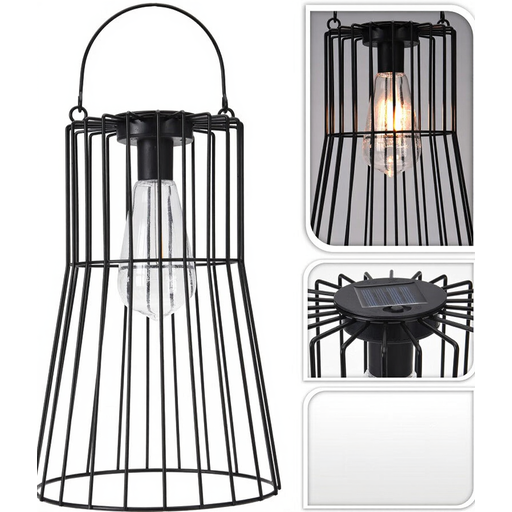
Why it suits this shopper: This solar lantern is easy to place or hang on a patio, balcony, windowsill or in a garden.
The product information lists an automatic sensor programme and a run time of up to six hours after a full day of charging. Be sure to check how much sunlight the chosen spot gets.
Metal housing, a built-in photovoltaic cell, a 3V LED and a handle for standing or hanging the lantern.
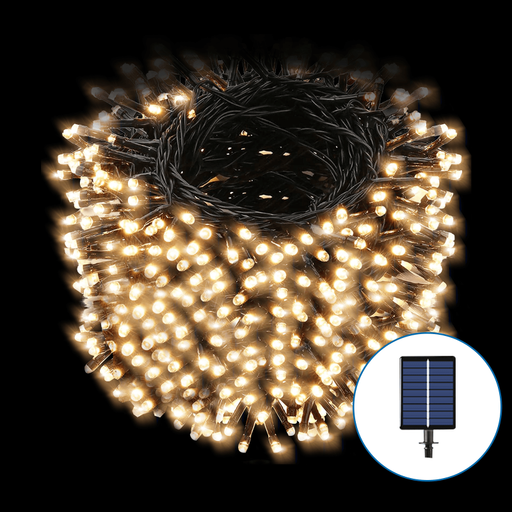
Why it suits this shopper: These solar string lights are ideal if you want a warm glow and several settings for the garden, window, door or Christmas decorations.
The listed specifications include a 10-metre string, 100 LEDs, IP65, eight light modes and a two-metre cable between the panel and the lights.
Warm light, an 800 mAh battery, a stated run time of eight to 12 hours and charging in around four to six hours.
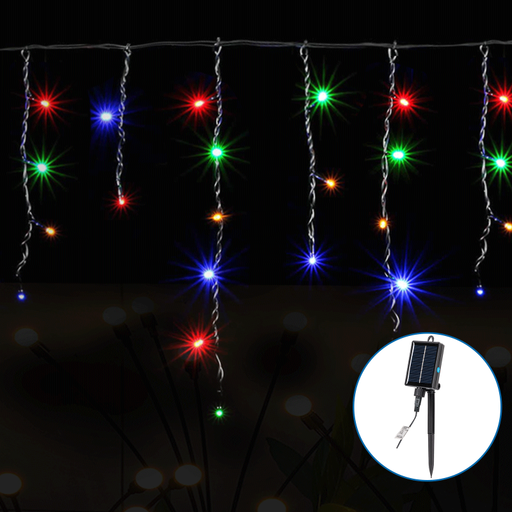
Why it suits this shopper: The cascading wave design is made for façades, roof edges, fences, trees and party venues where you want a striking pattern.
The product details list IP65, automatic switch-on at dusk, eight light modes and a charging time of four to six hours in sunlight.
100 LEDs, 20 cm spacing between hanging sections, a three-metre cable and a manufacturer-stated run time of up to 12 hours.
We’ve put together a complete, up-to-date list of products that meet these strict selection criteria and the applicable European safety regulations.
Place the solar panel somewhere it will get several hours of direct daylight. Don’t point it towards a shady wall, and keep its surface clear of leaves. For string lights, put up the lights first, then run the cable to the panel without bending it sharply.
Run time varies by model and weather conditions. Product information may, for example, state eight to 12 hours, but cloud, shade and low temperatures can affect performance. The battery’s lifespan is also different from the lifespan of the LEDs.
Not from the mains while it’s in use: the light charges via the solar panel during the day and uses the stored energy in the evening. Charging capacity and run time do vary, though. So check the battery, charging time and stated run time before you buy.
