
Vandaag of morgen in huis

Kwaliteit gegarandeerd

Welkomstaanbiedingen ontgrendelen: GRATIS bezorging | Tot 80% korting | Gratis 30 dagen JoyPlus-proefperiode
Download de app
Solar-powered outdoor lighting is useful when you don’t want to run cables or need to add a light where there’s no mains connection. However, solar lights vary considerably in brightness, battery life, water resistance and installation. A light that works well in a flower bed won’t necessarily be suitable as a security light by your driveway.
This guide will help you compare your options and avoid common buying mistakes.
A high lumen count sounds appealing, but the intended use determines how much light you need. For a balcony, warm-white LEDs with a modest light output are often enough. For a dark driveway or back door, a focused outdoor light with a motion sensor is more practical.
Pay attention to how the light is distributed, too. A light with several adjustable heads can cover a wider area than one with the same light output that only shines straight ahead.
Check the official IP rating rather than relying on the marketing copy alone. An IP44 light is protected against splashes and is best suited to sheltered spots. IP65 outdoor lighting offers greater protection against dust and water jets, but these lights generally shouldn’t be submerged either.
Also, don’t place the solar panel under a canopy if it gets very little direct sunlight there. Even a well-protected light can disappoint if the panel doesn’t get enough charge.
Stated running times are usually based on plenty of sunlight and a fully charged battery. In the Netherlands, cloudy days, shade, dirt on the panel and low winter sun can all affect performance. So treat a claim such as “8–14 hours” as a product specification based on certain conditions, not a guarantee for every night.
For a cosy effect, warm-white solar garden lights and an outdoor solar wall light are often good choices. For a pathway, solar path lights spaced evenly apart can work better.
The first digits in the IP code refer to solid objects and dust; the second digit indicates water protection. In practice:
A solar light is only practical if its panel gets enough daylight. Place it clear of trees, walls and roof edges. Clean the panel regularly with a soft, damp cloth.
Ground lights are usually easy to install with a ground stake. Wall lights need a sturdy surface. Position a light with a motion sensor so that passers-by enter its detection range, without moving branches constantly triggering the sensor.
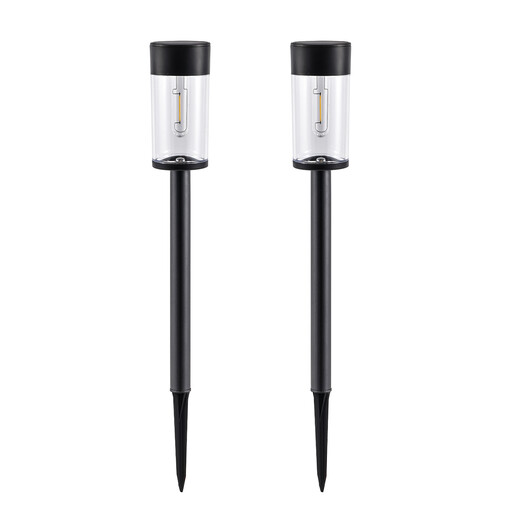
Why it suits this need: This set is designed for paths, borders, lawns and the edge of a driveway. The ground stakes make it easy to install without wiring.
The specifications state 10 lumens per light, 3000K and IP65. That makes it clear these are primarily soft path and accent lights, not powerful security lights.
A set of two, automatic on/off, 6–8 hours of charging and, according to the product specifications, 8–12 hours of light.
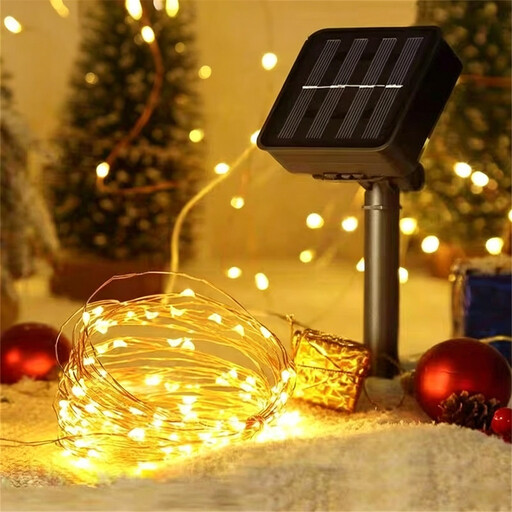
Why it suits this need: These two 49 ft strings of warm-white LED lights are ideal for decorating trees, railings, planters and patios.
The eight listed lighting modes and memory function give you more control than a string with just one setting. The panel still needs direct sunlight outdoors.
75 LEDs per string, warm white light, two strings and a stated running time of 8–14 hours in suitable charging conditions.
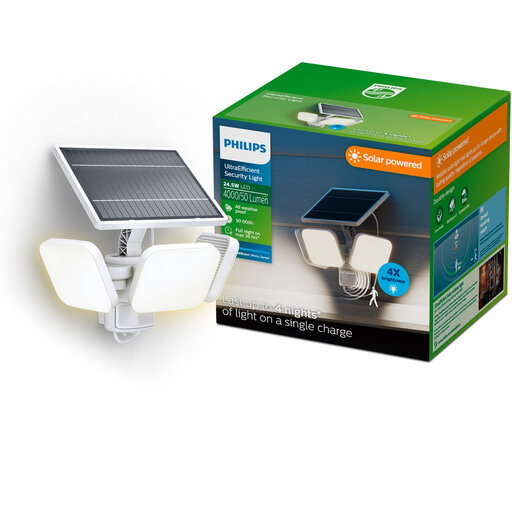
Why it suits this need: This solar security light is designed to provide broad, bright illumination by an exterior wall, garage or driveway.
The product specifications state IP65, with a motion detection range of 8 metres when approached directly and 16 metres when approached from the side. This gives you a clearer idea of its capabilities than the word “security” alone.
4000 lumens, an adjustable light head, two lighting modes and a stated detection range suited to larger outdoor areas.

Why it suits this need: A practical choice for an entrance, shed or side path where you want automatic lighting without a mains connection.
The light is clearly rated IP44. Choose a suitable location and don’t expect it to withstand immersion or direct water jets.
1000 lumens, 3000K warm white light, a motion sensor, two lighting modes and automatic operation without wiring.
We’ve put together a complete, up-to-date list of products that meet these strict selection criteria and current European safety regulations.
Yes, but charging performance may be lower due to shorter days, cloudy weather and the low angle of the sun. Place the panel somewhere as unobstructed as possible and clean it regularly. For essential pathways, consider a light with a motion sensor so the battery isn’t used unnecessarily to keep it shining at full brightness for long periods.
It depends on the battery, the number of charging cycles, the quality of the LEDs and exposure to the weather. As well as checking the stated lifespan, see whether the product details include a warranty period, battery type and maintenance instructions. A light with an integrated LED and battery may be harder to repair than a fitting with a replaceable light source.
A light charged solely by a solar panel doesn’t use mains electricity during normal operation. However, you may need to pay for replacement batteries or parts. So compare more than just the purchase price: check the IP rating, battery capacity, expected running time and installation options, too.
