
Vandaag of morgen in huis

Kwaliteit gegarandeerd

Welkomstaanbiedingen ontgrendelen: GRATIS bezorging | Tot 80% korting | Gratis 30 dagen JoyPlus-proefperiode
Download de app
Solar-powered outdoor lighting sounds ideal: no cable clutter, no extra costs on your energy bill, and a sustainable choice. Yet, the purchase often leads to frustration. A light that fails after a few rain showers, or an ambient light that fades before the evening has even truly begun.
As a Joybuy Product Recommendation Officer, I see a lot of products come and go. I'm here to help you see through the marketing jargon and avoid the common pitfalls many buyers encounter.
The 3 Most Common Pitfalls of Solar Lighting:
solar-powered outdoor light with motion sensor that only turns on after you've already passed by, or one that reacts to every moving branch. This makes the light unreliable for security.To avoid a bad purchase, it's useful to check three technical specifications. These determine whether a light is suitable for your situation.
The IP rating (Ingress Protection) indicates how well a device is protected against dust and water. This is an objective standard.
These two values determine the performance of your solar garden lighting.
solar-powered string light), 100-300 lumens is often sufficient. For functional lighting to illuminate a path or driveway, look for 300-800 lumens. For security purposes, 1000 lumens or more is recommended.Outdoor solar LED lighting is already efficient, but a good battery is essential for reliability.The effectiveness of a outdoor solar wall light for security lives or dies by its sensor. Pay attention to the detection angle and the detection range (in meters). A wide angle and a long range ensure the light turns on in time. Many lights also offer different modes, such as a standby mode that provides a soft glow and brightens upon detecting motion. This saves energy and extends the runtime.
Based on these criteria, we have selected a number of products that suit different needs.
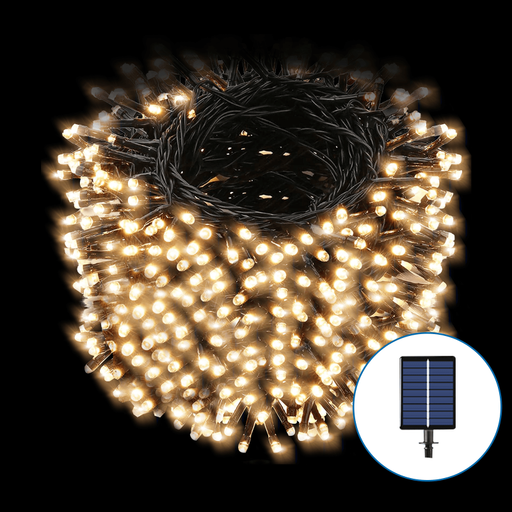
Why This Fits Their Persona: Ideal for those who want to add atmospheric lighting to a balcony, patio, or fence without any installation hassle. This solar-powered string light instantly creates a cozy atmosphere for long summer evenings.
The IP65 rating ensures these string lights can withstand rain. According to the manufacturer, the 800mAh battery provides up to 12 hours of runtime, bypassing the "dead battery" pitfall.
The 10-meter length and 8 different light modes offer plenty of decorative freedom. The warm light provides a pleasant ambiance.
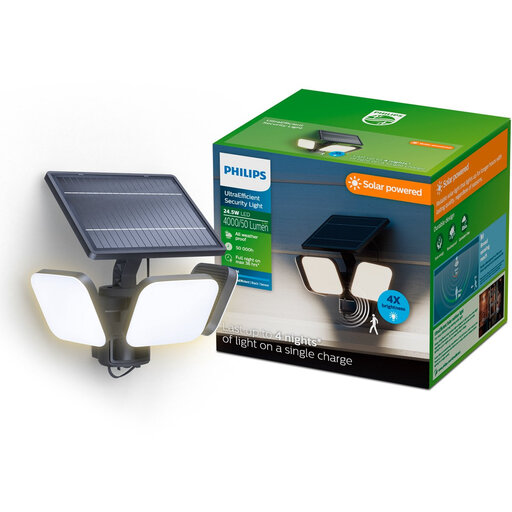
Why This Fits Their Persona: For homeowners looking to secure their driveway, back door, or garden path with powerful, reliable light. This light is purely focused on functionality and security.
According to Philips, the PIR sensor has a wide detection range (up to 16 meters laterally), tackling the "unresponsive sensor" pitfall. The IP65 classification and robust materials ensure durability in all weather conditions.
The light output of 4000 lumens is extremely powerful. According to Philips, its efficient technology can provide up to 4 nights of light on a full charge, making the lamp reliable even after overcast days.

Why This Fits Their Persona: For the tech enthusiast who wants complete control. Adjust colors, set scenes, and control multiple lights simultaneously via an app. This is more than just a light; it's part of a smart living environment.
The solar panel is connected to the light with a 5-meter long cable. This allows you to place the panel in the sunniest spot, while the light itself can be installed in a shadier area. This solves the "poor charging" pitfall.
The Bluetooth mesh technology makes it possible to control over 200 devices simultaneously, according to Aigostar. The RGBCCT functionality offers full control over color and color temperature.
This is just a selection. We have a complete and up-to-date overview of sustainable outdoor lighting that meets strict selection criteria and is suited for various weather conditions.
Most modern lights need about 4 to 6 hours of direct sunlight to fully charge. The placement of the solar panel is therefore very important. Choose a south-facing location if possible. For the darker months, models with an efficient panel and a high-capacity (mAh) battery are a wise choice.
The IP rating indicates how well the light's housing is protected against solid objects (first digit) and liquids (second digit). For outdoor lighting, the second digit is the most important. IP44 is splash-proof and sufficient for sheltered locations. IP65 is jet-proof and is the recommended standard for lights directly exposed to rain.
The lifespan of the rechargeable battery itself is typically 2 to 3 years, after which its capacity may decrease. The daily runtime depends on the amount of sunlight, the battery capacity, and the selected light mode. A good light provides between 6 and 12 hours of illumination on a full charge.
