
Vandaag of morgen in huis

Kwaliteit gegarandeerd

Welkomstaanbiedingen ontgrendelen: GRATIS bezorging | Tot 80% korting | Gratis 30 dagen JoyPlus-proefperiode
Download de app
Solar-powered garden lighting sounds ideal: no messy cables, no extra energy costs, and an eco-friendly choice. In practice, the reality can be disappointing. Many people buy lights that fail after a few months, provide weak illumination, or don't survive the first heavy downpour.
Before you make a choice, it's important to understand the common pitfalls. Widespread issues can often be traced back to a few specific product features that are either exaggerated or omitted in marketing materials.
By paying attention to a few key specifications, you can easily avoid these disappointments and choose a product that suits your garden and your needs.
You don't need to pore over a technical manual to make a smart choice. Pay attention to the following three points, and you'll know immediately if a product can live up to its promises.
The IP (Ingress Protection) rating indicates the degree to which a product is protected against dust and moisture. This is an objective standard.
A lamp without a clear IP rating or with a rating lower than IP44 is unsuitable for long-term outdoor use in climates with regular rainfall.
The battery's capacity, expressed in milliampere-hours (mAh), determines how long the lamp can stay lit. A higher mAh value means a longer potential runtime. Manufacturers often state a maximum runtime, but this depends on the amount of sunlight received that day.
A solar-powered outdoor light with a sensor is a smart solution. The light only turns on when it detects motion, which significantly extends the battery life. For ambient lighting, it's important to find a realistic balance between brightness and battery capacity.
Not all LED solar lighting is created equal. The atmosphere and function are determined by the light's colour and brightness.
Based on these criteria, we have highlighted several popular choices that suit different needs and situations.

Why This Fits Their Persona: This solar wall light is focused on security and functionality. It's ideal for a front or back door, driveway, or shed. The motion sensor provides light when needed, which enhances safety and saves energy.
The lamp combines a high lumen output (1000 lm) with a motion sensor. This prevents the battery from being drained unnecessarily, sidestepping the "briefly bright" pitfall. Its IP44 rating ensures it can withstand a typical rain shower.
High Lumen Output: With 1000 lumens, this lamp provides a serious amount of light for security.
Efficient Energy Use: The built-in dusk-to-dawn and motion sensors maximize battery life.
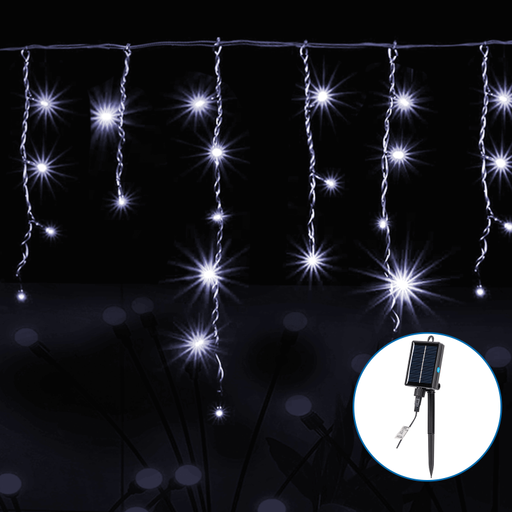
Why This Fits Their Persona: Perfect for anyone looking to add a cozy touch to a balcony, fence, or patio for evenings or holidays. This outdoor solar string light is purely decorative and easily creates the desired atmosphere with 8 different lighting modes, all without any installation work.
With an IP65 rating, this string light is excellently protected against the elements, tackling the "not truly weatherproof" pitfall. The stated runtime of 8-12 hours is realistic for decorative LED lighting, provided the solar panel is well-positioned.
High Waterproofing: The IP65 rating makes the string light suitable for exposed outdoor use, all year round.
Atmospheric Options: With 8 different lighting modes, you can adapt the mood to any occasion.
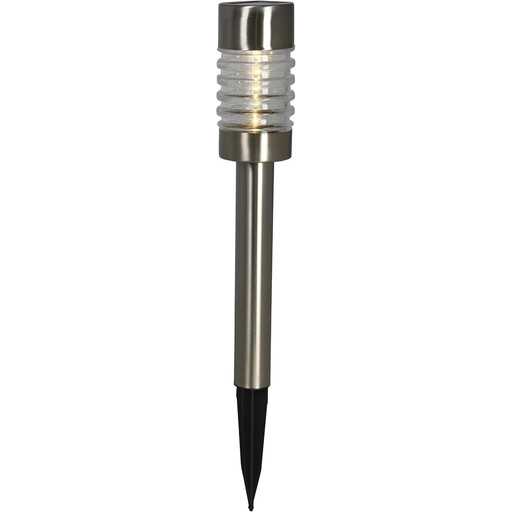
Why This Fits Their Persona: For those who want a simple and affordable way to mark a garden path, border, or planters. You just stake these solar-powered garden lights into the ground. No installation, no hassle—just an instant, subtle accent of light in your garden.
This set doesn't promise extremely bright light but delivers what you should expect: guidance lighting. The stainless steel design is more durable than many cheap plastic alternatives, reducing the risk of rapid wear and tear.
Simple Installation: You stake the lights directly into the ground, no tools or cables required.
Durable Material: The use of stainless steel offers better resistance to the elements than standard plastic.
This is just a small selection. There are many types of sustainable outdoor lighting to suit different gardens and preferences. Browse our full collection to find the perfect match for your outdoor space.
Yes, but performance is reduced. Due to shorter days and the lower angle of the sun, the battery doesn't charge as effectively. This means the runtime will be significantly shorter in winter than in summer. Models with an efficient solar panel and a motion sensor are most effective in winter because they use their stored energy intelligently.
The lifespan depends on the quality of the components. The LED bulbs themselves often last a long time, sometimes 15,000 to 30,000 hours of use. The weakest link is usually the rechargeable battery, which can lose capacity after a few years and may need to be replaced. The lamp's housing (plastic, metal, stainless steel) also plays a role in how long the product continues to look good.
No, that's not necessary. Virtually all solar lighting is equipped with a dusk-to-dawn sensor. It detects when it's getting dark and automatically turns the lamp on. In the morning, when it gets light again, the lamp switches off by itself and begins the charging process. You just need to make sure the on/off switch on the lamp is in the 'on' position.
