
Vandaag of morgen in huis

Kwaliteit gegarandeerd

Welkomstaanbiedingen ontgrendelen: GRATIS bezorging | Tot 80% korting | Gratis 30 dagen JoyPlus-proefperiode
Download de app
A solar light seems simple: mount it, let it absorb sunlight and it switches on automatically when someone walks past. In practice, models can vary significantly. Choose the wrong one and you could end up with too little light by your entrance, a flat battery after a cloudy day or a housing that isn’t suitable for the place where you want to install it.
This buying guide will help you compare a solar outdoor light, a solar wall light and a mains-powered outdoor light with a motion sensor. Our selection is based on verifiable specifications such as light output, IP rating, colour temperature and power supply.
A high number of LEDs doesn’t automatically mean that a light will be bright. Check the light output in lumens. For example, a compact solar wall light with 180 or 400 lumens could suit a doorway, balcony or garden path. For a driveway, garage or larger patio, a model with 800 to 3000 lumens may be a better fit.
Also check whether the stated light output refers to the whole light or just one light source. This helps you avoid comparing different products incorrectly.
An IP44 outdoor light is protected against solid objects larger than 1 millimetre and splashing water from different directions. This makes IP44 suitable for many sheltered walls, entrances, balconies and patios. It doesn’t mean the light is waterproof or can withstand direct jets of water.
An IP65 solar light offers a higher level of protection: its housing is dust-tight and can withstand water jets. This may be important for an open driveway, shed or wall that is exposed to heavy rain. Correct installation is still important, even with IP65. The light must not be left standing in water.
An outdoor solar light won’t work well just because it’s labelled “solar”. The panel needs enough daylight to charge the battery. A north-facing wall, shade from a balcony or a spot beneath a dense tree can reduce how long the light lasts.
Before buying, check:
For a doorway or balcony, 180 to 500 lumens is often a practical range. For a driveway or larger area of the garden, consider models with 800 lumens or more. A wide beam angle is useful if you want to light a path or cover several directions.
Some models have adjustable heads. The UME light in our selection has three light heads, a stated coverage of 270 degrees and a motion detection angle of 180 degrees. According to the manufacturer’s product description, its detection range is up to 60 feet. When installing it, always check that the sensor isn’t blocked by a wall, shrub or drainpipe.
Colour temperature is measured in kelvin:
A warmer colour often works better for wall lighting in a garden or entrance. Cooler light may be more practical for a garage or driveway, depending on your preference.
A motion sensor switches the light on when it detects movement. A dusk or daylight sensor stops the light from coming on unnecessarily during the day. Also check whether you can choose between automatic operation, continuous light or several modes.
Be aware of the difference between a solar security light and a mains-powered outdoor light with a motion sensor. A mains-powered light uses electricity and doesn’t rely on sunlight, but it does require wiring. A solar model can be installed without wires, as long as there’s enough daylight available.
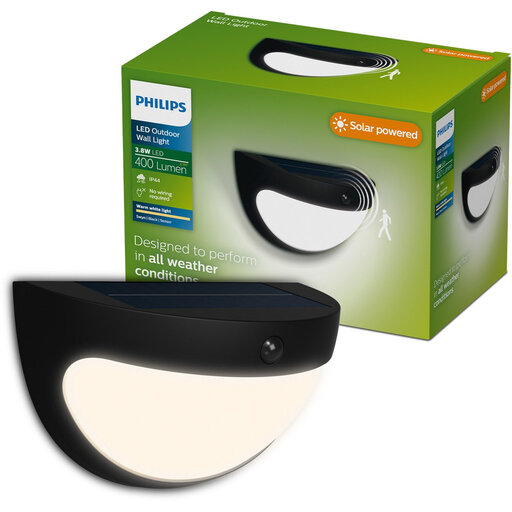
Why it suits this need: This compact solar wall light is designed to provide basic lighting by a doorway, balcony or small patio, without needing a mains connection.
The specifications state that it has 400 lumens, two lighting modes, a motion sensor and an IP44 rating. This makes it clearer what the light is designed for than a model that simply emphasises its high number of LEDs.
2700 K warm white light, integrated LED and wireless installation according to the product description.

Why it suits this need: This model combines higher light output with a dark wall-light housing. It’s a good fit for an entrance, patio or driveway where you need more light.
The product specifications state that it has 1000 lumens, 3000 K, two modes and an IP44 rating. This means you can compare its expected brightness and level of protection with your needs before buying.
1000 lumens, integrated LED, and a dusk and motion sensor according to the product information provided.

Why it suits this need: The three adjustable light heads are designed for larger areas such as a garage, driveway, garden or back garden where you need broad light coverage.
Its stated IP65 rating and adjustable heads give you a clearer idea of how it will suit a large, open outdoor space than a general claim about weather resistance alone.
3000 lumens, three lighting modes, 270-degree coverage and a stated detection angle of 180 degrees.
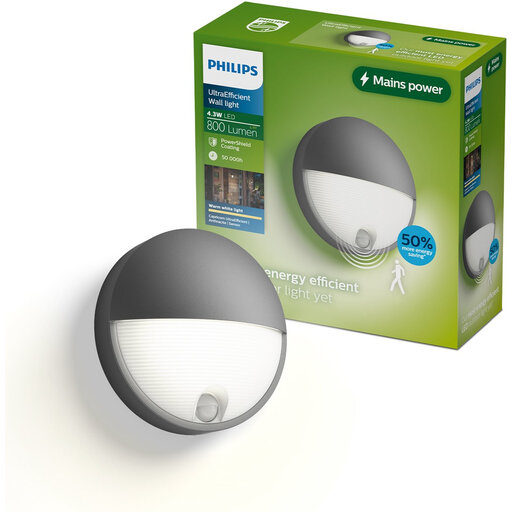
Why it suits this need: Ideal if you’re looking for a mains-powered wall light with motion and dusk sensors for a wall, garden or balcony, without needing to position a solar panel.
As this isn’t a solar light, it doesn’t rely on direct sunlight. Bear in mind that it does need an electrical connection.
800 lumens, 2700 K warm white light, integrated LED and IP44 protection.
We’ve put together a complete, up-to-date list of products that meet these strict selection criteria and the applicable European safety regulations.
Ideally, install your solar outdoor light on a sturdy, flat surface and point the panel towards the area that gets the most direct sunlight. Position the sensor at a height and angle that will detect people approaching along the path. Don’t point it directly at a busy road or a tree that moves in the wind, as this could cause the light to switch on unnecessarily.
Clean the solar panel and sensor regularly with a soft, slightly damp cloth. Also check the fixings after stormy weather. If your model has an integrated battery, don’t open the housing or attempt to modify the battery yourself.
It depends on the battery capacity, how often the light switches on, the selected lighting mode and the amount of sunlight. In winter or after several cloudy days, the light may not last as long. A light that only comes on when it detects movement generally uses less energy than a model that stays on continuously throughout the night.
A solar light doesn’t use mains electricity during normal operation. Its battery charges during the day via the built-in solar panel. However, you’ll need to allow for maintenance, possible battery replacement in the longer term and the fact that charging performance depends on the light’s position and the weather.
IP44 is suitable for many sheltered outdoor locations, such as an entrance, balcony or covered patio. The rating protects against splashing water, but not immersion or powerful jets of water. For a completely exposed spot with lots of rain and dust, an IP65 solar light may be a better choice.
