
Vandaag of morgen in huis

Kwaliteit gegarandeerd

Welkomstaanbiedingen ontgrendelen: GRATIS bezorging | Tot 80% korting | Gratis 30 dagen JoyPlus-proefperiode
Download de app
Solar outdoor lighting seems simple: position the panel, hang up the light and you’re done. In practice, some models disappoint because they are installed in a shady spot, produce too little light or have a protection rating that does not suit the location. With the right checks beforehand, you can find the right solar-powered outdoor light for your garden, patio, balcony, driveway or entrance.
A high light output sounds appealing, but you should also consider how you intend to use the light. For a path or balcony, 180 to 500 lumens may be sufficient. A driveway or dark side wall may require more light. Also consider the colour temperature:
Also check whether the stated lumen value applies to each light point and whether the light has a fixed setting or several lighting modes.
A waterproof outdoor light is not automatically suitable for every location. Check the IP rating:
An IP44 light should not be installed directly beneath a leaking roof edge or in a location exposed to continuous powerful water jets.
Solar lighting will not work at its best when the panel is in shade for long periods. Trees, walls, canopies and a north-facing wall can limit charging capacity. A cloudy day in the Netherlands can also result in a shorter operating time.
Position the panel as unobstructed as possible and keep it clean. With models that have a separate cable, you can install the panel in a sunnier location. Also check whether the light needs to be switched on before first use; some solar string lights require this to activate the automatic charging and switching programme.
Use lumens as a practical point of comparison, but relate the figure to the space. A small solar wall light with 400 lumens is mainly suitable for orientation and ambience. For a wide driveway or as a solar security light, a higher light output is more useful.
Also consider the difference between continuous lighting and sensor lighting. For example, a light may combine a low base setting with a brighter setting when movement is detected. This helps distribute the available battery capacity, but actual operating time will still depend on sunlight, temperature and usage.
A dusk or darkness sensor switches the light on when it gets dark. A motion sensor activates additional light as soon as someone enters its detection range. Check:
A sensor light next to a front door requires different adjustment from outdoor lighting with a motion sensor along a long driveway.
Check that the mounting wall is strong enough and use the supplied fixings according to the instructions. Keep the area around the solar panel clear so it has an unobstructed view of the sky. Clean the panel regularly with a soft cloth and do not use abrasive products.
An integrated LED light does not have a replaceable standard bulb. Therefore, check the warranty, battery information and whether replacement parts are available. According to the product information, the Philips models in this selection come with a statutory warranty of at least two years under EU consumer law.
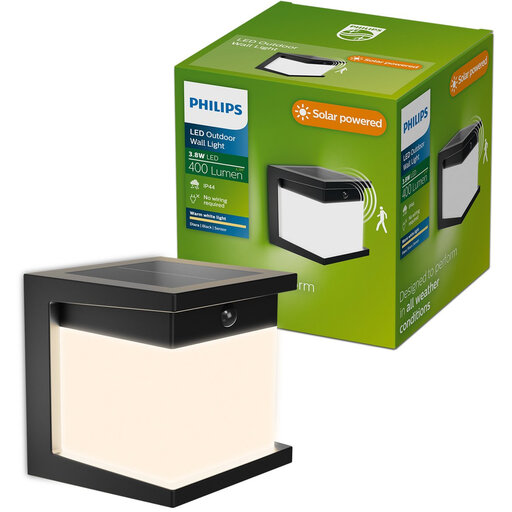
Why it suits this profile: This compact solar wall light works without wiring and has two lighting modes. The 400 lumens and warm 2700 K colour temperature are well suited to an entrance, balcony or sheltered garden wall.
The specifications state IP44, making it clear that this light is designed for splashing water, not immersion or powerful water jets.
2700 K warm white light, motion sensor, two lighting modes and a compact size of approximately 12 × 11 × 12 cm.

Why it suits this profile: This powerful Philips solar outdoor light is designed to provide broad illumination around a driveway, garage or dark side wall. The product information states 4000 lumens, IP65 and an adjustable light head.
The IP65 rating and stated sensor range provide more concrete points of comparison than a general claim about weather resistance alone.
4000 lumens, 5000 K, IP65, motion detection up to 8 metres when approached directly and 16 metres from the side, according to the product description.
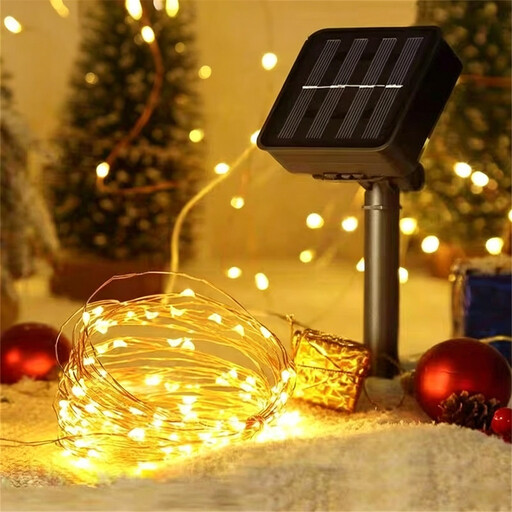
Why it suits this profile: This solar string light is designed for decorative lighting on trees, fences, balconies and patios. Each string has 75 warm white LEDs spread over approximately 49 feet.
The product information lists eight lighting modes and a memory function. This means you do not have to select the same setting again every day.
Two strings, eight lighting modes and an operating time of 8 to 14 hours after 6 to 8 hours of charging in direct sunlight, according to the product description.
We have put together a complete, up-to-date list of products that fully meet these strict selection criteria and the applicable European safety regulations.
According to Philips’ own product information, the Zyren can provide up to four nights of lighting when the battery is fully charged. This is a product specification under certain conditions, not a guarantee for every winter’s day in the Netherlands.
Yes, but operating time may be reduced by shorter days, cloudy weather, the low position of the sun and dirt on the panel. Position the panel as unobstructed as possible and clean it regularly. A motion sensor can help use the available energy more efficiently.
A solar outdoor light does not use electricity from the mains during normal operation. Its built-in battery is charged by the solar panel during the day. However, battery performance and operating time can vary depending on the season, location and lighting mode.
Service life depends on the LED module, battery, housing and exposure to the weather. Check the stated lifespan of the light source, the IP rating and the warranty. For some Philips models, the product information states a light source lifespan of 25,000 hours; this does not automatically indicate how long the battery will last.
