
Vandaag of morgen in huis

Kwaliteit gegarandeerd

Welkomstaanbiedingen ontgrendelen: GRATIS bezorging | Tot 80% korting | Gratis 30 dagen JoyPlus-proefperiode
Download de app
A solar-powered outdoor light with a sensor sounds ideal: no fussing with cables, no extra costs on your energy bill, and automatic light whenever you need it. This promise of convenience and sustainability is making sustainable outdoor lighting increasingly popular. In reality, however, the experience is often quite different. Many people end up with a light that only shines dimly after a few months or gives out completely after the first autumn storm.
As a Joybuy Product Recommendation Officer, I see where things often go wrong. To help you choose a model that actually delivers on its promise, we'll discuss the three most common pitfalls and what you really need to look for.
Before you make a purchase, it's important to see through the marketing claims. These are the problems we encounter most often:
outdoor light with a motion sensor that constantly turns on and off with the wind, or fails to react when you walk up the driveway. A poor-quality sensor renders the light useless.To avoid these pitfalls, you need to pay attention to a few objective specifications. These determine whether a solar-powered LED outdoor light is a worthwhile investment.
The brightness of a light is expressed in lumens (lm). Don't be misled by the wattage. A higher lumen count means more light.
A high light output requires a powerful battery and an efficient solar panel. Check if the manufacturer provides information about the runtime on a full charge.
The IP rating indicates how well a light is protected against dust and water. This is a crucial factor for its lifespan.
solar-powered security light, this is a wise choice.Most solar lights use a PIR (Passive Infrared) sensor that reacts to body heat. Pay attention to two things:
Based on these criteria, we have selected several models that suit different needs. We aren't presenting "winners," but rather matching products to user profiles.
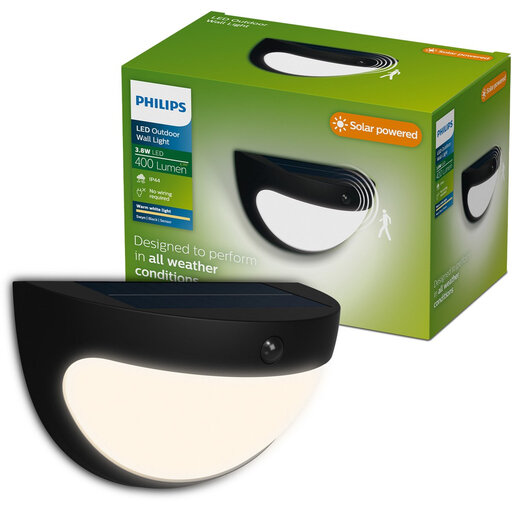
Why it's a match: Ideal for anyone wanting to add a cozy glow to a balcony, patio, or seating area. The focus isn't on bright security, but on creating a warm ambiance without the hassle of cables.
This light is designed for ambiance (400 lm), which sets realistic expectations. The IP44 rating is sufficient for its intended sheltered mounting locations, thus avoiding the "false weather-resistance" pitfall.
Produces warm white light (2700K) for an inviting atmosphere. Installation is extremely simple, and the `wireless outdoor light` operates completely autonomously thanks to its dusk-to-dawn and motion sensor.

Why it's a match: For those seeking a reliable light source for the front door, garden path, or shed. This `outdoor solar wall light` offers a great balance between brightness and a long lifespan.
With 1000 lumens, this light delivers truly functional illumination, avoiding the "too dim" pitfall. The sensor is designed for security and responds reliably to motion.
A strong all-rounder with a bright white light colour (3000K) that ensures good visibility. The IP44 rating and robust materials ensure a long lifespan in various climates.
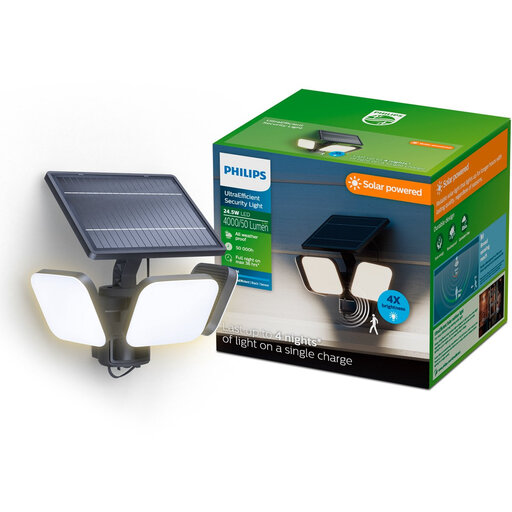
Why it's a match: For those who want maximum visibility and deterrence. Perfect for illuminating a long driveway, a dark backyard, or the side of a house.
This model tackles all the pitfalls: a very high light output of 4000 lumens, a superior IP65 rating against all weather conditions, and an advanced PIR sensor with a wide detection range (up to 16 metres).
Maximum performance and reliability. According to Philips, the light can run for up to 4 nights on a full battery, minimising the chance of a dark driveway, even after a few gloomy days.
We have compiled a complete, up-to-date list of products that meet these strict selection criteria.
The lifespan of the integrated LED lighting is typically very long (often 25,000 hours or more). The determining factor is the rechargeable battery, which can lose capacity after a few years. During winter, with fewer and weaker hours of sunlight, the charging time will be longer and the runtime per night shorter. Proper placement in a spot with maximum direct sunlight (ideally south-facing) is therefore extra important.
No, the location is crucial. The light needs direct sunlight to charge the battery effectively. Placement under a wide eave, behind a large tree, or on the north side of a building will significantly reduce its performance. Check the intended spot for shade throughout the day before you permanently mount the light.
No, there are no running costs because the light operates on solar energy. The investment is entirely in the purchase price. A higher-quality model is more expensive initially but saves money in the long run because it won't need to be replaced after just one or two seasons.
