
Vandaag of morgen in huis

Kwaliteit gegarandeerd

Welkomstaanbiedingen ontgrendelen: GRATIS bezorging | Tot 80% korting | Gratis 30 dagen JoyPlus-proefperiode
Download de app
Lighting a garden path, balcony, patio or driveway without cables is an attractive option. Solar outdoor lighting works wirelessly, uses solar energy during the day and can switch on automatically when it gets dark or detects movement. However, some purchases can be disappointing in practice. A light may be less bright than expected, fail to charge sufficiently in winter or be unsuitable for an exposed wall.
With this guide, you can compare solar wall lights, solar garden lights and solar security lights based on measurable features rather than marketing claims.
A large number of LEDs does not automatically mean that a light will illuminate a large area effectively. Brightness is mainly expressed in lumens. A small solar garden light with a few dozen lumens is intended for atmosphere or marking out a path. For a driveway or garage, you will generally need more light.
Also consider the light distribution. A light with adjustable heads can illuminate a larger area than a fixed model with a similar light output.
The IP rating indicates the conditions against which the housing is protected. IP44 outdoor lighting is protected against splashing water and solid objects larger than 1 millimetre. This makes it suitable, for example, for a sheltered balcony, patio or wall beneath an overhang.
IP65 outdoor lighting offers greater protection against dust and water jets. This is more practical for an exposed wall, driveway or garden where rain falls directly on the light. However, IP65 does not mean that the light can be placed underwater. Also check whether the solar panel and connections have the same level of protection.
A solar light needs direct daylight to charge the battery sufficiently. Shade from a fence, tree, balcony edge or north-facing wall can limit the operating time. Even a small light with a high claimed number of hours of illumination may run for less time on dark, cloudy days.
So choose the installation location first and check how much sunlight it actually receives. Keep the panel clear of leaves and clean it regularly with a soft, slightly damp cloth.
Compare lumens, rather than just wattage or the number of LEDs. A low light output is sufficient for an atmospheric solar lantern or solar string light. For functional lighting by a back door or driveway, a higher light output makes more sense.
The light colour determines the look and feel:
Also check that the stated colour temperature matches your intended use. For example, a product description may describe a light as warm white, while the technical specification states a higher Kelvin value.
An outdoor light with a motion sensor only switches on when movement is detected. This helps conserve the battery, but performance depends on the detection angle, distance and installation height. So look at:
A compact solar wall light is often sufficient for a path leading to the front door. For a wide driveway, a solar security light with multiple light heads may be more practical.
An integrated battery stores the energy collected during the day. Actual operating time is affected by sunlight, temperature, the selected lighting mode and battery capacity. A longer stated operating time therefore does not guarantee the same performance in all Dutch weather conditions.
Also consider installation. Wireless outdoor lighting is easy to install, but a sturdy surface and secure attachment remain important. For wall mounting, check that the wall can support the weight and position the panel as openly towards the sun as possible.
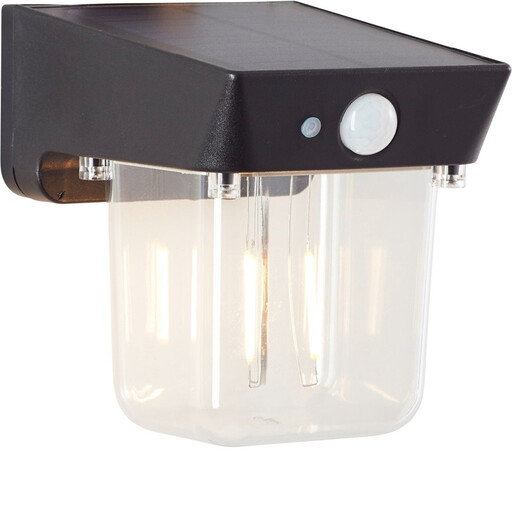
Why it suits this profile: A compact wall light for an entrance, balcony or sheltered patio wall, with no electrical wiring required.
The product information states 180 lumens and IP44. This makes it clear that the model is mainly intended for nearby lighting and protection against splashing water, rather than a large exposed driveway.
Integrated LED, motion sensor, 2700 K warm white light and two watts of power.

Why it suits this profile: Ideal if you are looking for a neat wall or patio light with a sturdy housing, motion sensor and a choice of two lighting modes.
The IP44 rating makes the usage limitation clear: suitable for normal outdoor use with protection against splashing water, but not for immersion.
400 lumens per light point, 2700 K warm white light, integrated motion sensor and two lighting modes.

Why it suits this profile: For a garage, large garden, rear access or driveway where broad coverage and motion detection are important.
The specifications state 3000 lumens, IP65, a detection angle of 180 degrees and three adjustable heads. This allows you to direct the coverage more precisely than with a small fixed light.
302 LEDs, three lighting modes, a stated detection distance of 60 voet and an integrated 1800 mAh battery.
We have put together a complete, up-to-date list of products that fully meet these strict selection criteria and the applicable European safety regulations.
Yes, the solar panel can also absorb energy from diffuse daylight. However, charging time and operating duration may be reduced in cloudy conditions, during short winter days and in shaded locations. So position the panel as openly as possible and expect different results from sensor lighting than from continuous lighting.
This depends on the battery type, frequency of use, temperature, charging conditions and protection against moisture. Clean the panel regularly, check that it is securely attached and follow the manufacturer’s instructions. A stated LED lifespan does not automatically indicate how long the battery or the complete light will last.
Solar lighting does not use electricity from the mains during normal operation. This means there are no regular electricity costs for the light itself. However, bear in mind the purchase price, any battery replacement and the fact that light output remains dependent on sunlight. For atmospheric lighting, path lighting and motion-activated lighting, solar is often practical; for very consistent and powerful illumination, a wired solution may be more suitable.
