
Vandaag of morgen in huis

Kwaliteit gegarandeerd

Welkomstaanbiedingen ontgrendelen: GRATIS bezorging | Tot 80% korting | Gratis 30 dagen JoyPlus-proefperiode
Download de app
Solar outdoor lighting is ideal when you want to illuminate a garden, balcony, patio or driveway without running cables to a socket. However, not every solar-powered outdoor light meets the same needs. A small light for ambience requires different features from an outdoor light with a motion sensor for an entrance.
The right choice therefore starts not with the colour or appearance, but with how you plan to use it and its technical specifications.
A lamp with a high lumen output provides more light, but that is not always pleasant or necessary. Soft lighting may be sufficient for garden paths or a solar table lamp. A 170-lumen lamp, such as some Viani table lamps, is mainly designed for ambience and local use. For a driveway or dark entrance, a much more powerful LED outdoor light may be the more sensible option.
Also consider the light distribution. A wide beam illuminates a larger area, while a focused beam works better by a door, path or staircase.
An IP44 outdoor light is protected against splashing water, but is not designed to stand underwater or withstand powerful, direct jets of water. This makes IP44 suitable for many sheltered patios, balconies and façades, but less suitable for locations where the light is constantly exposed to driving rain.
An IP65 solar light offers greater protection against dust and water jets according to the IP rating. Even so, check the installation instructions and make sure that connections and fixings are properly sealed. No rating makes a light suitable for immersion.
In the Netherlands, cloudy days and short winter days are normal. As a result, a solar light may stay on for less time or become less bright when the panel does not receive enough sunlight. A USB-rechargeable outdoor light with dual charging options is more practical for use on a patio, while camping or in situations where you need reliable lighting.
Lumens (lm) indicate how much visible light a lamp produces. Use these guidelines as a starting point:
Colour temperature determines the appearance of the light:
For example, a solar garden light with 6,500 K can stand out clearly along a path, while 2,700 K is better suited to a seating area.
An outdoor light with a motion sensor only switches on when movement is detected. This can save energy and is practical by a front door or driveway. Check the detection distance, detection angle and adjustment options. A sensor aimed at a busy pavement may switch on more often than you would like.
Multiple lighting modes are also useful. A low permanent setting combined with a brighter sensor setting provides orientation lighting as well as extra light when someone approaches. Also check whether the lamp has a dusk sensor and switches on automatically at sunset.
The stated operating time depends on sunlight, lighting mode, temperature and battery capacity. Position the solar panel where it will receive as much direct daylight as possible. Shade from trees, a canopy or a wall reduces the amount of charge generated.
A lamp with an integrated battery is easy to position, but check whether the battery can be replaced. With an integrated LED light source, the light source generally cannot be replaced by the user. Clean the panel regularly with a soft, dry or slightly damp cloth, following the product instructions.
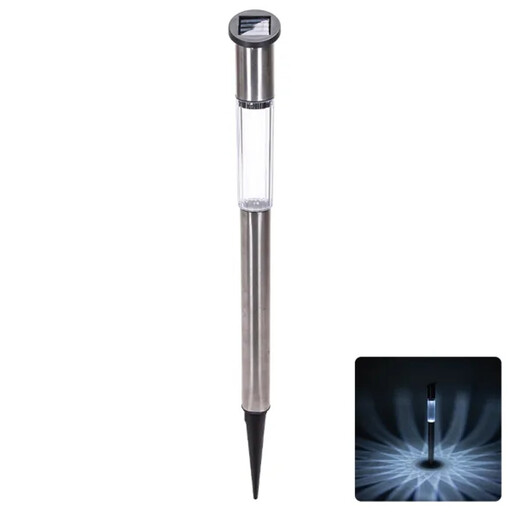
Why it suits this profile: This spike light is designed to provide simple garden path lighting without wiring. Its stainless-steel construction and height of 55 cm make it suitable for a row of lights along a border or path.
The product information states IP44, a charging time of 4–6 hours and an operating time of 8–12 hours. This makes expectations clearer than a general claim that the product is “weather-resistant”.
Polycrystalline solar panel, NiMH battery, 6,500 K and a stainless-steel metal housing.

Why it suits this profile: The combination of 1,000 lumens, warm white light at 3,000 K and a motion sensor is well suited to an entrance, garage or driveway where both visibility and a gentle light colour are important.
The specifications list the light output, colour temperature and IP44 rating separately. According to the product information, the lamp has two lighting modes and a dusk sensor.
400 lumens per light point according to the product details, motion sensor, two modes and an anti-UV plastic housing.

Why it suits this profile: With 4,000 lumens according to the product specifications, this solar wall light is designed for large areas such as a wide driveway, back garden or garage area.
The IP65 rating is clearly stated, along with sensor ranges of 8 metres for direct approach and 16 metres for sideways movement. However, check that your chosen mounting location makes the most of this coverage.
4,000 lumens, 5,000 K, adjustable light head, two lighting modes and a stated detection range.
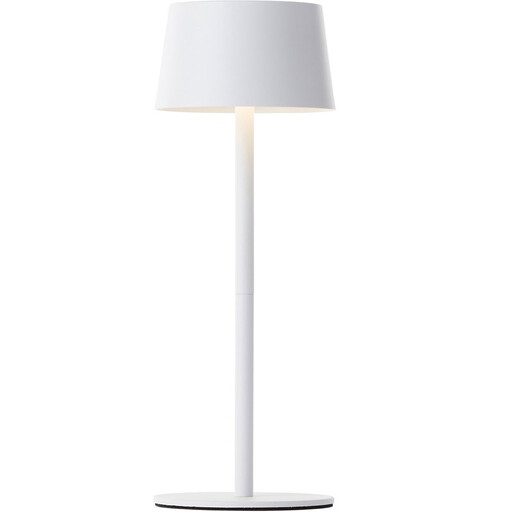
Why it suits this profile: The combination of solar and USB charging makes this portable table lamp suitable for a balcony, patio, campsite or festival. No permanent installation is required.
The USB charging option reduces reliance on sunlight. IP44 makes the lamp suitable for splashing water, but not for immersion or direct water jets.
170 lumens, warm white light at 3,000 K, three dimming modes, USB A charging and two mounting heights.
We have put together a complete, up-to-date list of products that fully meet these strict selection criteria and the applicable European safety regulations.
Always follow the manufacturer’s instructions when installing the light. Wall lights require a solid, flat surface. Do not point the solar panel towards an area shaded during the day by a roof edge or tree. For solar garden lights and solar torches, it is a good idea to test the desired arrangement first before installing several lights.
Also bear the following points in mind:
This depends on the battery, charging conditions, temperature, operating mode and quality of the housing. Manufacturers sometimes state an expected lifespan for the LED light source, but this is not the same as the lifespan of the battery or the product as a whole. Check both details whenever they are available.
Yes, but the operating time may be reduced by fewer hours of daylight, a lower sun position and cloudy weather. Position the panel as openly as possible and, if you use the light regularly, choose a model with an additional USB charging option. Keep the panel free from dirt, leaves and snow.
While in use, a solar light draws energy from its charged battery. This means that no permanent mains connection is required. Models with USB charging may use electricity when you charge the battery via an adapter. The eventual running costs therefore depend on the charging method and how often you recharge the lamp.
