
Vandaag of morgen in huis

Kwaliteit gegarandeerd

Welkomstaanbiedingen ontgrendelen: GRATIS bezorging | Tot 80% korting | Gratis 30 dagen JoyPlus-proefperiode
Download de app
Solar-powered outdoor lighting is handy for a garden, balcony, patio, driveway or entrance where there’s no fixed wiring. But a cheap solar garden light can disappoint in practice. It may give off very little light, the battery may run flat after a cloudy day, or the casing may be less suitable for rain than the product photo suggests.
So don’t focus only on appearance or terms such as “waterproof”. Pay particular attention to the IP rating, light output, battery details and installation options. That way, you can choose solar outdoor lighting that suits your needs.
A lumen rating indicates how much light a lamp produces under certain conditions. It doesn’t automatically tell you how large an area it will illuminate or how long it will maintain that level. For example, a solar wall light with a motion sensor may give off bright light for a short time, while a decorative solar garden light is mainly designed to create a soft glow.
So look at the combination of:
An IP44-rated light is protected against splashes and is suitable for many sheltered outdoor areas. That doesn’t mean you can submerge it or expose it to a direct jet of water. IP65 offers greater protection against dust and water, but correct installation is still important.
Before buying, check:
A stated run time usually assumes the light has received enough charge in daylight. In the Netherlands, clouds, short winter days, shade and dirt on the panel can all affect output. So a model listed as providing 8 to 14 hours of light won’t necessarily last that long every night.
Position the panel where it can get as much sunlight as possible and clean it regularly. Also check whether the battery is replaceable. On several models, such as integrated LED outdoor lights, the light source or battery isn’t designed to be replaced by the user.
Solar garden lights with ground stakes are practical for paths and borders. They don’t need wiring and are easy to move. A solar wall light makes more sense for an entrance, shed or patio. Ideally, choose a model with a clear mounting plate and fixings that are suitable for your wall.
A light with a motion sensor is a good choice if you mainly need light when someone walks past. For constant ambience, solar mood lighting, string lights and decorative lamps work better.
You’ll need more light for finding your way at a front door or shed than for illuminating a flower bed. For example, the Brilliant Alvero solar outdoor light is listed as producing 500 lumens at 3000 K, while the Brilliant Magua pedestal light is listed as producing 350 lumens at 4000 K. According to the specifications, the first gives off warmer light, while the second has a more neutral tone.
Product details can vary: the Brilliant Iseo portable wall light is listed as producing 300 lumens in the product specifications, while the description also mentions 350 lumens. So always check the latest information on the product page before ordering.
An IP44 rating is suitable for outdoor locations where the light may be exposed to splashes, but it still needs to be installed sensibly. IP65 is a better option for garden paths and open areas, provided the solar panel and light are positioned correctly.
For solar path lights with ground stakes, a level surface is important. Consider the risk of tripping, and keep children and lawnmowers in mind. Wall lights need to be mounted on a sturdy surface. Magnetic mounting is flexible, but check that the mounting plate can safely support the weight.
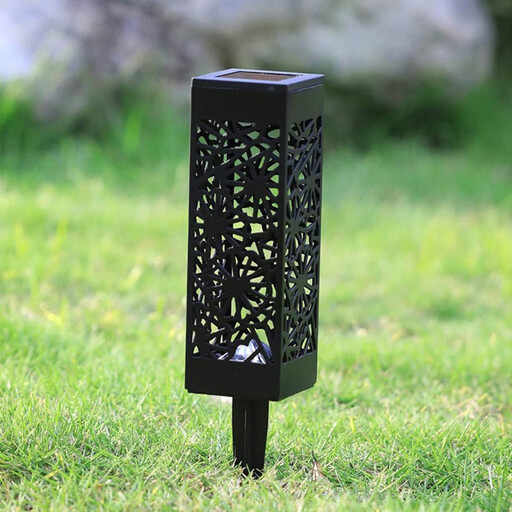
Why it suits this profile: Six individual lights offer a simple way to illuminate a path, border or flower bed without cables or tools.
The product details list an IP65 rating, a charging time of 4–6 hours in sunlight and an expected run time of 5–8 hours. Actual run time will still depend on the weather.
Set of 6, warm white LEDs, ground-stake mounting and no wiring required.

Why it suits this profile: This solar wall light is designed for permanent installation by an entrance, patio or balcony. It combines a daylight sensor with a motion sensor.
The stated IP44 rating makes clear that this is splash-resistant outdoor lighting, not a lamp that can be submerged. The installation spot needs to receive direct daylight.
Two light settings, warm white light at 2700 K and automatic sensor activation.
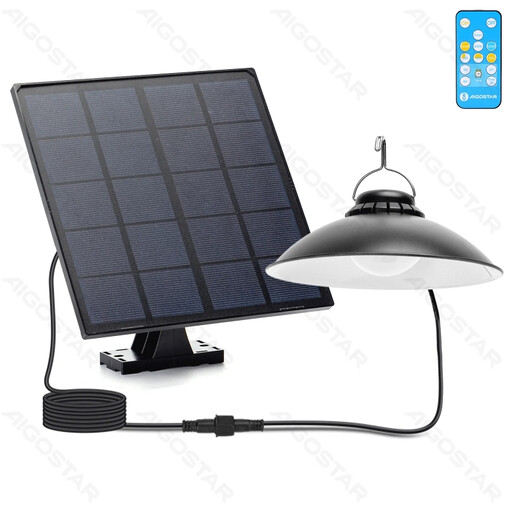
Why it suits this profile: This model is worth considering for a covered outdoor area, veranda or another spot where you want a pendant light with adjustable colour temperature.
The listed specifications include IP65, a battery capacity of 5000 mAh, 4–6 hours of charging and a run time of up to 12 hours. It still needs to be placed in direct sunlight.
Choose from 3000 K, 4000 K and 6500 K, with a stated beam angle of 120 degrees.
We’ve put together a complete, up-to-date list of products that meet these strict selection criteria and the applicable European safety regulations.
For ambience on a balcony or patio, a solar-powered LED string light or solar mood lighting is a practical choice. According to the product details, the VIVREAL set includes two string lights, each 49 ft long, with 75 warm white LEDs and eight modes. The solar panel needs to be placed outdoors in direct light; you can then arrange the string lights as you like.
For the festive season, an LED Christmas wreath can decorate an entrance or window. According to the product specifications, the DDHS wreath has a diameter of 48 inches, 200 LEDs, eleven lighting modes and timers. The description says this model runs from a suitable power supply, so it isn’t a solar product. If using it outdoors, take care with installation and protection from the elements.
Run time varies by model and is affected by sunlight, temperature, battery condition and the selected light level. Clean the solar panel regularly and only replace the battery if the manufacturer allows it.
It can, but shorter days, cloudy weather and the low angle of the sun mean less energy for charging. Position panels where they’re as free from shade as possible, and expect a shorter run time when there’s little sunshine.
It doesn’t use electricity from the mains while it’s switched on, but there are upfront costs and you may need to replace the battery. A light with a sensor can reduce energy use by switching on only when needed.
