
Vandaag of morgen in huis

Kwaliteit gegarandeerd

Welkomstaanbiedingen ontgrendelen: GRATIS bezorging | Tot 80% korting | Gratis 30 dagen JoyPlus-proefperiode
Download de app
Solar outdoor lighting seems simple: position the panel, hang up the light and you’re done. In practice, the light output can sometimes disappoint, a motion sensor may be awkward to use, or a light may not stand up to rain as well as the product title suggests. Use these checks to choose the right solar outdoor light for your garden, balcony, patio, exterior wall, garage or path.
A higher lumen count means more light, but it doesn’t automatically make for a better solution. A powerful solar security light can be useful on a driveway, but the same light could be dazzling on a small balcony. So look at the beam pattern, the number of adjustable heads and where you plan to mount the light.
Soft lighting is usually enough for a path. A solar wall light with a motion sensor needs a different brightness level from decorative solar garden lights among your plants.
Product titles sometimes use words such as waterproof or weather-resistant without explaining what they mean. So check the IP rating:
IP44 may be suitable for a sheltered exterior wall. For an exposed driveway, garage wall or garden where the light will be exposed to plenty of rain and dust, IP65 is a more sensible choice.
A solar light needs direct daylight to charge its battery. Shade from a fence, tree or canopy can reduce its running time. Days are shorter in winter and the sun sits lower in the sky. So check that the solar panel has a clear view of the sky for several hours a day.
Pay attention to the settings, too. A light that stays on at full brightness all night uses more energy than a model with a dusk sensor, dimming function or motion sensor.
Lumens indicate the amount of visible light. Here are a few guidelines:
Colour temperature is measured in kelvins. 2700K and 3000K produce warm white light and suit patios and gardens. 5000K to 7000K looks much whiter and may suit functional lighting, but it isn’t always pleasant around a seating area.
An outdoor light with a motion sensor needs more than just a sensor; its range and angle matter, too. Check whether the sensor detects movement well both directly in front of the light and from the side. Mount the light where bushes, doors or walls won’t block its view.
A short run-on time can be useful by a front door. For a driveway or garage, you may want a wider detection angle and multiple light heads.
Check that the battery and solar panel are a good match. A larger panel or a stated conversion rate doesn’t tell you how many hours the light will stay on in your garden. Manufacturer estimates depend on sunlight, season, temperature and operating mode.
Also check:
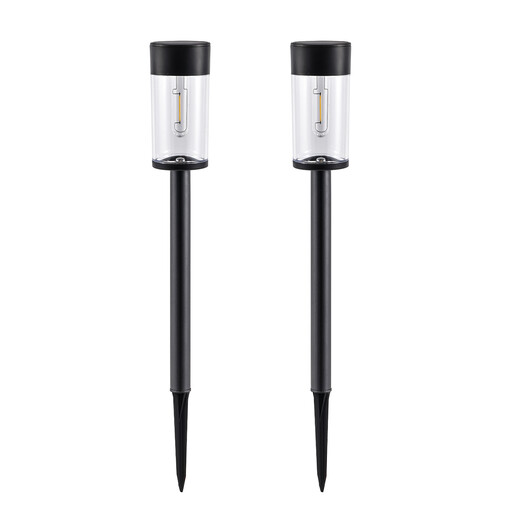
Why it suits this type of buyer: This set is designed for easy placement along a garden path, flower bed or driveway. The two lights are installed with ground stakes and, according to the product description, switch on automatically at dusk.
The stated light output is 10 lumens per light. That makes it clear this model is intended for subtle guidance lighting, not for illuminating an entire garden.
IP65 rating, warm white light at 3000K and a stated running time of 8 to 12 hours after 6 to 8 hours of sunlight.
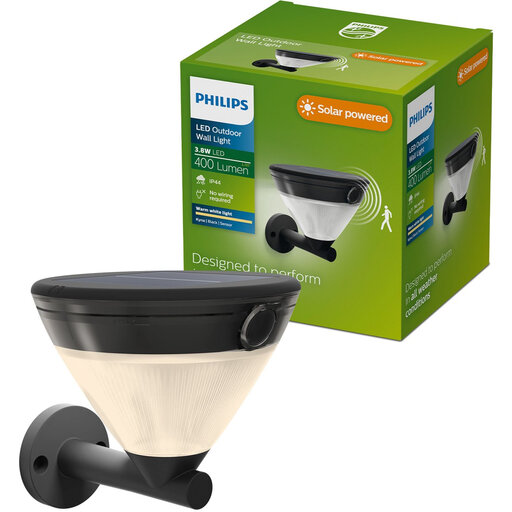
Why it suits this type of buyer: This solar wall light is a good fit for an exterior wall, balcony or garden where you want a compact light with a warm glow and automatic operation.
The product information lists an IP44 rating, so you shouldn’t treat the light as fully waterproof. A sheltered exterior wall is therefore a more sensible location than somewhere exposed to direct water jets.
400 lumens, warm white light at 2700K, two lighting modes and a motion sensor, according to the product specifications.

Why it suits this type of buyer: This model is designed to provide bright, wide coverage for a driveway, garage, patio or larger garden area where a standard solar wall light may not reach far enough.
The three light heads, stated detection range of 60 feet and IP65 rating make its intended use clear: wide-area functional outdoor lighting, not subtle decoration.
The listing states 3000 lumens, three modes, three adjustable heads and a 180-degree detection angle.
We’ve put together a complete, up-to-date list of products that meet these strict selection criteria and the applicable European safety requirements.
Yes, but running time can decrease because there is less daylight, the sun is lower in the sky and the weather is cloudier. Position the panel in as open a spot as possible and clean it regularly. Use a motion sensor or dimming setting to make the most of the available energy.
It varies by model, battery, operating mode and weather conditions. Alongside the stated LED lifespan, check the warranty, battery details and maintenance options. A built-in battery isn’t always replaceable by the user.
A solar outdoor light uses stored solar energy and normally doesn’t need to be connected to the mains. Models with a rechargeable battery may need to be charged by cable from time to time. Actual running time depends on the amount of sunlight and the lighting mode you choose.
