
Vandaag of morgen in huis

Kwaliteit gegarandeerd

Welkomstaanbiedingen ontgrendelen: GRATIS bezorging | Tot 80% korting | Gratis 30 dagen JoyPlus-proefperiode
Download de app
Solar-powered outdoor lighting is a practical choice: no hassle with cables and no extra costs on your energy bill. The popularity of this sustainable outdoor lighting is growing, but that also means the market is flooded with products that don't always live up to their promises. Many lights look good online but turn out to be a disappointment in practice.
Before you make a purchase, it's helpful to know what to look for. We've listed the three most common pitfalls to help you avoid a bad buy.
Many packages boast a high light output, but in reality, the lights only provide a weak glow. A small, inefficient solar panel and battery combination simply cannot sustain the promised brightness for long. The result is a light that goes out after just an hour.
An outdoor light in the UK needs to be durable, especially against rain. A common problem is a low IP rating (Ingress Protection). For example, a lamp with an IP23 rating is only resistant to light drizzle, not a heavy British downpour. Rust and water damage will cause the lamp to fail after just one season.
The light works perfectly on the first sunny day, but after a few cloudy days, it no longer provides light. This is often due to a solar panel that is too small to capture enough energy, or a low-quality battery that cannot hold the stored energy for long.
To choose the right solar-powered garden lighting, it's useful to understand a few technical specifications. This will help you distinguish marketing jargon from facts.
Don't look at the wattage, but at the number of lumens (lm). Lumens indicate the actual amount of light a lamp emits.
The IP rating indicates how well a product is protected against dust and water. For an outdoor light with a sensor in the UK climate, these are the most important ratings:
Modern LED solar lighting is often equipped with smart sensors to maximise battery life.
Based on objective specifications, we have selected a number of products that suit different needs and situations.
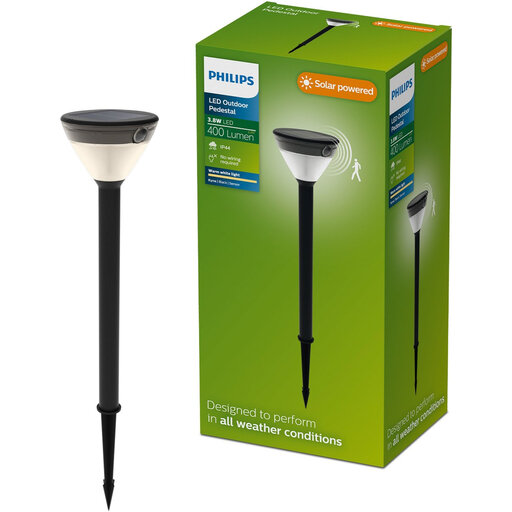
Why This Fits Their Persona: Ideal for those who want to create a warm, inviting atmosphere along a garden path or in a border. The ground stake makes installation and relocation easy, without the need for walls or fences.
Where many ambient lights fail after an hour, this Philips model is designed for a longer runtime. According to the manufacturer, the battery can last up to 20 hours on a full charge.
Produces warm white light (2700K) for a cosy ambiance. The combination of a dusk-to-dawn sensor and a motion sensor ensures efficient energy use.
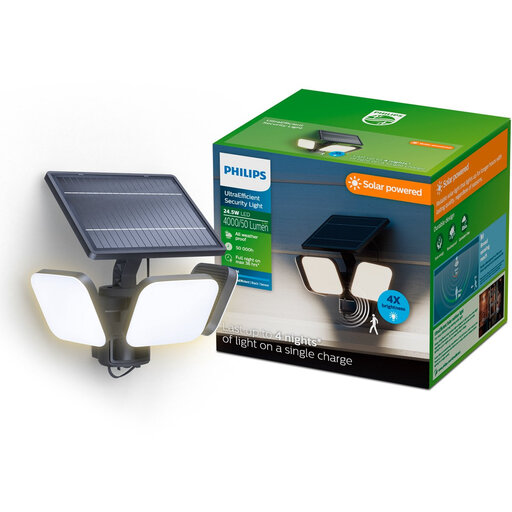
Why This Fits Their Persona: For those who want to powerfully illuminate a driveway, back entrance, or shed. This light is purely focused on functionality and security, with a very high light output that covers a large area.
This lamp delivers a high light output of 4000 lumens and has an IP65 rating. This means it's built for harsh weather, not just for a sunny brochure.
Very high, bright white light output (5000K) and a wide motion sensor detection angle (up to 16 metres sideways, according to Philips). The head is adjustable.

Why This Fits Their Persona: A reliable and functional wall light for the front or back door, shed, or garage. This Philips solar outdoor light offers a good balance of brightness, features, and a sleek design.
This lamp provides a reliable 1000 lumens, bright enough for functional light without exaggerated claims. The IP44 rating guarantees protection against a normal rain shower.
A solid all-rounder with both a dusk-to-dawn and a motion sensor. Installation is simple, and the light offers two light modes for flexible use.
We have compiled a complete, up-to-date list of products that meet these selection criteria and comply with current regulations.
For a full charge, a solar panel typically needs 6 to 8 hours of direct sunlight. Performance may decrease during a series of dark, cloudy days, which is more common in the autumn and winter. Therefore, place the light in a location that receives the most sun during the day.
The IP rating indicates how well a lamp is protected against solid particles (first digit) and liquids (second digit). IP44 means the lamp is splash-proof and therefore suitable for most sheltered outdoor locations. IP65 means the lamp is completely dust-tight and protected against water jets, allowing it to be used in exposed locations as well.
In most integrated LED solar lights, the battery is not designed to be replaced by the user. The lifespan of the light is linked to the lifespan of the LED and the battery, which is often expressed in thousands of operating hours (e.g., 25,000 hours). Check the product information for specific details about the expected lifespan.
