
Vandaag of morgen in huis

Kwaliteit gegarandeerd

Welkomstaanbiedingen ontgrendelen: GRATIS bezorging | Tot 80% korting | Gratis 30 dagen JoyPlus-proefperiode
Download de app
Solar-powered outdoor lighting is a smart choice: no cable clutter, no extra costs on your energy bill, and an eco-friendly solution for your garden, patio, or balcony. However, the market is flooded with options, and not every light is worth its price. Many buyers fall into the same traps, resulting in lighting that fails after just a few months.
As a Product Recommendation Officer at Joybuy, I see which products are returned daily and why. To help you avoid a purchase you'll regret, I've outlined the three most common problems to watch out for.
Fortunately, these problems can be avoided by paying attention to a few key specifications.
Marketing terms mean little. The technical specifications tell the real story. These are the three most important points to check before you make a purchase.
The IP (Ingress Protection) rating indicates how well a device is protected against dust and moisture. This is perhaps the most critical specification for waterproof solar lighting in our climate.
A higher IP rating typically means a more durable construction that is better suited to withstand the elements.
Not every light serves the same purpose. The amount of light (Lumen) and the colour of the light (Kelvin) determine its function and atmosphere.
A good solar garden light should still work even after a cloudy day. The battery's capacity (expressed in mAh) and the solar panel's efficiency are crucial here. A higher mAh value generally means a longer runtime.
Additionally, smart features help to conserve energy:
Based on the criteria above, we have selected a number of products that suit different needs and situations.
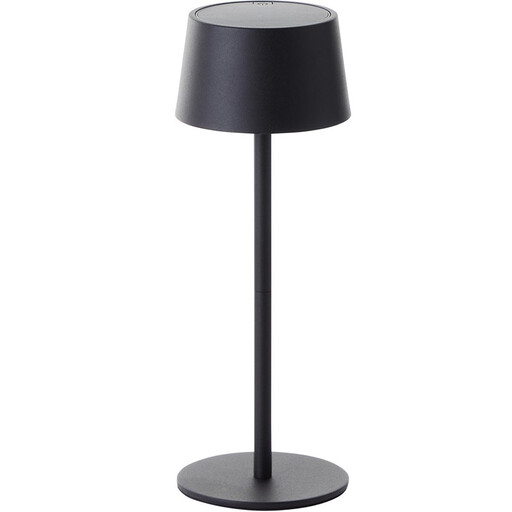
Why This Fits Their Persona: Perfect for those who want to create a cosy, stylish atmosphere on their garden table or balcony. The warm light (3000K) and modern design make it a decorative object, not just a lamp.
The dual charging option (solar and USB) solves the 'short runtime' trap. Even after a series of cloudy days, you can simply charge the lamp indoors for a guaranteed illuminated evening.
Dimmable in 3 steps for the perfect atmosphere and an IP44 rating that is sufficient for use in a sheltered spot. Flexibly height-adjustable.

Why This Fits Their Persona: Ideal for securing a dark driveway, shed, or back path. This lamp is purely functional and designed to brightly illuminate a large area as soon as motion is detected.
With a light output of 1000 lumens, this lamp completely avoids the 'too little light' trap. The motion sensor ensures the battery is used efficiently, thus bypassing the 'short runtime' trap.
Very high light output for maximum visibility and security. The reliable Philips motion and dusk-to-dawn sensor ensures worry-free, automatic operation.
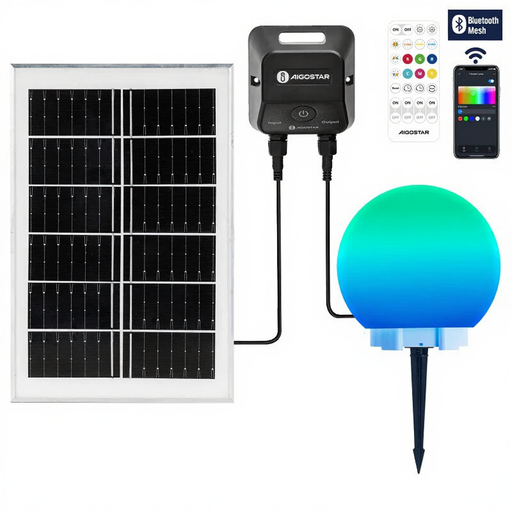
Why This Fits Their Persona: For the user who wants complete control. Colours (RGB), colour temperature, and brightness can be set via an app. Perfect for adapting the garden to any occasion, from a quiet evening to a garden party.
This product avoids the traps by focusing on quality and features. The IP65 rating guarantees excellent waterproofing. The detailed specifications, such as a runtime of up to 24 hours, offer transparency and assurance.
Full control over colour (RGBCCT) and brightness via Bluetooth Mesh. The ability to link over 200 devices provides a scalable solution for the entire garden.
The lifespan of LED solar lighting is determined by two components: the LED lamp itself and the rechargeable battery. The LED can last for tens of thousands of hours (often 15,000 to 30,000 hours). The rechargeable battery is usually the component that wears out first, with a typical lifespan of 1 to 3 years. In many high-quality models, this battery is replaceable. The quality of the housing and the waterproof rating (IP rating) are also crucial for a long lifespan.
Yes, but performance is reduced compared to summer. In winter, the days are shorter and the sunlight is less intense, which means the battery doesn't charge as fully. As a result, the runtime at night will be shorter. Models with a large, efficient solar panel and a high-capacity battery perform better. An outdoor solar light with a sensor is especially useful in winter, as it only consumes power when needed.
No, and that is one of its biggest advantages. Because no wiring or power outlet is required, installation is typically very simple. You screw wall lights to the wall, push ground spikes into the soil, and simply place lanterns or table lamps in the desired location. The only thing to be mindful of is ensuring the solar panel can receive enough direct sunlight during the day.
