
Vandaag of morgen in huis

Kwaliteit gegarandeerd

Welkomstaanbiedingen ontgrendelen: GRATIS bezorging | Tot 80% korting | Gratis 30 dagen JoyPlus-proefperiode
Download de app
Solar outdoor lighting is a handy option if you don’t want to run cables to your garden, exterior walls or driveway. The light charges during the day and switches on at dusk, when it detects movement or when you turn it on manually. However, not every solar-powered outdoor light will meet your expectations. A small solar panel, a limited battery or an unsuitable IP rating could make a light less suitable than its product photo suggests.
This guide will help you understand what to look for and which type of solar outdoor lights is right for you.
A light with a high lumen rating can be bright, but how the light is distributed is just as important. A narrow beam, for example, will mainly illuminate a door, while a light with several heads will cover a wider area. As well as checking the lumen rating, look at the beam angle, the number of light heads and where you plan to install the light.
A lower light level is often enough for ambient lighting. For a driveway, garage or path at the back of your home, a motion sensor with a brighter light may be more practical.
Check the IP rating. The first digit indicates protection against dust and solid objects; the second indicates protection against water.
An IP65 outdoor light isn’t automatically suitable for use underwater. Check the installation instructions and the condition of the seals too.
A solar garden light won’t work at its best in deep shade, beneath a dense tree or on a north-facing wall. The amount of sunlight in the Netherlands also varies considerably by season. Position the panel somewhere as unobstructed as possible and check that it gets enough daylight during the day.
A light with a large or adjustable panel may be more practical if the ideal installation spot doesn’t get direct sunlight. Clean the panel regularly with a soft, damp cloth.
Colour temperature is measured in Kelvin (K):
For a patio or balcony, a solar lantern or solar string lights often work best with a warm light colour. For visibility and orientation, a more neutral or cooler shade may be more functional.
Check the battery capacity, battery type and stated run time. Actual run time depends on the amount of sunlight, the selected lighting mode and the age of the battery. A motion sensor saves energy by ensuring the light doesn’t stay on at full brightness all night.
Check the charging time too. The Aigostar string lights, for example, have a stated charging time of 4 to 6 hours and a maximum run time of 12 hours. Treat this as a product specification based on the stated conditions, not a guarantee for every night in the Netherlands.
Ground lights or spike lights are suitable for borders and paths. A wall light needs a sturdy fixing point and a solar panel that won’t be obscured by the edge of a roof. Adjustable light heads can be useful for wider coverage.
A solar wall light with a motion sensor is especially practical by a front door, shed or garage. Check the detection range, detection angle and adjustable modes before you order.
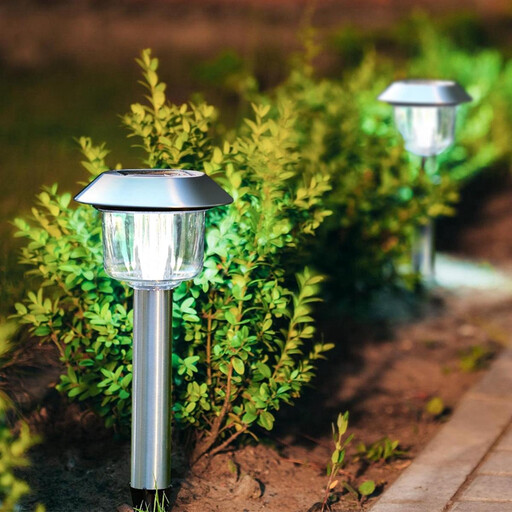
Why it suits this profile: This compact solar garden light is designed to provide simple accent lighting along a border, patio or garden path. It stands 36.6 cm tall and runs on solar power.
The stated IP44 rating makes it clear that this light isn’t designed for heavy exposure to water. It’s best placed in a more sheltered spot rather than used as fully waterproof outdoor lighting.
Stainless steel, a 6500K light colour, a height of 36.6 cm and a stated charging time of 4–6 hours.
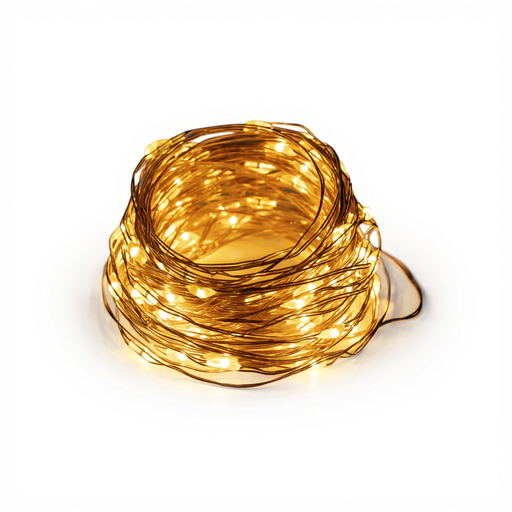
Why it suits this profile: These 10-metre solar string lights are ideal for a patio, balcony, pergola or garden party where atmosphere matters more than a powerful beam of light.
The specifications list IP65, an adjustable panel and automatic day/night operation. This gives you more flexibility when positioning the lights than you’d get with a light that has a fixed panel.
10-metre length, IP65, eight lighting modes, a 1200 mAh battery and a stated run time of up to 12 hours.

Why it suits this profile: This wall light has three adjustable heads and is designed for driveways, garages, patios and larger outdoor spaces where motion detection and broad coverage are useful.
The product details list IP65, three lighting modes, a detection range of 60 feet and a detection angle of 180°. Before installation, check that your chosen spot gets enough sunlight.
302 stated LEDs, 3000 lumens, three adjustable light heads, IP65 and an integrated 1800 mAh battery.
We’ve put together a complete, up-to-date list of products that meet these strict selection criteria and the applicable European safety regulations.
Choose a spot where the solar panel gets direct or bright indirect light during the day. Keep the panel clear of leaves, dirt and shade. Securely install any wall lights, and don’t point the sensor directly at a busy road if you want to avoid it switching on unnecessarily.
Run time varies by model and is affected by charging time, battery capacity, lighting mode and weather conditions. Check whether the battery is replaceable too. Clean the panel and sensor regularly, as dirt can affect how well they work.
A solar garden light doesn’t use electricity from the mains during normal operation. It charges via the solar panel. However, you may have costs if the battery or light fitting needs replacing over time. Before you buy, check the warranty, availability of replacement parts and the build quality.
