
Vandaag of morgen in huis

Kwaliteit gegarandeerd

Welkomstaanbiedingen ontgrendelen: GRATIS bezorging | Tot 80% korting | Gratis 30 dagen JoyPlus-proefperiode
Download de app
Solar outdoor lighting seems simple: place the lamp in your garden and let the solar panel do its work. In practice, some models disappoint because they get too little sunlight, have a short run time or aren’t built for British weather. Choosing the right specifications can save you from having to buy new solar garden lights again after just a few weeks.
A lamp may look bright in the product photo, but its practical light output depends on the number of lumens, how widely the light spreads and where you position it. For ambient lighting along a flower bed, 10 lumens per lamp may be enough. For a driveway or exterior wall, a more powerful lamp with a motion sensor is usually a better choice.
Also consider the difference between ambient and functional lighting. Warm white light at around 2700 to 3000K creates a softer look. Light at around 5000 to 6500K looks cooler and can be easier to see by, but it won’t suit every garden or exterior wall.
A rating such as IP65 outdoor lighting doesn’t mean the lamp can be placed underwater. The first digit indicates protection against dust; the second indicates protection against water jets. IP65 is suitable for rain and many outdoor conditions, but the lamp should not be submerged.
IP44 protects against splashing water and is best suited to a sheltered spot, such as under a canopy. Check that the lamp is suitable for the exact place where you intend to install it.
A solar lamp charges through light, not just high temperatures. A panel placed under a tree, against a north-facing wall or in the shade of a fence may store considerably less energy in winter. Check whether the product specifications state a charging time and expected run time.
The stated run time also depends on factors such as sunlight, temperature, battery capacity and the selected lighting mode. Treat a stated run time of, for example, 8 to 12 hours as a product specification under certain conditions, not as a guaranteed daily figure.
For solar path lights, the main purpose is to provide even lighting to help you find your way. Place several lamps with enough space between them rather than relying on one very bright lamp. Look out for:
A warm colour temperature of 3000K works well on a patio, garden path or flower bed. Cooler light may be more practical by an entrance or on an exterior wall. For solar garden lights with a motion sensor, check that the sensor covers the direction of travel and distance you need.
Look beyond the solar cell to the battery and the stated charging and run times. A lamp that needs 6 to 8 hours of direct sunlight will work less reliably if its panel gets only a few hours of light each day.
An energy-saving mode can be useful for a solar wall light with a motion sensor. The lamp might stay dim or remain off until it detects movement. Check how many lighting modes it has and whether you can adjust the sensor separately.
Stainless steel, aluminium and plastic are common materials for solar outdoor lighting. Metal can give a sturdy feel, while plastic is often lighter. For ground lights, check that the supplied pole and ground stake are suitable for your surface.
Wipe the solar panel regularly with a soft, damp cloth. Dirt, leaves and bird droppings can reduce the amount of light reaching the solar cell. For wall lights, make sure the mounting surface is sturdy enough. Always follow the manufacturer’s installation and safety instructions.
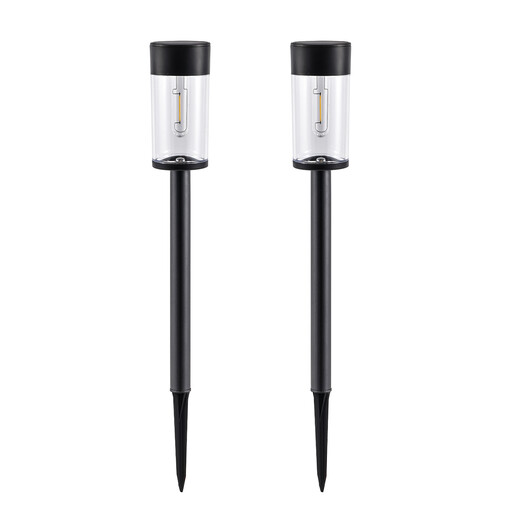
Why it suits this profile: This set includes two ground lights for a garden path, lawn edge, flower bed or driveway. They’re installed using ground stakes, so there’s no need for wiring.
The product information states that each lamp produces 10 lumens, with 3000K warm white light and an IP65 rating. This means the light colour, output and water resistance are clear before you buy.
Set of 2, automatic on/off function, metal stand and stated run time of 8 to 12 hours after 6 to 8 hours of sunlight.
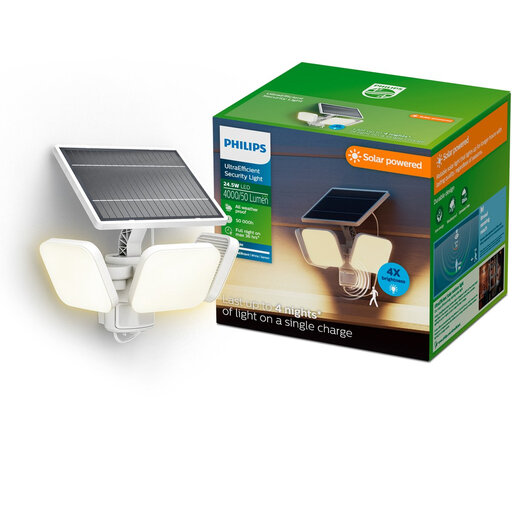
Why it suits this profile: This wall light is designed to provide practical lighting by an entrance, shed, garage or exterior wall without a mains electricity connection.
The specifications state a PIR detection range of 8 metres when approached directly and 16 metres when approached from the side. The IP65 rating confirms it’s suitable for outdoor use, but it should not be submerged.
4000 lumens according to the product description, an adjustable lamp head, two lighting modes and a dusk sensor. The manufacturer states that it provides light for up to four nights after a full charge.
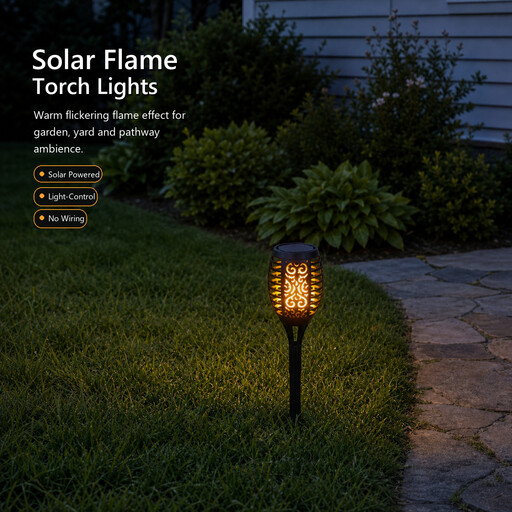
Why it suits this profile: These solar torches are designed for gardens, patios and borders where you want a decorative flame effect. The set of four makes it easy to create a coordinated display.
The product name states that the lamps switch on and off automatically, with 12 LEDs per lamp and an IP65 rating. Expect decorative lighting; choose a wall light if you want to brighten a driveway.
Four lamps, each around 51 cm tall, with a flickering flame effect and automatic operation for a decorative garden display.
We’ve put together a complete, up-to-date list of products that meet these strict selection criteria and the applicable European safety regulations.
Yes, but the run time may be shorter. Days are shorter in winter and the sun is lower in the sky. So, position the solar panel where it gets as much direct light as possible and clean it regularly. A model with a motion sensor or multiple lighting modes can make better use of the stored energy.
Its lifespan depends on the materials, battery, LED and exposure to the weather. Products in the range may have different stated lifespans. A manufacturer’s figure, such as 15,000 or 50,000 hours of LED operation, doesn’t automatically tell you how long the complete lamp will last. The battery is a separate component and may hold less charge over time.
When in use, the lamp gets its energy from the solar panel and built-in battery, so it doesn’t need a permanent mains connection. Do bear in mind the purchase price, possible battery maintenance and reduced performance when there’s little sunlight. Also check that the lamp is genuinely solar-powered; some outdoor lights with a GU10 fitting are designed to connect to a 220–240 volt supply.
