
Vandaag of morgen in huis

Kwaliteit gegarandeerd

Welkomstaanbiedingen ontgrendelen: GRATIS bezorging | Tot 80% korting | Gratis 30 dagen JoyPlus-proefperiode
Download de app
Solar outdoor lighting is useful if you don’t want to run cables or need to install a light somewhere without a socket. However, some purchases can disappoint in practice. A light may produce very little illumination after a cloudy day, a motion sensor may not respond as expected, or a product with a high IP rating may still be installed incorrectly.
Use these points to compare solar garden lighting, outdoor solar wall lights and other LED outdoor lighting based on verifiable features.
The lumen figure indicates how much light a lamp produces according to its product specifications. It doesn’t automatically tell you how large an area it will illuminate. For example, a directional outdoor solar wall light may illuminate a path or entrance, while a solar garden light may provide mainly decorative lighting.
So, check the following:
An IP44 outdoor light is protected against splashing water and solid particles larger than 1 millimetre. IP44 doesn’t mean the light can be submerged. Don’t place it in a dip where rainwater collects, and don’t immerse the solar panel or light.
Also check whether the IP rating applies to the entire light or just one component. For solar string lights, for instance, the solar panel may have different protection from the light string.
Solar lighting charges during the day using a solar panel. The actual operating time depends on direct sunlight, the season, the angle at which the panel is positioned, shade and the selected lighting mode. A panel beneath a canopy or among dense foliage will receive less light.
A stated operating time is therefore a product specification based on certain conditions, not a guarantee for every night. Clean the solar panel regularly and choose a spot that gets as much direct daylight as possible.
Choose a spot where the panel won’t be shaded during the day by a wall, balcony edge, tree or parasol. For a wall light, the mounting height should also suit the motion sensor. Check in advance that you have a sturdy surface to mount it on and that the light won’t be directly exposed to standing water.
An outdoor light with a motion sensor is useful by a front door, shed or garden path. Look out for the differences between:
For ambient lighting on a patio, warm white light and a fixed setting are often enough. A brighter sensor light may be a better choice for an entrance.
A plastic housing can be lightweight and easy to install. Metal or copper wire may be a better match for a particular garden style, but always check the care instructions. Also check the dimensions: a compact light is a good fit for a balcony, while a floor light over a metre tall is better suited to a patio or garden border.
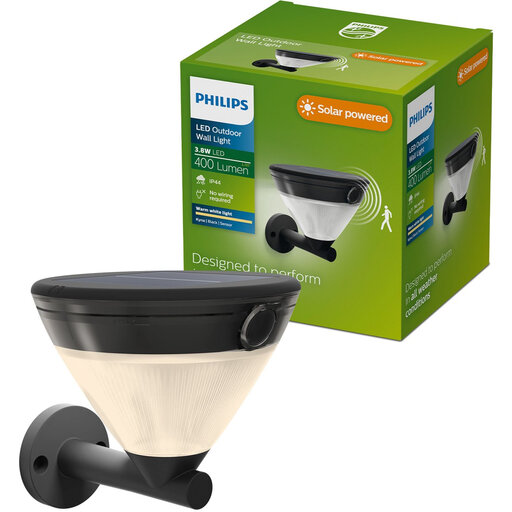
Why it suits this profile: This compact outdoor solar wall light is a good choice for a balcony, exterior wall or small garden where you want to install a light without wiring.
The product specifications state that it has an IP44 rating and two lighting modes. Be sure to place it away from standing water and in a spot where the panel gets direct sunlight.
400 lumens, warm white light at 2700 K, motion sensor, integrated LED and a weight of 0.48 kg.
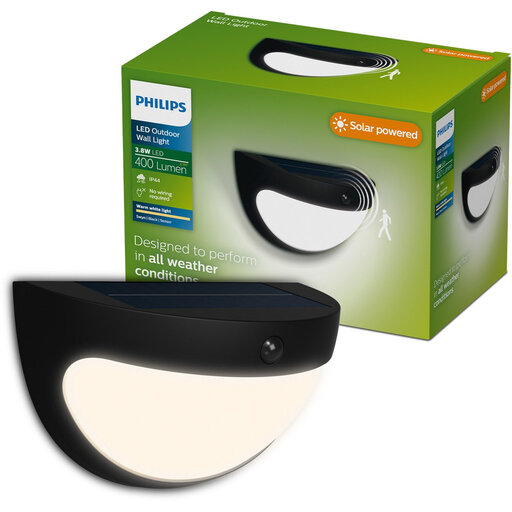
Why it suits this profile: A practical choice for an entrance, patio or side wall where you want automatic lighting and a dark housing.
The choice between Auto and On makes it easy to use. IP44 protects against splashing water, but the light isn’t designed to be submerged.
400 lumens per light, warm white light at 2700 K, integrated LED and a motion sensor.

Why it suits this profile: This model is a good fit for a driveway, shed or back door where a higher stated light output and automatic detection are important.
The product specifications state 1000 lumens, 3000 K and IP44. This gives you clear details to compare, without suggesting that the light is completely waterproof.
1000 lumens, motion sensor, two lighting modes, 3000 K warm white light and integrated LED.
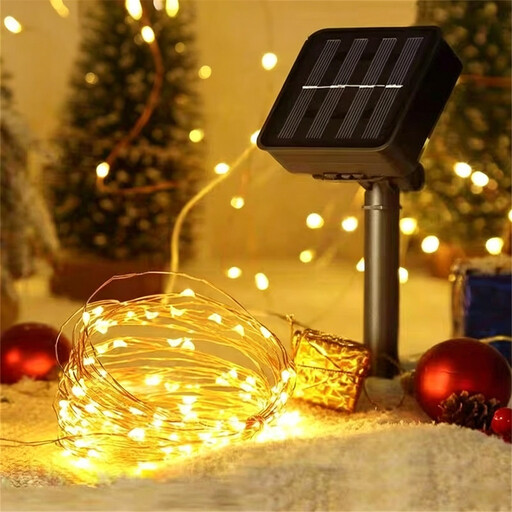
Why it suits this profile: A good choice for a balcony, pergola, planter or patio where you want decorative solar garden lighting with flexible copper-coloured wire.
The product description states a charging time of 6 to 8 hours and an operating time of 8 to 14 hours, depending on conditions. This sets clearer expectations than a fixed operating time.
Two 49 ft string lights, each with 75 warm white LEDs, eight lighting modes and a memory function.
We’ve put together a complete, up-to-date list of products that meet these strict selection criteria and the applicable European safety regulations.
Solar lighting doesn’t use mains electricity during normal operation. This can help keep running costs low, but the battery, solar panel and light source can wear out over time. The statutory guarantee applies in accordance with the applicable EU consumer rules.
Yes, but performance can vary. Shorter days, cloudy skies, rain and the lower position of the sun limit how much energy the panel can collect during the day. Position the panel somewhere as open as possible and keep its surface clean. If longer operating times are important, try a lower lighting setting.
Lifespan varies by model, frequency of use, battery and conditions. Some product descriptions state the lifespan of the integrated LED, but that isn’t the same as the lifespan of the battery or the complete light. Check the individual specifications, and only replace or maintain components in accordance with the manufacturer’s instructions.
During normal operation, solar garden lighting gets its energy from sunlight and doesn’t use electricity from the mains. You will still have indirect costs for the initial purchase, maintenance and any battery replacement. The actual saving depends on the type of light you would otherwise use and how often the solar light is on.
