
Vandaag of morgen in huis

Kwaliteit gegarandeerd

Welkomstaanbiedingen ontgrendelen: GRATIS bezorging | Tot 80% korting | Gratis 30 dagen JoyPlus-proefperiode
Download de app
Solar-powered outdoor lighting sounds ideal: no cable clutter, no extra costs on your energy bill, and an eco-friendly choice. Yet, the purchase often leads to disappointment. Many lights barely emit any light, break after a few heavy downpours, or fail completely during the dark winter months.
The problem is that many products are sold with lofty promises that don't hold up in reality. To prevent you from wasting your money, we'll explain what you really need to look for. We will discuss the common pitfalls and the specifications that make the difference between a beautifully lit, functional garden and a dark disappointment.
Before you make a choice, it's wise to recognise the most common problems.
waterproof outdoor light is not a luxury in our climate, but a necessity.To avoid the pitfalls mentioned above, focus on a few key specifications. These determine whether a light will do its job and keep doing it.
Lumen (lm) measures the total amount of light a lamp emits. This is the most important indicator of brightness. Don't be fooled by the wattage.
solar-powered floodlight with a motion sensor often falls into this category.The IP rating indicates how well a product is protected against dust and water. For outdoor use, this is crucial.
The combination of battery capacity (measured in mAh) and the quality of the solar panel determines how long the light stays on, especially after days with little sun. A higher mAh value typically means a longer runtime. Good solar panels, such as monocrystalline panels, also charge reasonably well in cloudy weather, which is essential for sustainable garden lighting that works year-round.
Not every light is suitable for every situation. Below, we match some popular choices to specific user profiles, based on their objective specifications.
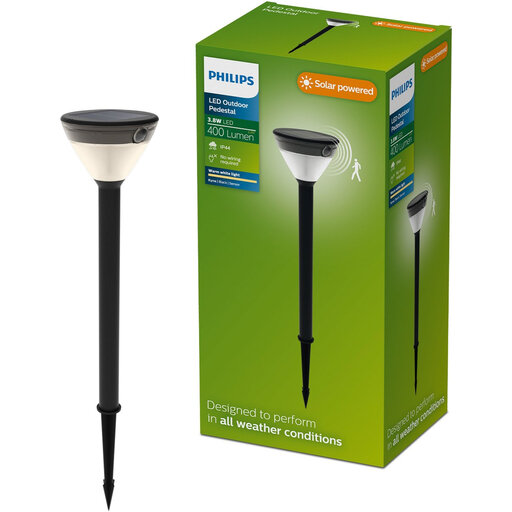
Why This Fits Their Persona: Ideal for those who want to create a cosy atmosphere along a garden path or in a border. The stake light is easy to move, and its warm white light (2700K) provides an inviting ambience without harsh brightness.
This light is designed for ambience, not high brightness. The focus is on warm light, which sets the right expectation. Its IP44 rating is sufficient for most garden spots.
Flexible placement with the ground stake. The combination of a motion sensor and a dusk-to-dawn sensor ensures efficient energy use.

Why This Fits Their Persona: This `solar wall light` is focused on security. With a light output of 1000 lumens and a motion sensor, it's perfect for illuminating a dark driveway, entrance, or shed as soon as motion is detected.
It delivers a powerful, functional beam of light that lives up to the promise of security lighting. The `LED outdoor light with sensor` maximises battery life by only activating at full strength when needed.
High light output (1000 lm) for clear visibility. The combination of a `Philips solar` light with a motion sensor ensures reliability and efficiency.
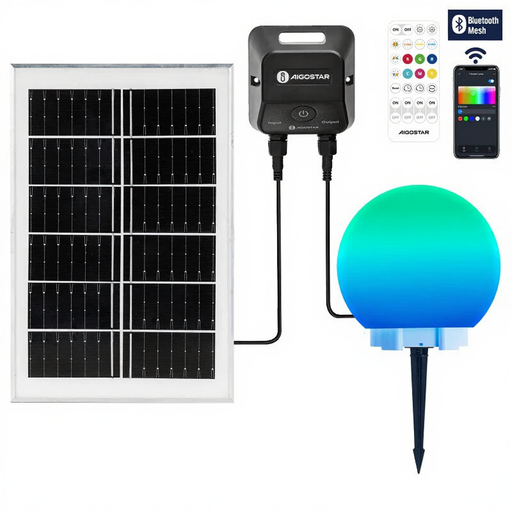
Why This Fits Their Persona: For those who want complete control. This `smart outdoor lighting` from `Aigostar solar` uses Bluetooth Mesh to let you set colours (RGBCCT), brightness, and schedules. You can also link multiple lights together.
The IP65 rating guarantees excellent weather resistance. The smart features give you full control over the light settings, allowing you to adapt the lighting to the needs of the moment.
Full control via app, adjustable colours and brightness. Ability to create a network of over 200 lights for a complete smart garden experience.
We have compiled a complete, up-to-date list of products that meet these selection criteria and local regulations.
Yes, but performance depends on quality. Models with high-quality solar panels and large battery capacities are designed to charge enough for a few hours of light, even with less sunlight. For the winter months, choose a light with a motion sensor; it only consumes energy when truly needed, extending the battery life.
This depends entirely on your goal. For a soft, decorative glow, 50 to 300 lumens per light is sufficient. If you want to safely walk a path, look for 300 to 700 lumens. For security lighting near a front door or driveway, 700 lumens or more is recommended.
For most models, yes. You simply push a solar ground light into the soil. A solar wall light is mounted with just a few screws. Since no electrical wiring is involved, no specialist knowledge is required. The only thing to ensure is that the solar panel can receive enough direct sunlight during the day.
