
Vandaag of morgen in huis

Kwaliteit gegarandeerd

Welkomstaanbiedingen ontgrendelen: GRATIS bezorging | Tot 80% korting | Gratis 30 dagen JoyPlus-proefperiode
Download de app
Solar outdoor lighting is handy for a garden path, patio, balcony, driveway or entrance where you don’t want electrical cables. But a light can disappoint in practice. Common problems include a short run time, insufficient sunlight or an inadequate protection rating.
As a Joybuy Product Recommendation Officer, I focus on practical, verifiable product details. Before buying solar lights for outdoors, look out for these three pitfalls:
The IP rating consists of two digits. The first indicates protection against solid particles, and the second against water.
A solar wall light with a motion sensor at your entrance also needs to be securely fitted. A sensor light that wobbles or points in the wrong direction may switch on unnecessarily often.
Colour temperature is measured in kelvins:
Lumens indicate light output. A string of lights with lots of small LEDs is designed to create ambience, not to light an entire path. A solar floodlight with 3000 lumens, on the other hand, is intended to cover a larger area. Bear in mind that performance claims come from the brand itself; the actual effect also depends on mounting height, direction and surroundings.
A solar light needs direct or mostly unobstructed daylight. Don’t place the panel under dense foliage, behind a wall or in a north-facing spot with little sunshine.
Check the following before buying:
Regular cleaning is simple but useful for solar garden lights. Dust, leaves and grime on the panel reduce the amount of light it receives. With a string of lights, the solar panel needs to stay outdoors, even if you temporarily use the LED string indoors.

Why it suits this profile: This straightforward stake light is designed for paths, borders and small garden beds. It can be installed without cables or a fixed electrical connection.
The specifications clearly state a charging time of 4–6 hours, a run time of 8–12 hours and an IP44 rating. This means you can see upfront that the light is best suited to a sheltered outdoor spot, rather than prolonged exposure to jets of water.
Stainless steel housing, 550 mm height, 6500K cool white light and a 100 mAh NiMH battery.
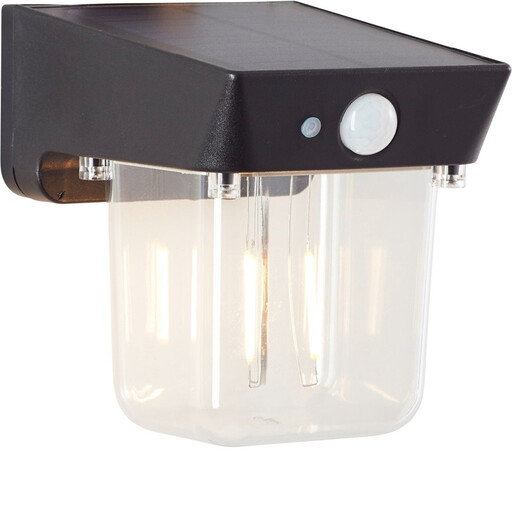
Why it suits this profile: This wall light is a good choice for an entrance, patio or exterior wall where you want focused light when someone approaches. According to the product specifications, the integrated LED produces 180 lumens at 2700K.
The IP44 rating is clearly stated. You can choose this light for a sheltered wall without confusing its protection rating with IP65.
Motion sensor, dimmable function, integrated 18650 Li-ion battery and warm 2700K light.
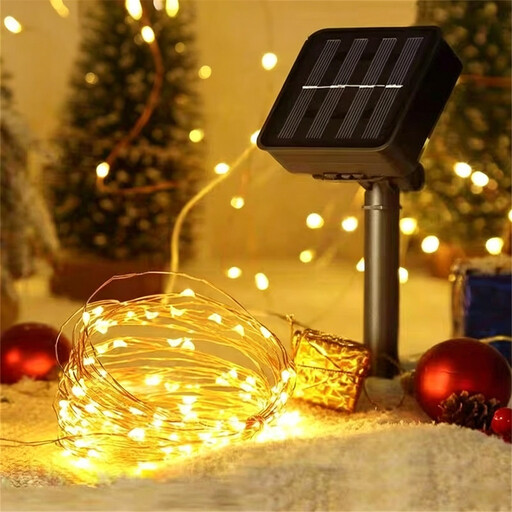
Why it suits this profile: The two copper-coloured light strings are designed for trees, railings, pergolas, balconies and patios. The warm white light is especially suited to decorative lighting.
According to the product information, the lights run for 8–14 hours after 6–8 hours of charging. The solar panel needs direct sunlight and must not be submerged.
Two strings, each 49 ft long, with 75 LEDs per string, eight lighting modes and a memory function.

Why it suits this profile: This solar floodlight is designed for a driveway, garage, garden or larger property where broad, bright lighting is needed.
The product specifications list IP65, three lighting modes, a detection range of 60 ft and a detection angle of 180°. This makes the key limitations clear before you buy.
302 LEDs, a stated light output of 3000 lumens, three adjustable heads and an 1800 mAh lithium-ion battery.
We’ve put together a complete, up-to-date list of products that meet these strict selection criteria and the applicable European safety regulations.
Point the solar panel towards a spot that gets as much direct daylight as possible. Keep it clear of branches, walls and other obstructions. Switch the light on before its first use if the instructions say to, and clean the panel regularly.
Its lifespan depends on the battery, charging cycles, temperature and exposure to the weather. Product information may state an LED lifespan of 15,000 hours, for example, but that doesn’t automatically tell you how long the battery will last. A replaceable battery can be useful if you plan to use the light for a long time.
The light doesn’t use a fixed mains connection during normal operation. The solar panel charges a battery during the day. This keeps running costs low, but you still pay for the initial purchase, possible maintenance and any battery replacement. Light output remains dependent on the weather and the available hours of sunshine.
