
Vandaag of morgen in huis

Kwaliteit gegarandeerd

Welkomstaanbiedingen ontgrendelen: GRATIS bezorging | Tot 80% korting | Gratis 30 dagen JoyPlus-proefperiode
Download de app
Solar outdoor lighting is ideal when you do not want to run cables or have an outdoor power socket. However, not every solar-powered outdoor light delivers the same results. A small solar panel, an unsuitable IP rating or a light that provides mainly decorative illumination can leave you disappointed after purchase.
With this buying guide, you can compare the key specifications and make a more informed choice between solar garden lights, a solar wall light, solar stake light, solar table lamp or solar string lights.
The lumen count indicates how much light a lamp produces. A solar garden light with 100 to 200 lumens is generally suitable for ambient lighting or marking out a path. For an entrance, driveway or garage, you will usually need more light. So do not just check the number of LEDs; pay particular attention to the stated luminous flux in lumens (lm).
A solar security light with a motion sensor may shine more brightly for a short time than an ambient light. This makes it suitable for practical lighting, but not automatically for providing light throughout the evening.
The IP rating consists of two digits. The first indicates protection against dust; the second refers to water. IP44 protects against solid objects and splashing water. This type of light is suitable for general outdoor use, but not for submersion or direct water jets.
IP65 solar lighting offers greater protection against dust and water jets. This may be a sensible choice for an exposed façade, shed or location where the light is likely to be hit by heavier rain. Always check the product description, though: an IP rating does not automatically tell you anything about charging performance, construction or battery life.
A solar panel needs direct daylight to charge the battery. Shade from a fence, tree or canopy can reduce the operating time. In winter, and after several cloudy days in a row, the light may also stay on for less time.
Position the panel as far from obstructions as possible. Clean the surface regularly and check that the light is switched on correctly before assessing its performance during the first night.
Colour temperature is measured in kelvin (K):
A 6500K solar stake light can clearly mark out a garden path, while a 3000K solar table lamp is usually more pleasant for an evening on the patio. According to the product specifications, the Aigostar stainless steel solar stake light has a colour temperature of 6500K, a charging time of 4 to 6 hours and a stated operating time of 8 to 12 hours. Its IP44 rating makes it suitable for general outdoor use, but not for locations exposed to direct water jets.
An outdoor light with a motion sensor switches on only when movement is detected. This can help conserve battery power and is practical by a front door, driveway or side entrance. Pay attention to the settings: some models work with a dusk sensor, while others also offer a constant-on mode.
The Philips Swyn, Diara and Fyns are listed in the product descriptions as having two lighting modes and a motion sensor. According to the specifications, the Philips Diara delivers 400 lumens at 2700K. The Philips Fyns is rated at 1000 lumens and 3000K, making it better suited to functional lighting. Sensor performance and the stated figures are based on the product specifications and brand information; actual operating time depends on placement, weather conditions and battery status.
Look at the battery type and capacity, but do not draw conclusions from these figures alone. A larger battery only helps if the solar panel can generate enough energy. A light with USB charging as an additional option, such as the Brilliant Viani solar table lamp, offers greater flexibility during extended periods of limited sunlight.
Also check:
In the European Union, these products are covered by a minimum two-year statutory guarantee of conformity. Check the product page and the seller for full details.
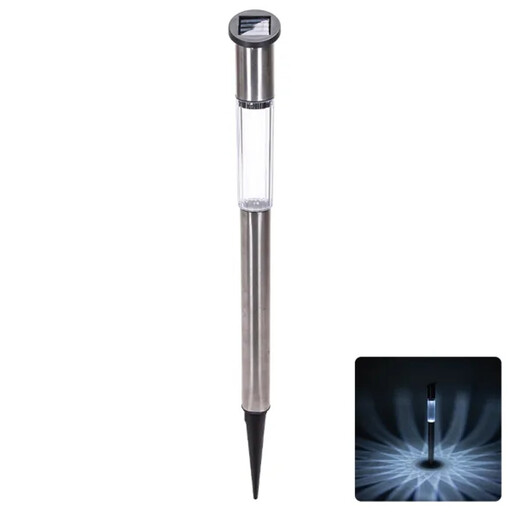
Why it suits this profile: This solar garden light is easy to push into the ground and is suitable for marking out a garden path or border without cabling.
The specifications state the colour temperature, charging time, operating time and IP44 rating. This makes it clear that it is primarily intended for path and accent lighting, rather than powerful security lighting.
Stainless steel construction, 6500K cool white light, a 55 cm stake and a stated battery life of 8 to 12 hours.
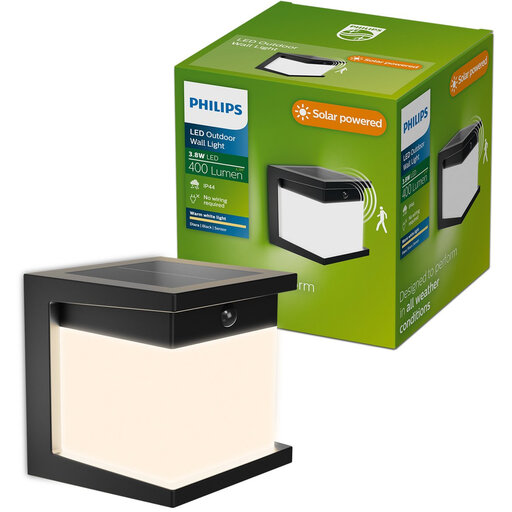
Why it suits this profile: A suitable choice for anyone looking for a smart solar wall light by the front door, on the façade or on the balcony, with automatic activation.
The IP44 rating is clearly stated. According to Philips, the light is splashproof, so do not position it where it will be exposed to direct water jets.
400 lumens, warm white light at 2700K, two lighting modes and an integrated motion sensor.

Why it suits this profile: This solar security light is designed for driveways, garages, gardens and larger outdoor areas where broad light coverage is required.
The product information lists IP65, three lighting modes, a motion sensor and a detection angle of 180 degrees. This makes its intended use clearer than simply claiming that it provides “extra-bright” light.
Stated light output of 3000 lumens, three adjustable light heads, IP65 and an 1800 mAh lithium-ion battery.
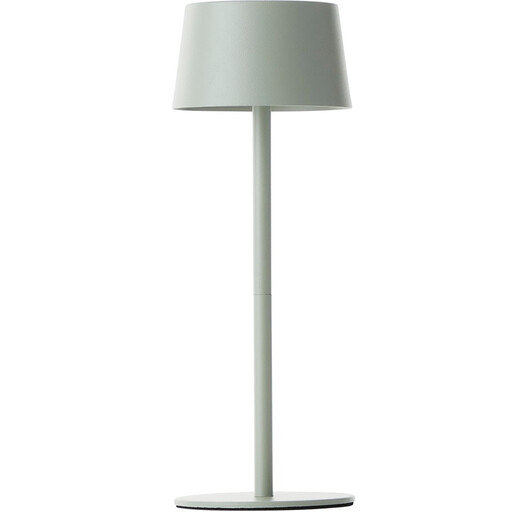
Why it suits this profile: This freestanding solar table lamp is ideal for a balcony or table and can also be charged via USB when sunlight is limited.
As well as solar charging, the lamp supports USB charging. This makes you less dependent on a single sunny day, although IP44 still only means protection against splashing water.
170 lumens, 3000K warm white light, three dimming levels and two charging methods: solar and USB.
We have put together a complete, up-to-date list of products that fully meet these strict selection criteria and the applicable European safety regulations.
Operating time per night depends on the battery, charging capacity, amount of sunlight and selected lighting mode. Manufacturers sometimes state an expected lifespan for the LED light source, but this is not the same as the lifespan of the complete light. Also check whether the battery or LED module can be replaced.
Yes, but it may stay lit for less time. Shorter days, low winter sun and cloudy weather provide less charging energy. Position the solar panel in as sunny a location as possible and choose a model with multiple lighting modes or USB charging if you need reliable illumination.
During normal use, the light charges via the solar panel and does not use mains electricity. Models with USB charging may occasionally require power from an adapter. The purchase price, battery wear and any replacement costs should still be considered when comparing your options.
