
Vandaag of morgen in huis

Kwaliteit gegarandeerd

Welkomstaanbiedingen ontgrendelen: GRATIS bezorging | Tot 80% korting | Gratis 30 dagen JoyPlus-proefperiode
Download de app
Solar outdoor lighting seems simple: place the lamp outside, let the solar panel charge during the day and enjoy the light in the evening. In practice, the location, IP rating and type of lighting largely determine whether your purchase delivers the desired results. A small lamp for a garden path has different requirements from a powerful wall light by the front door.
A solar lamp does not run directly on sunlight, but on the energy stored in its battery during the day. If the panel is beneath a canopy, next to a tall fence or under a tree, the operating time may be shorter. Cloudy weather and short winter days have the same effect.
So do not just look at the number of LEDs or the stated number of operating hours. Also check whether the panel can be positioned with a clear view of the sky. Models with a separate panel, such as some hanging lamps, offer more flexibility when it comes to positioning.
An IP44 outdoor light is protected against splashing water and solid objects of certain sizes. This does not mean that the lamp is completely waterproof. IP44 may be suitable for a sheltered veranda or balcony, but for a wall exposed to plenty of rain and wind, an IP65 solar lamp is generally the more sensible choice.
Always check the full product description. IP65 means protection against dust and water jets, but it is still not an invitation to submerge the lamp.
Solar garden lighting with a low lumen output can highlight a border, table or garden path. A driveway, back door or entrance requires more light. Outdoor lighting with a motion sensor also prevents a lamp from operating at full brightness throughout the night.
Pay attention to the difference between mood lighting and practical lighting. Warm white light around 2700–3000 K creates a soft atmosphere. Cooler white light, for example 5000–6500 K, makes details more visible but appears brighter.
Lumens indicate the amount of visible light. A small solar spotlight or garden spike usually serves a mainly decorative purpose. A wall light with 180 lumens is suitable for an entrance or patio, while a model with 4000 lumens is designed to illuminate a much larger, more functional area.
Also consider the colour temperature:
An LED solar lamp has an integrated light source. Check whether the LED can be replaced. In several models in this overview, the light source cannot be replaced by the user.
Performance depends on hours of sunlight, panel size, temperature and battery capacity. A manufacturer may state a particular number of operating hours under specific conditions. Treat this as a product specification, not as a guaranteed result for every British garden.
Some lamps can be charged via USB as well as solar power. A solar table lamp with this option remains useful after several cloudy days. For a permanent outdoor installation, a sunny and easily accessible location is particularly important.
A freestanding garden spike, wall light and hanging lamp each require a different type of installation. Check:
A solar wall light with a motion sensor is practical by the front door, but do not position the sensor directly opposite a busy road if you want to limit unnecessary activation.

Why it suits this profile: This garden spike is designed for paths, borders and small decorative accents. It requires no permanent wiring, while the stainless steel construction complements a modern garden.
The specifications state IP44, a charging time of 4–6 hours and a quoted battery life of 8–12 hours. Make sure you place the panel in a sunny spot.
6500 K cool white light, stainless steel, solar power and a height of 55 cm.
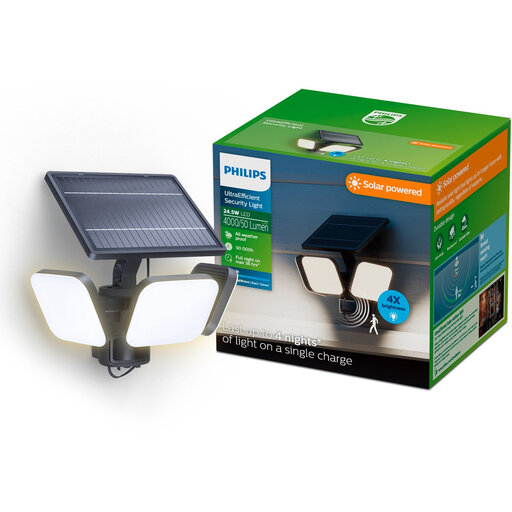
Why it suits this profile: Ideal if you are looking for a powerful lamp for a wall, driveway or entrance. It has a stated light output of 4000 lumens and an IP65 rating.
The IP65 rating and adjustable lamp head make it more suitable for an exposed wall than an IP44 model. Check the installation location beforehand.
Integrated LED, motion sensor, 5000 K light and a stated detection range of up to 16 metres for lateral movement.

Why it suits this profile: This solar wall light is designed for entrances, patios and walls where light is only needed when someone passes by.
The motion sensor limits unnecessary operation. IP44 means protection against splashing water, so ideally install the lamp in a sheltered position.
180 lumens, integrated LED, 2700 K warm white light and a dimming function according to the product specifications.
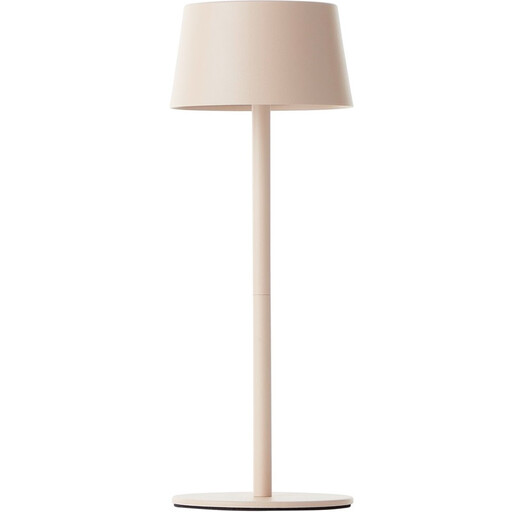
Why it suits this profile: A practical choice if you want to use a portable lamp on a table, balcony or patio and recharge it via USB when there has been little sunshine.
As well as solar charging, it can be charged via USB. The IP44 rating makes the lamp suitable for splashing water, but not for submersion or direct water jets.
170 lumens, warm white 3000 K light, three dimming settings and two charging methods.
We have put together a complete, up-to-date list of products that fully meet these strict selection criteria and the applicable European safety regulations.
Choose a location where the solar panel receives several hours of direct daylight. Avoid shade from walls, trees and parasols. Push a garden spike firmly into the ground and mount a wall light on a stable surface. After installation, check that the on/off switch is in the correct position; some models only start automatically once the switch has been activated beforehand.
Its lifespan depends on the battery type, LED quality, weather conditions and maintenance. Clean the solar panel regularly with a soft, dry cloth. Store a detachable lamp or battery during prolonged frost in accordance with the instructions. An integrated LED cannot be replaced on many models, so check this before buying.
During normal use, the lamp is charged by solar energy and does not require a permanent connection. Models with USB charging, such as certain solar table lamps, do use electricity when charged via an adapter. The actual operating time still depends on the amount of daylight and the battery’s charge level.
