
Vandaag of morgen in huis

Kwaliteit gegarandeerd

Welkomstaanbiedingen ontgrendelen: GRATIS bezorging | Tot 80% korting | Gratis 30 dagen JoyPlus-proefperiode
Download de app
Solar outdoor lighting is a convenient option for a garden, balcony, patio or driveway without electrical cables. However, some buyers are disappointed when a lamp gives off little light, runs out of power quickly or proves insufficiently resistant to British weather. The product name does not tell you everything. So focus mainly on measurable specifications and where you intend to use the lamp.
A lamp with hundreds of LEDs may look powerful, but the number of LEDs says little without a stated light output in lumens. For subtle solar garden lighting, a low light output may be sufficient. For a driveway, gate or rear wall, you will generally need more light.
Also consider the operating mode. A solar outdoor light with a motion sensor often stays off or dimmed until movement is detected. This can conserve the battery, but it is less suitable if you want ambient lighting throughout the evening.
An IP44 outdoor light is protected against solid objects larger than 1 millimetre and splashing water. This makes IP44 suitable for many sheltered façades, balconies and patios, but not for immersion or direct jets of water.
An IP65 outdoor light offers greater protection against dust and water jets. This is useful for an open garden, pathway or driveway. However, IP65 does not mean that you can place the lamp underwater. Also check that the housing, post and fittings are all suitable for outdoor use together.
A solar lamp only works well when the panel receives sufficient daylight. Shade from a fence, tree or canopy reduces charging performance. In winter, the days are shorter and there is often less direct sunlight. The operating time stated in a product description is therefore a guideline under particular charging conditions, not a fixed guarantee for every British garden.
Position a wireless outdoor light so that the panel has an unobstructed view of the sky. Clean the panel regularly with a soft, slightly damp cloth and check that the on/off switch is set correctly before first use.
Lumens indicate the total amount of visible light. As a practical guide:
The colour temperature determines the appearance of the light. 2700K to 3000K produces warm white light for a relaxed atmosphere. 4000K appears more neutral. Around 5000K to 7000K, the light is noticeably whiter and more prominent, which may be suitable for a driveway or security function.
Check the detection angle, range and adjustment options. A sensor with a wide angle is practical by a passageway, while an adjustable light is useful when you want to illuminate a specific part of the garden.
Also consider the modes:
A motion sensor is not a replacement for an alarm system. Think of it as automatic lighting around, for example, a back door, shed or garage.
A metal housing may offer a different appearance and greater sturdiness than plastic, but focus mainly on the complete construction and fittings. For ground lights, sturdy stakes are important. For wall lights, the surface must be suitable for the supplied fixings.
Also check the battery type, stated capacity and whether the battery is replaceable. With integrated LEDs, the light source often cannot be replaced by the user. So review the warranty terms and keep the product information.
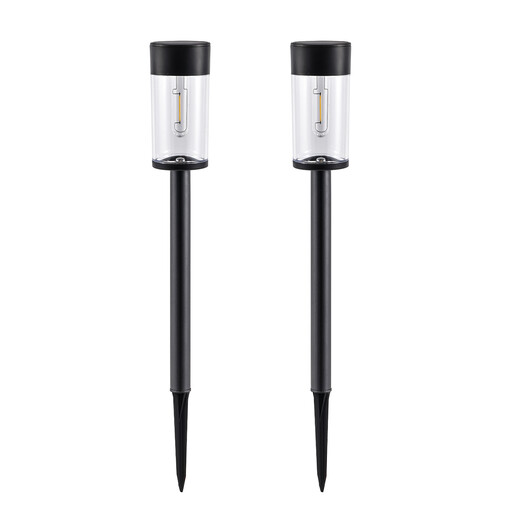
Why it suits this profile: Two ground lights provide a simple starting point for a garden path, border or driveway. They are installed with ground stakes, without cabling.
The product information states 10 lumens per lamp and IP65. This makes it clear that these are primarily accent and path lights, rather than a broad-beam floodlight.
3000K warm white light, automatic dusk activation and two lamps in one set.
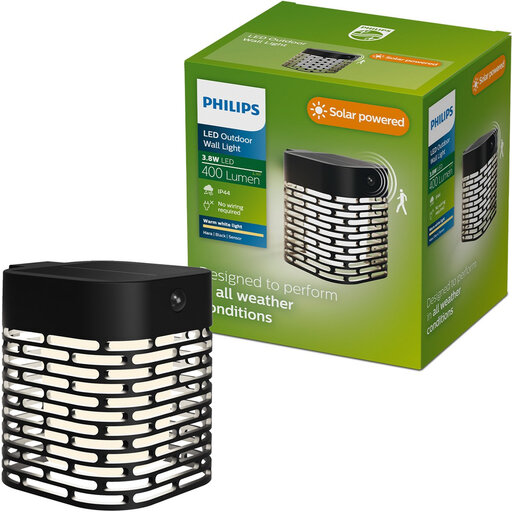
Why it suits this profile: This solar wall light is suitable for an entrance, balcony or patio where warm light and a compact black outdoor lamp are preferred.
The specifications state 400 lumens, 2700K, two lighting modes and IP44. You can therefore compare the light output and protection with the intended installation location.
Integrated LED, warm light and installation without a mains power cable.
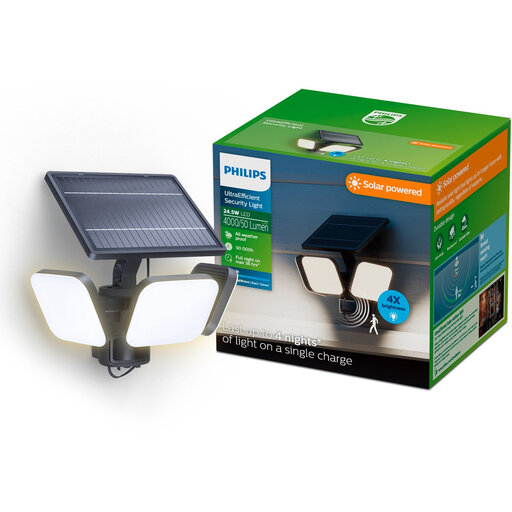
Why it suits this profile: For a large driveway, garage or façade, high light output is more important than soft ambient lighting.
The product description mentions 4000 lumens, IP65, an adjustable head and a motion sensor. This makes the intended use clearer than simply stating a high LED count.
IP65 protection, 5000K light colour and a stated detection range of up to 8 metres when approached directly.

Why it suits this profile: The three adjustable light heads are aimed at wider areas such as a back garden, garage, patio or driveway.
The listing states 3000 lumens, three lighting modes, a 180° detection angle and IP65. Before installation, however, check the desired direction and available sunlight.
Adjustable heads, 270° coverage according to the product information and installation without a permanent power connection.
We have put together a complete, up-to-date list of products that fully meet these strict selection criteria and the applicable European safety regulations.
Operating time depends on sunlight, battery capacity, temperature, lighting mode and battery age. Product listings sometimes state a number of operating hours under specific conditions. Treat this as an indication. Regular cleaning and positioning the lamp in a sunny location help maintain charging performance.
Yes, but operating time may decrease because of shorter days, cloud cover and the lower position of the sun. Position the panel as unobstructed as possible and choose a motion sensor or dimmed mode when you want to save energy.
The lamp does not use electricity from a mains socket during normal use. However, the built-in battery may lose capacity over time, meaning that it may need to be replaced or you may need to buy a new lamp. So do not compare the purchase price alone; also consider the warranty, battery specifications, IP rating and suitability for your location.
