
Vandaag of morgen in huis

Kwaliteit gegarandeerd

Welkomstaanbiedingen ontgrendelen: GRATIS bezorging | Tot 80% korting | Gratis 30 dagen JoyPlus-proefperiode
Download de app
Solar outdoor lighting seems like the ideal solution: no messy cables, no extra energy costs, and it's good for the environment. Yet, the reality can often be disappointing. A light that dies after just a few hours, a sensor that fails to respond, or a plastic housing that turns brittle and discoloured after a single winter. These are common pitfalls.
Before you invest in solar-powered garden lighting, it's crucial to know what to look for. Many products promise the world but fall short in climates with limited sunlight. We've outlined the most common traps to help you make an informed decision.
To avoid disappointment, there are a few technical specifications you should always check. These determine whether a light is suitable for your situation.
Lumen indicates the amount of light a lamp emits. More lumens mean brighter light. But without a powerful battery, it's of little use.
Always check the battery capacity, expressed in milliampere-hours (mAh). A higher value means the battery can store more energy and the light can stay on longer, which is crucial during dark winters.
The IP rating indicates how well a product is protected against dust and water. This is one of the most important specifications for durable outdoor lighting.
The lifespan of your solar garden lights depends heavily on the materials used.
Also, consider the placement. A solar panel needs at least 4-6 hours of direct sunlight per day to fully charge the battery. A south-facing position is ideal.
Based on objective specifications, we have selected a number of products that suit different needs and situations.

Why This Fits Their Persona: Perfect for the front or back door. The bright 1000-lumen beam and motion sensor provide a sense of security and light your way when you come home in the dark or take out the bins.
Where many lights provide weak illumination, the Fyns delivers a powerful light output. The combination with a motion sensor ensures the battery isn't drained unnecessarily, allowing it to function even after a dark day.
Powerful light output (1000 lm) for functional security; Built-in motion and dusk-to-dawn sensor for efficient energy use.
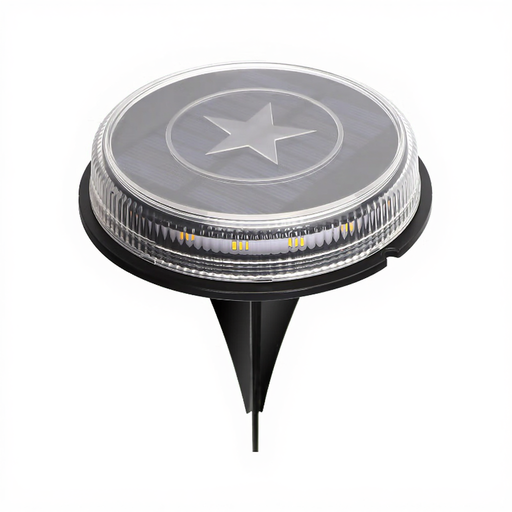
Why This Fits Their Persona: Ideal for adding subtle accents in the garden, along a border, or on the driveway. The warm light (3200K) creates a cosy atmosphere without being overpowering and stylishly marks pathways.
This ground spot has an IP66 rating, meaning it's not just splash-proof but also resistant to powerful water jets. It will easily survive a heavy downpour and the sprinkler, unlike less robust models.
High water resistance (IP66) for durability in the garden; Warm white light (3200K) for an atmospheric effect; Robust housing that can withstand normal pressure.
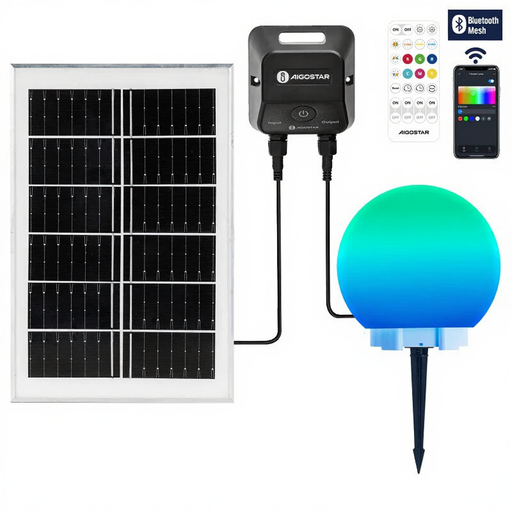
Why This Fits Their Persona: For those who want complete control. Adjust colours via an app, set timers, and link up to 200 lights. Turn your garden into a dynamic light show for a party or a tranquil oasis after a long day at work.
This is more than a simple on/off light. The smart features and the ability to adjust brightness and colour (RGBCCT) give you control over energy consumption and atmosphere, so you're not stuck with a single, overhyped setting.
Full control via Bluetooth Mesh (colour, brightness, timers); Linkable with over 200 devices for a complete smart lighting system; IP65 rating.
We have compiled a complete, up-to-date list of products that meet these selection criteria and current safety standards.
Ideally, a solar panel needs 4 to 6 hours of direct sunlight for a full charge. During autumn and winter, with shorter and darker days, the runtime will be shorter. Therefore, choose a model with an efficient solar panel and a good battery, or a light with a motion sensor that conserves energy. Place the light in a spot that is as south-facing as possible and free from shade.
The IP (Ingress Protection) rating consists of two digits. The first digit indicates protection against solid objects (like dust), and the second indicates protection against moisture. For outdoor lighting, the second digit is particularly important. IP44 is splash-proof, while IP65 or higher means the light is resistant to water jets and thus better suited for unsheltered locations.
In most consumer models, the battery is integrated and not easily user-replaceable. This is done to guarantee the water resistance of the housing. The lifespan of the built-in rechargeable battery is typically several years. Therefore, investing in a product from a reputable brand with a quality battery is often more cost-effective in the long run.
