
Vandaag of morgen in huis

Kwaliteit gegarandeerd

Welkomstaanbiedingen ontgrendelen: GRATIS bezorging | Tot 80% korting | Gratis 30 dagen JoyPlus-proefperiode
Download de app
A solar-powered light seems simple: charge it during the day and enjoy automatic light in the evening. In practice, some models disappoint because they’re poorly positioned, don’t provide enough light or aren’t built for the spot where you want to install them.
If you’re looking for solar outdoor lighting, don’t focus only on appearance or lumen output. How and where you’ll use the light, its IP rating and how it charges are just as important. Read on to find out what to consider when choosing a solar wall light, solar garden lighting, wireless outdoor lighting or an outdoor light with a motion sensor.
A solar light only works well if its panel gets enough light during the day. A spot under a balcony, next to a tall fence or on a north-facing wall can significantly reduce charging time. Cloudy weather, short winter days and dirt on the panel can also affect how long the light stays on.
Before you buy, check:
A higher lumen rating means a brighter light, but it doesn’t necessarily mean the light will stay at that setting all night. A solar security light with a motion sensor, for example, may switch on brightly for a short time, then dim or turn off. That’s useful for a driveway or entrance, but less suitable for continuous mood lighting.
A lower light output is often enough for paths and decoration. For a dark wall or driveway, a wider beam, sensor range and adjustable settings matter more than the highest lumen rating alone.
Check the IP rating. IP44 means the light is protected against solid objects larger than 1 millimetre and water splashes. It isn’t designed to be submerged or exposed to direct jets of water. IP65 offers greater protection against dust and water jets, but you should still follow the product instructions and avoid submerging the light.
So, a waterproof outdoor light isn’t automatically suitable for every location. Don’t install it in a dip where rainwater collects, and check that the wall mounting won’t direct water into the casing.
Colour temperature is measured in kelvin:
Lumens indicate the total light output. A solar garden light with 100 to 400 lumens is generally designed for marking out an area or creating atmosphere. A light with 1000 lumens or more is more likely to be intended for practical lighting, especially when activated by a motion sensor.
A dusk sensor switches the light on when it gets dark. A motion sensor responds to movement within a certain range. Check:
A sensor helps prevent the light from staying on unnecessarily, but one that’s too sensitive may respond to pets, passing cars or moving branches.
Plastic casings are often lightweight and easy to install. Metal can give the light a different look, but check the finish and fixings. All solar lighting benefits from regular maintenance: wipe the panel clean, check the screws and look for any damage to the casing.
An integrated LED usually isn’t designed to be replaced by the user. Check the stated lifespan of the light source, but treat this as a product specification rather than a guarantee of how long it will last in use.
The recommendations below are based on specific product details, such as light output, IP rating, colour temperature and sensor function.
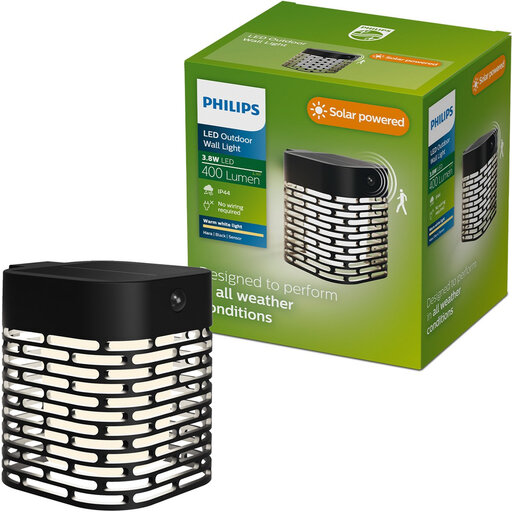
Why it suits this profile: This solar wall light is a good choice for an entrance, balcony or patio where easy installation and warm light are important. It has two light settings, a colour temperature of 2700 K and a stated light output of 400 lumens.
The specifications clearly state IP44 and automatic or manual operation. Make sure you install the light in a suitably sheltered spot: IP44 protects against water splashes, not submersion.
Warm white light at 2700 K, integrated LED, two light settings and installation without a mains cable.
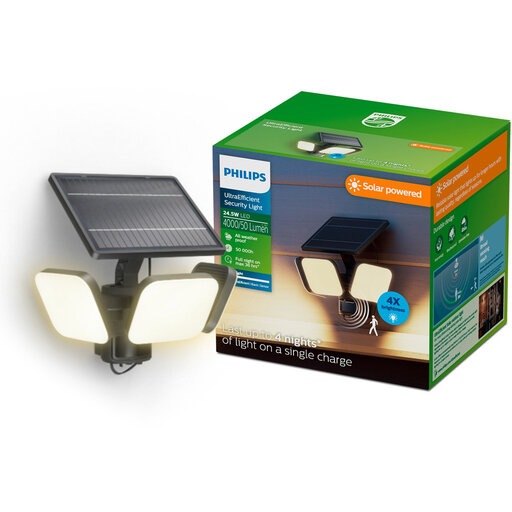
Why it suits this profile: This solar security light is designed for a driveway, exterior wall or larger entrance where high light output and a wide detection range are important.
There’s more to consider than lumens alone: the product specifications state 4000 lumens, IP65 and a PIR detection range of 8 metres for movement approaching head-on and 16 metres for movement from the side.
4000 lumens, IP65, adjustable light head and two sensors/light settings, according to the product information.
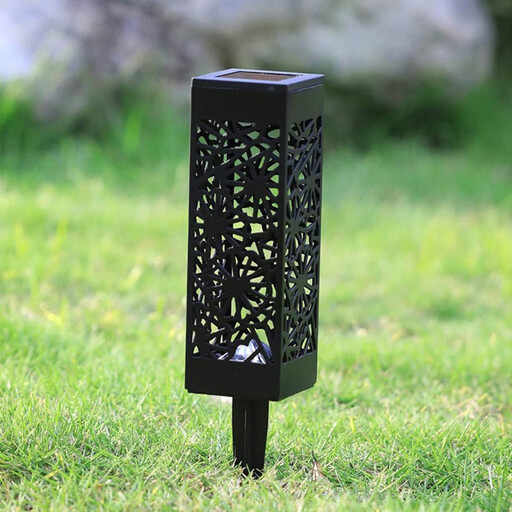
Why it suits this profile: This set is designed for garden paths, borders, flower beds and driveways where you need several lights without having to run cables.
Charging and lighting times are given as approximately 4–6 hours and 5–8 hours respectively, under the stated conditions. This gives you a clearer expectation than a general claim about long-lasting light.
Six lights, warm white LED light, IP65 and easy installation by placing the lights directly in the ground.
We’ve put together a complete, up-to-date list of products that meet these strict selection criteria and current European safety requirements.
Position the solar panel somewhere that gets as much direct daylight as possible. Avoid shade from walls, trees and overhangs. Mount a wall light on a firm surface, and first check that the sensor detects the area you want it to cover. Switch on the light before first use, following the instructions, so the battery can charge.
How long the light stays on depends on the battery, charging capacity, amount of sunlight, temperature and selected light setting. Manufacturers often give an estimate based on specific conditions. A cloudy day or dirty panel can shorten the lighting time. Check the panel regularly, and bear in mind that the light may be dimmer during darker winter periods.
During normal use, a solar light doesn’t draw electricity from the mains. Its battery charges during the day via the solar panel. However, some components may need maintenance or replacing over time, such as the battery. Before you buy, check whether the battery is replaceable, and follow local rules for battery disposal.
