
Vandaag of morgen in huis

Kwaliteit gegarandeerd

Welkomstaanbiedingen ontgrendelen: GRATIS bezorging | Tot 80% korting | Gratis 30 dagen JoyPlus-proefperiode
Download de app
Solar outdoor lighting is a convenient way to illuminate a driveway, wall, balcony or garden without needing cables running to a socket. During the day, a built-in battery charges up, and at dusk, the light switches on automatically. However, not all solar outdoor lights work the same way in practice. The placement, protection rating and brightness will largely determine whether your purchase is right for your needs.
A product with many LEDs might seem powerful, but the actual result also depends on the reflector, light distribution and battery capacity. For example, a solar security light with a motion sensor needs a higher light output than a solar lantern that mainly provides ambient light.
You should also pay attention to the colour temperature. 2700 to 3000 Kelvin typically produces a warm white light that's ideal for a patio or wall. A higher value can look whiter and brighter. Therefore, don't just check for the description "warm white"; look at the specified Kelvin value too.
An IP rating consists of two digits. The first digit relates to protection against solid particles, and the second to water. IP44 protects against splashing water and is mainly suitable for general outdoor locations. IP65 offers a higher level of protection against dust and water jets.
No rating means you can submerge a light for long periods. So, don't place the solar panel in a dip where water can collect. Also, check that the battery and switch components are properly sealed.
Trees, fences and overhangs can shield the solar panel for much of the day. This means the battery won't charge as much, and the light will stay on for a shorter time in the evening. For instance, you can hang solar string lights on a balcony, but the panel must be placed outside in a spot with as much direct sunlight as possible.
Cloud cover, a low sun position and dirt on the panel also affect the runtime. Therefore, specifications for charging and operating times are estimates, not a guarantee for every single evening.
For orientation along a garden path, a few hundred lumens are often enough. For a driveway, garage or dark corner, you might want more light. A solar outdoor light with a motion sensor also prevents the light from staying on at full brightness all night.
A larger battery can store more energy, but the light also needs enough sun to fill that battery. Some product descriptions state a charging time of 4 to 6 hours and a runtime of 5 to 8 hours. For other models, this might be 8 to 14 hours. According to the product information, the actual duration depends on factors like sunlight and weather conditions.
Also, check the battery type. The range includes lithium-ion, lithium iron phosphate and Ni-MH batteries, among others. A replaceable battery can be more practical in the long run, but always check if the manufacturer supports replacement.
For an exposed area in the garden, IP65 solar lights are a good option if the product specification mentions this rating. For a sheltered wall or balcony, IP44 may be suitable. Mount a solar wall light on a solid surface and point the panel towards the part of the sky that gets the most sun.
With ground lights, be mindful of tripping hazards. Do not place solar garden lights in the middle of a walkway and, after installation, check that the spike is firmly in the ground.
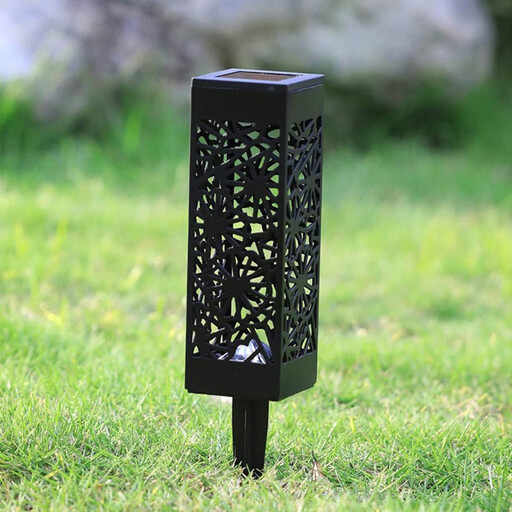
Why it's a great match: A set of six ground lights is practical for a garden path, border or flowerbed. The lights are easy to install without any wiring.
The product specification mentions an IP65 rating, a charging time of 4–6 hours and a runtime of 5–8 hours. This makes the key expectations clearer than a description without technical details.
Six pieces per set, warm white LED light and a height of approximately 38 cm. According to the product information, the lights feature automatic on/off switching.
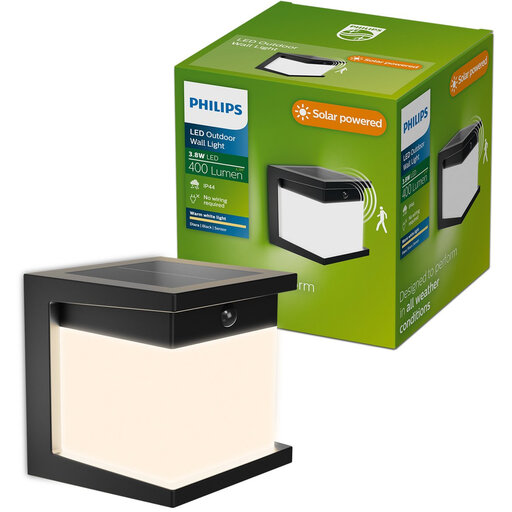
Why it's a great match: This solar wall light is ideal for a wall, balcony or entrance where a compact light with a warm glow and a motion sensor is desired.
The IP44 rating makes it clear that the light is splash-proof but not designed for submersion. This helps you choose a suitable, sheltered spot for installation.
400 lumens, 2700 K warm white light, two light modes and an integrated motion sensor. Philips states a lifespan of 25,000 operating hours; this is a claim from the brand's product information.

Why it's a great match: This model is aimed at driveways, garages, back gardens or large areas where motion-activated lighting is needed.
The listing mentions 3,000 lumens, three light modes, a detection distance of 60 feet and an IP65 rating. Before buying, do check that the units of measurement and settings are suitable for your installation spot.
Three adjustable heads, a stated 270-degree spread and an 1800mAh lithium-ion battery. The manufacturer also mentions a two-year warranty against defects in materials and workmanship.
We have compiled a complete, up-to-date list of products that fully meet these strict selection criteria and comply with current European safety regulations.
When installing, always follow the manual and use suitable mounting materials. A solar wall light should be securely attached to a wall or fence. For a solar hanging light, you need to check that the suspension point can support its weight.
For consistent results:
A solar lantern, solar garden lights or LED solar lighting usually requires little maintenance, but the battery is a component that will wear out over time. Shorter runtimes after a while can therefore be normal. Check to see if the manufacturer offers replacement batteries and parts.
Yes, but their performance can decrease due to shorter days, a lower sun position, cloud cover and leaves or dirt on the panel. Place the panel in an unobstructed spot and clean it regularly. Expect fewer hours of light with limited sun compared to a sunny period.
The lifespan varies depending on the battery, LED module, housing and operating conditions. Manufacturers may state an expected lifespan for the light source, but that doesn't automatically tell you how long the battery will last. Check the warranty, battery type and the possibility of replacement.
During normal use, a solar light does not use electricity from a socket. The battery is charged via the solar panel. There are, however, indirect costs for purchase, maintenance and eventual battery replacement. With a solar security light, the motion sensor helps to conserve stored energy by limiting the time the light is on.
