
Vandaag of morgen in huis

Kwaliteit gegarandeerd

Welkomstaanbiedingen ontgrendelen: GRATIS bezorging | Tot 80% korting | Gratis 30 dagen JoyPlus-proefperiode
Download de app
Lighting a garden, balcony, driveway or entrance without cables sounds simple. Yet many buyers choose a light that turns out to be less suitable in practice. The battery barely charges, the light is too dim or the housing isn’t right for the place where you want to install it.
Use this guide to compare solar outdoor lighting based on measurable features such as light output, IP rating, colour temperature, sensor functions and installation. That way, you can make a more informed choice between solar garden lights, a solar wall light, a solar garden lamp or an outdoor light powered by solar energy.
With LED lighting, wattage mainly tells you how much energy a light uses. For the amount of light it produces, look at lumens. A decorative LED solar light with a few small LEDs is designed for guidance or ambience. You’ll generally need more light for a driveway or entrance.
Also consider the difference between a light that stays on continuously and a solar light with a motion sensor. A sensor light can produce a lot of light for a short time, without needing to stay at full brightness all evening.
An IP44 solar light is protected against solid objects larger than 1 millimetre and splashing water. This makes IP44 suitable for many sheltered walls, balconies and patios, but not for immersion or direct jets of water.
An IP65 solar light offers greater protection against dust and water jets. This can be more practical on an open driveway, in a front garden or somewhere the light is directly exposed to rain. Always check the installation instructions too. No IP rating automatically means a product can be placed underwater.
A black housing, RGB lighting or a modern design says little about how a light will work in your garden. A solar panel needs enough daylight. If you install a light under a canopy, beside a tall fence or on a north-facing wall, it may take longer to charge and the light may stay on for less time.
According to the product information for various models, performance depends on how much solar energy is stored. So check the position of the panel, the cable supplied and whether the panel can be installed separately.
Use lumens as your guide:
Colour temperature affects the look of the light. 2,700 to 3,000 kelvin gives you warm white light, which suits a patio or front door. Around 4,000 kelvin looks more neutral. Higher values, such as 5,000 kelvin, create a cooler, brighter effect and are more often used for practical lighting.
A dusk sensor switches the light on when it gets dark. A motion sensor activates the light when it detects movement. Check the detection angle and range. A wide-angle sensor is useful by an entrance, but may also react to pets or passing traffic.
For a solar security light, the installation height and sensor direction are important too. Don’t place the light behind an obstruction, and avoid pointing the sensor directly at a busy road if you want to prevent it switching on unnecessarily.
Check the housing, dimensions and type of installation. A spike light is quick to place in soil, while a wall light needs a sturdy surface. A wireless outdoor light with a separate solar panel gives you more flexibility if the light itself is in the shade.
Product details usually specify the battery type and capacity. Expect the light to stay on for a different length of time in winter or on cloudy days than it would after a sunny day. Clean the panel regularly with a soft cloth and check the screws, cables and seals.
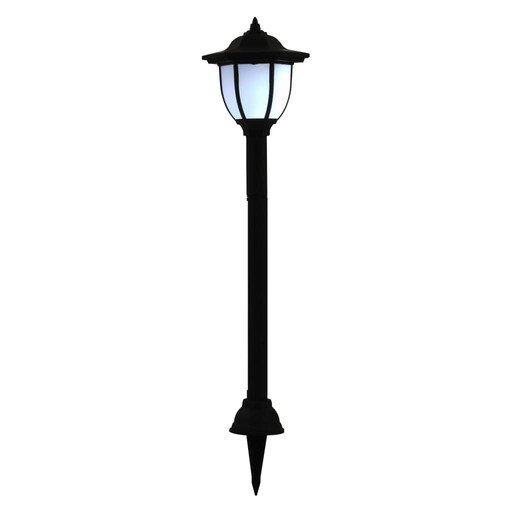
Why it suits this profile: If you want to light several spots in your garden or along a path, this set gives you three lights in one. Installation fittings are included.
The product specifications clearly state that each light has three 0.06-watt LEDs, a rechargeable AA battery and an IP44 rating. This makes it easier to judge the limited light output in advance.
Set of three, automatic switch-on at dusk and installation without mains power.
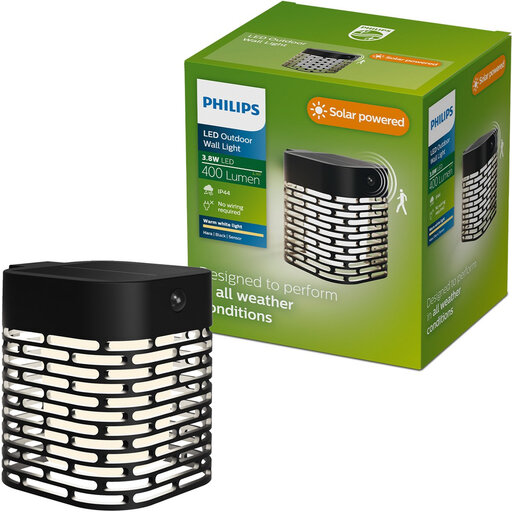
Why it suits this profile: This solar wall light is designed for a fixed exterior wall, balcony or entrance where warm light and a neat finish matter.
The light output of 400 lumens, colour temperature of 2,700 K and IP44 rating are all clearly specified. The light also has automatic and on modes.
Warm white light, integrated LED and installation without wiring.
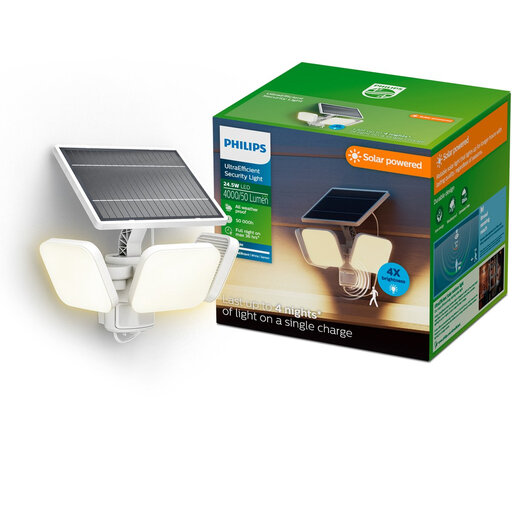
Why it suits this profile: For a driveway, wide exterior wall or entrance where high light output and a greater detection range are important.
The product specifications state 4,000 lumens, IP65, an adjustable light head and motion detection up to 8 metres when approached directly and 16 metres from the side.
IP65, warm white light at 3,000 K and a wide-range sensor for practical outdoor lighting.
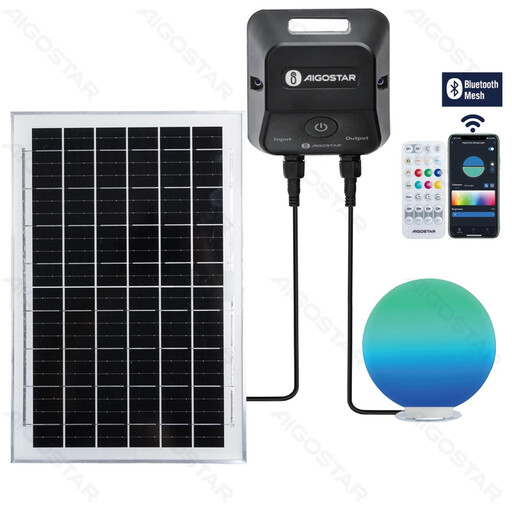
Why it suits this profile: If you’re looking for RGB solar garden lighting and control of multiple lights, this model offers Bluetooth Mesh functions and RGBCCT lighting.
The specifications state IP65, RGBCCT light colour, a 120-degree beam angle, and scheduling, brightness control and on/off functions.
RGB and white light, IP65 and Bluetooth Mesh for connecting to more than 200 devices, according to the product information.
We’ve put together a complete, up-to-date list of products that meet these strict selection criteria and comply with current European safety regulations.
Yes, but output may be lower because of shorter days, cloudy weather and the sun being lower in the sky. Place the panel somewhere as free from shade as possible and keep it clean. A motion sensor can help you make more efficient use of the available battery capacity.
How long the light stays on depends on sunlight, battery capacity, temperature and the selected light setting. The LED lifespan stated by manufacturers varies by model. The battery is a separate component with its own useful life. So check whether it can be replaced according to the instructions, and don’t try to open an integrated battery yourself.
During normal use, the light charges via its solar panel during the day and doesn’t use electricity from the mains. There are indirect costs, such as the purchase price, maintenance and any battery replacement. The practical savings depend on how long the lights are used and how many you have.
