
Vandaag of morgen in huis

Kwaliteit gegarandeerd

Welkomstaanbiedingen ontgrendelen: GRATIS bezorging | Tot 80% korting | Gratis 30 dagen JoyPlus-proefperiode
Download de app
Solar-powered outdoor lighting sounds ideal: no cable clutter, no extra energy costs, and a sustainable choice for your garden, balcony, or facade. Installation is often a breeze. Yet, for many, the search ends in disappointment. A lamp that fails after the first autumn storm or a path that is barely illuminated.
Before you make a purchase, it's wise to understand the potential pitfalls. Many products promise more than they can deliver. Here are the most common problems:
To ensure your purchase doesn't disappoint, focus on a few objective specifications. These provide a much clearer picture of performance than marketing promises.
The IP (Ingress Protection) rating indicates how well a product is protected against dust and water. This is a crucial factor for durable garden lights.
For most applications in a typical garden, an IP65 rating is a safe and sensible choice.
Lumens are the measure of the total amount of light a lamp emits. More lumens mean more light. What you need depends on the purpose:
The performance of LED solar lighting depends on the balance between the solar panel and the battery. The battery's capacity is expressed in milliampere-hours (mAh). A higher value means the battery can store more energy, resulting in a longer runtime. A lamp with 2000 mAh will typically last longer than one with 600 mAh, provided the solar panel is powerful enough to charge it.
Not every lamp is suitable for every situation. Below is a selection of products, matched to specific needs and user profiles.
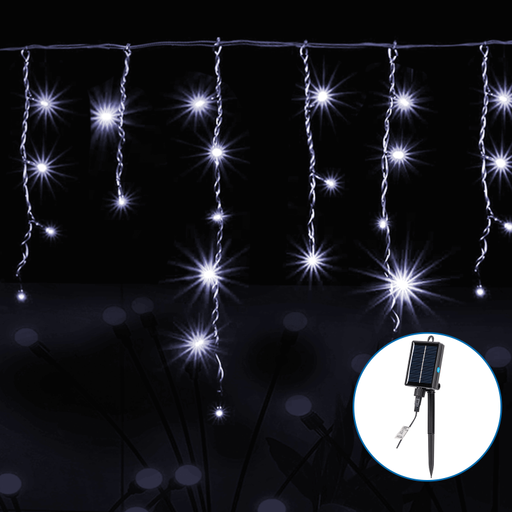
Why This Fits Their Persona: Ideal for those who want to transform their balcony, fence, or pergola into an atmospheric space. Not for functional lighting, but purely for creating a cosy atmosphere for long summer evenings or the holidays.
This string light avoids the 'splash-proof' lie with an IP65 rating. This means it's designed to withstand heavy rain, unlike many decorative string lights with a lower IP rating.
With 8 different lighting modes, you can adjust the atmosphere from calm and steady to festive and sparkling. Installation is simple: place the panel in the sun, hang the string, and you're done.

Why This Fits Their Persona: This solar wall light is for those who prioritise safety and visibility around their home. Perfect for the front door, back entrance, or next to the shed, where bright light upon motion detection is desired.
This lamp tackles the 'weak light output' pitfall. With an output of 1000 lumens, it delivers a serious amount of light, comparable to many mains-powered lamps. The motion sensor ensures this power is only used when needed, conserving the battery.
The combination of high light output, a reliable motion sensor, and the build quality of Philips makes this a solid choice for security lighting. The IP44 rating is sufficient for wall mounting.
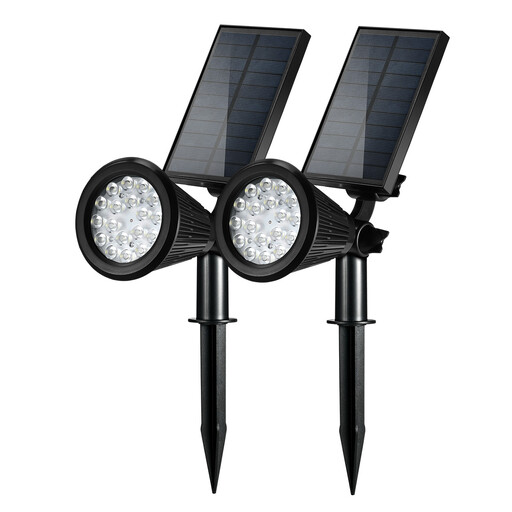
Why This Fits Their Persona: For those who want to accent specific elements in the garden. Think of highlighting a beautiful tree, a statue, or marking the edges of a patio. These solar-powered garden spots are flexible and targeted.
This set is made from durable ABS and PC and has an IP65 rating. This makes the spotlights highly resistant to the elements, avoiding the pitfall of poor weather resistance and making them suitable for placement directly in the ground.
As they come in a set of two, they offer excellent value for money and the flexibility to illuminate multiple spots in the garden. Installation is easy with the included ground stakes.
We've curated a complete, up-to-date list of products that meet these selection criteria and comply with current safety standards.
Yes, but performance is reduced compared to the summer. The days are shorter and the sun is less powerful, so the battery doesn't charge as fully. This will result in a shorter runtime. Models with an efficient solar panel, a large battery capacity, and a motion sensor (which only provides light when needed) generally perform better during the darker months.
The LED bulb itself has a very long lifespan, often 25,000 hours or more. The limiting factor is the rechargeable battery. Depending on its quality and usage, a battery's capacity will degrade after about 2 to 4 years and may need to be replaced. On some models, the battery is easy to replace, which significantly extends the product's lifespan.
The main advantage of solar-powered outdoor lighting is its ease of installation. Since no wiring is involved, you can install most lights yourself. The only thing to be mindful of is mounting or placing the solar panel in a location where it can receive sufficient direct sunlight during the day.
