
Vandaag of morgen in huis

Kwaliteit gegarandeerd

Welkomstaanbiedingen ontgrendelen: GRATIS bezorging | Tot 80% korting | Gratis 30 dagen JoyPlus-proefperiode
Download de app
Solar-powered outdoor lighting sounds ideal: no cable clutter, no extra costs on your energy bill, and a sustainable choice. In reality, the experience can be disappointing. A light that only emits a faint glow after a few weeks, or a sensor that fails after the first autumn downpour. Sound familiar?
Many of these disappointments can be avoided. Manufacturers often promote specifications that look better on paper than they perform in practice. Let's explore the three most common pitfalls to ensure your next purchase is a success.
To avoid these issues, it helps to understand a few technical specifications. Don't worry, we'll keep it practical.
Lumens (lm) are the measure of the total amount of visible light a lamp emits. More lumens mean more light. But more isn't always better; it all depends on your purpose.
The IP rating indicates how well a light is protected against dust and moisture. For outdoor lighting, this is a critical number.
The performance of solar-powered outdoor lighting depends entirely on the combination of the solar panel and the battery. A small, inefficient panel may not generate enough energy on an overcast day to charge a large battery. Conversely, a small battery will drain quickly. Pay attention to the battery capacity (measured in mAh); a higher value typically means a longer runtime. Models with a Li-Ion battery often perform better and last longer than older types.
Not everyone has the same needs. Below are a few recommendations tailored to specific user profiles.
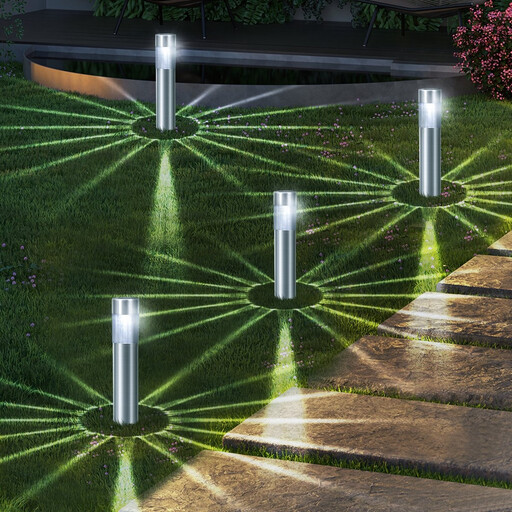
Why This Fits Their Persona: Ideal for those who want to add atmospheric accents effortlessly. Stake the lights along a path or among plants for a subtle, decorative glow as soon as it gets dark. No technical expertise required.
This light is designed for ambiance, not bright illumination. The light output is intentionally low and suited to its purpose, which prevents false expectations.
Extremely simple installation (just stake it into the ground) and automatic operation thanks to the built-in sensor. The IP44 rating is sufficient for general garden use.
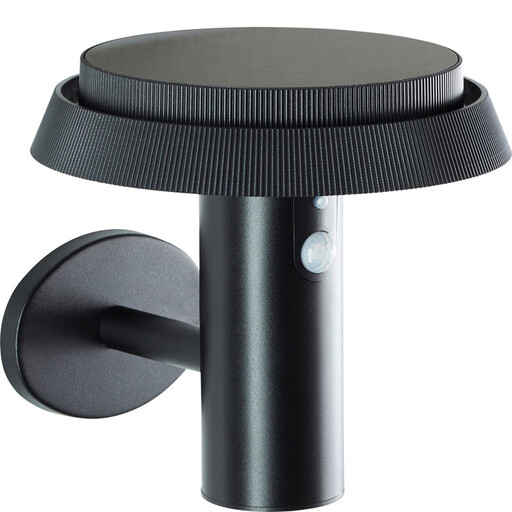
Why This Fits Their Persona: This wall light combines a modern design with practical functionality. Perfect for a front or back door. The motion sensor provides light when needed, which is both secure and energy-efficient.
With 500 lumens, this lamp delivers genuinely functional light, unlike weaker decorative models. The motion sensor prevents the battery from draining unnecessarily.
The combination of a good light output (500 lm), a reliable motion sensor, and a warm white light colour (3000K) makes this a very complete solution for everyday use.
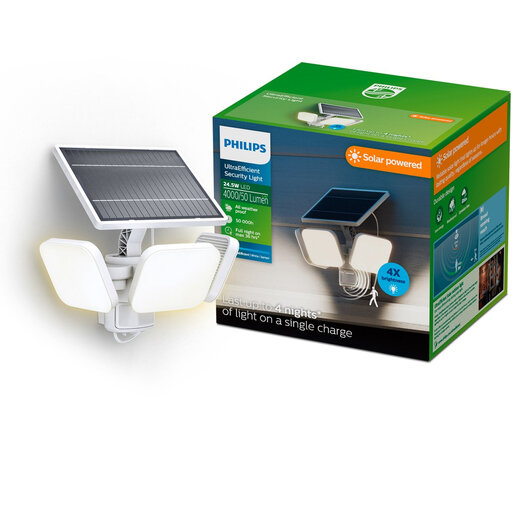
Why This Fits Their Persona: When security is the top priority, a powerful beam of light is essential. This light is designed to fully illuminate a large area, like a driveway or backyard, as soon as motion is detected.
This light avoids the "weatherproof" myth with an IP65 rating, meaning it's built to withstand heavy rain. The massive 4000 lumen output isn't an empty promise but a serious security feature.
Extremely high light output for maximum visibility and deterrence. According to Philips, the superior PIR sensor has a wide detection range, and its efficient technology ensures a long runtime, even with less sunlight.
We've curated a complete, up-to-date list of products that meet these selection criteria.
A: This depends heavily on the product's quality. Cheaper models often struggle with the short, overcast days common in winter. An outdoor solar light with an efficient solar panel and a high-capacity (mAh) battery will perform better. Models with a motion sensor are especially practical in winter; they only activate at full power when needed, which conserves the battery.
A: The IP rating indicates the degree of protection. The first digit represents protection against solid particles (like dust), and the second represents protection against moisture. IP44 means it's splash-proof and is sufficient for a light hung in a sheltered spot, like under an eave. IP65 is better; it's dust-tight and can withstand water jets, making it suitable for exposed locations that face heavy rain.
A: In most modern solar-powered LED garden lighting, the light source (LED) and the battery are fully integrated and not designed to be user-replaceable. The expected lifespan of the LED is often tens of thousands of hours. This underscores the importance of choosing a high-quality product from the outset.
