
Vandaag of morgen in huis

Kwaliteit gegarandeerd

Welkomstaanbiedingen ontgrendelen: GRATIS bezorging | Tot 80% korting | Gratis 30 dagen JoyPlus-proefperiode
Download de app
Solar-powered outdoor lighting sounds ideal: no cable clutter, no extra costs on your energy bill, and a simple installation. Yet, the search often ends in disappointment. A light that gives up after the first heavy downpour, a fixture that provides barely more light than a glow-worm, or a battery that dies before the evening has even truly begun.
As a Joybuy Product Recommendation Officer, I see countless products come and go. I'm here to help you see through the marketing claims and avoid the common pitfalls. Pay close attention to these three frequent issues:
You don't need to comb through a technical manual to make a smart choice. Focus on a few key specifications that mark the difference between a valuable purchase and wasted money.
The brightness of a light is measured in lumens (lm). More lumens mean more light. The right amount depends on your goal:
solar-powered security light often includes a motion sensor to shine at full power only when movement is detected.The colour temperature, measured in Kelvin (K), determines the atmosphere. Warm white light (around 3000K) is cosy and ideal for seating areas. Cool white light (around 5000-6500K) is brighter, more closely resembles daylight, and is better suited for functional and security purposes.
The IP rating indicates how well a solar-powered LED outdoor light is protected against dust and moisture. This is a crucial factor for its lifespan.
waterproof solar lighting is designed to withstand harsh weather conditions and can be installed in exposed locations.The battery's capacity (measured in mAh) determines how long the light can operate on a full charge. A larger capacity is especially important for the winter months. The solar panel's efficiency dictates how quickly that battery charges, even on cloudy days. Monocrystalline solar panels generally perform better in low light than their cheaper polycrystalline counterparts.
To help you with your choice, we have matched a number of products to specific user profiles.
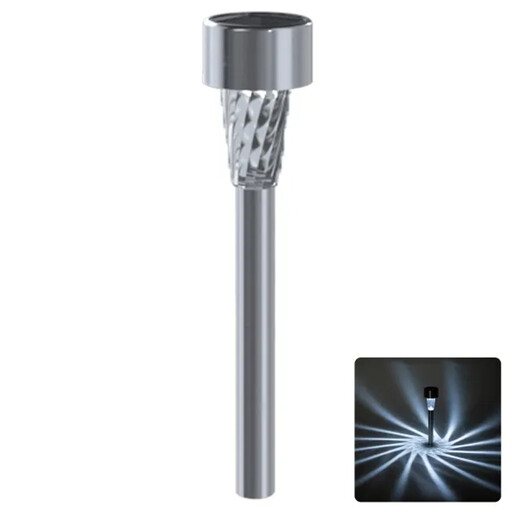
Why it's a match: Ideal for those looking to add ambiance to their garden affordably. These ground stakes are perfect for accentuating a border, pathway, or flowerbeds without a major investment.
This light doesn't pretend to be a high-power spotlight. Its low lumen output is intended for decoration, which aligns with its price point. The IP44 rating is sufficient for sheltered spots in the garden.
Simple installation (just stake it into the ground) and a sleek stainless steel design. An affordable entry point for `solar-powered garden lighting`.
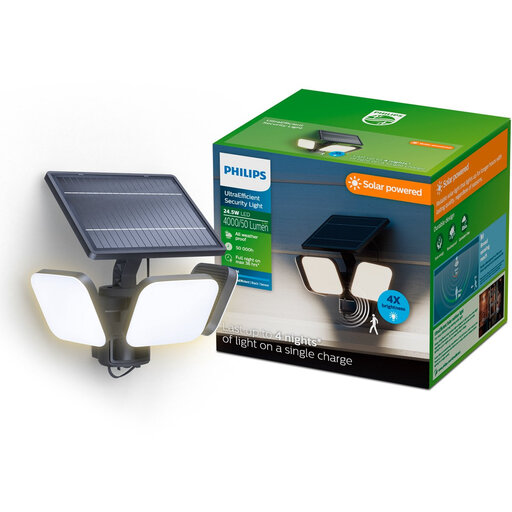
Why it's a match: For those who prioritise functionality and security. This `solar wall light with motion sensor` is designed to powerfully illuminate driveways, backyards, and dark corners.
This light delivers a high output of 4000 lumens, fulfilling its promise of bright illumination. The IP65 rating guarantees it can withstand heavy rainfall, preventing it from failing after a single season.
An efficient solar panel and a powerful battery that, according to Philips, can provide up to 4 nights of light on a full charge. The sensor's wide detection angle ensures reliable activation.
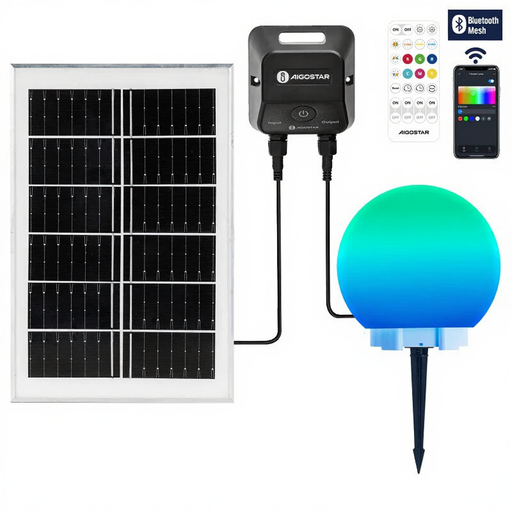
Why it's a match: For those who want more than just on/off. These smart `solar ground lights` offer full control over colour (RGBCCT) and brightness via an app, perfect for creating dynamic lighting scenes in the garden.
This product targets a specific need: smart, customisable lighting. The IP65 rating ensures this advanced technology is well-protected from the elements, a common failure point for cheaper smart lights.
Full control over colour and brightness via Bluetooth Mesh, allowing you to manage multiple lights simultaneously. The combination of solar power and smart technology is unique.
We have curated a complete, up-to-date list of products that fully meet these strict selection criteria and safety standards.
Yes, but performance depends on quality. In winter, the days are shorter and sunlight is less intense. Therefore, choose a model with an efficient (preferably monocrystalline) solar panel and a high-capacity battery (mAh). Lights with a smart power-saving mode or a motion sensor often perform better because they only use full power when necessary.
That depends entirely on your goal. For creating atmospheric highlights on plants or a fence, solar garden lights with 10 to 100 lumens are sufficient. For safely navigating a pathway, 50 to 200 lumens is recommended. If you want to illuminate a driveway or the area around your home for security, look for a solar-powered security light with at least 300 lumens, and preferably more.
The IP (Ingress Protection) rating indicates the degree of protection against solid particles (first digit) and liquids (second digit). For outdoor lighting, the second digit is most important. IP44 is splash-proof and sufficient for lights in sheltered positions. For lights fully exposed to rain, a rating of IP65 (water-jet resistant) or higher is a wise choice for a longer lifespan.
