
Vandaag of morgen in huis

Kwaliteit gegarandeerd

Welkomstaanbiedingen ontgrendelen: GRATIS bezorging | Tot 80% korting | Gratis 30 dagen JoyPlus-proefperiode
Download de app
A well-lit garden or driveway provides both atmosphere and security, but installing the necessary wiring is often a hassle. A solar-powered outdoor light with a sensor seems like the perfect solution: sustainable, no energy costs, and easy to install. Yet, the wrong choice often leads to disappointment. Many lights fail after just a few dark months or can't withstand a harsh autumn downpour.
As a Joybuy Product Recommendation Officer, I'm here to help you make the right choices. We'll look past the marketing jargon and focus on what truly matters. These are the pitfalls you need to know before purchasing a wireless outdoor light.
To avoid a bad purchase, it's important to understand a few technical specifications. This will help you choose an energy-efficient garden light that actually performs.
Not every lamp is suitable for every purpose. The amount and colour of the light determine its function and atmosphere.
outdoor light with motion sensor with at least 400-1000 lumens. For a powerful floodlight to illuminate a large area, you might even consider 2000 lumens or more.An off-grid outdoor light is completely dependent on its battery and solar panel. A large battery (expressed in milliampere-hours or mAh) is important, but only if the solar panel is efficient enough to charge it, even on a cloudy day. Some models have a separate solar panel with a cable, which is convenient. You can hang the lamp in the shade and place the panel in a sunny spot.
The IP rating indicates how well a lamp is protected against dust and water. This is a crucial factor for durable outdoor lighting in many climates.
Not every solar-powered wall light is created equal. We've highlighted a few models that suit different needs and situations.
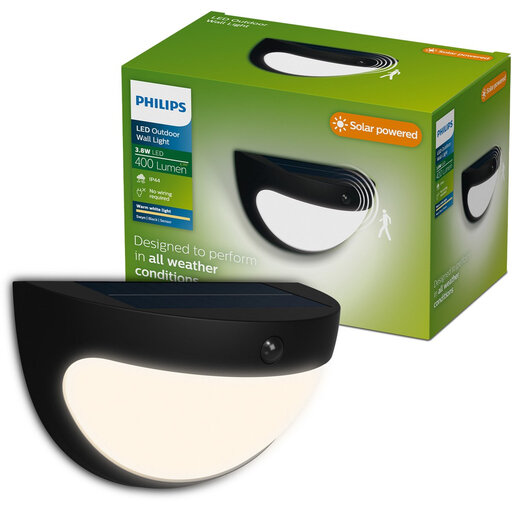
Why This Fits Their Persona: Perfect for those seeking a cosy atmosphere on their patio or balcony. This lamp emits a warm white light that creates an inviting ambience for long summer evenings, without any harsh glare.
The IP44 rating is sufficient for sheltered installation. Philips is known for efficient solar cells that perform well even in low light, reducing the risk of a dead battery in winter.
Produces atmospheric warm white light (2700K). Its sleek, black design complements virtually any exterior wall.
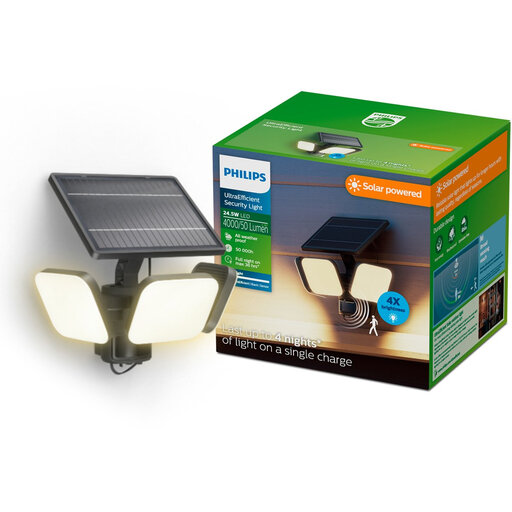
Why This Fits Their Persona: For those who want to secure a dark path, driveway, or back door. This lamp is a powerhouse that bathes a large area in bright light as soon as motion is detected.
With an IP65 rating, this lamp is fully equipped to handle harsh weather. According to Philips, its efficient technology provides light for several nights, even after a day with less sun.
Very high light output of 4000 lumens. The PIR sensor has a wide detection range (up to 16 metres) for enhanced security.
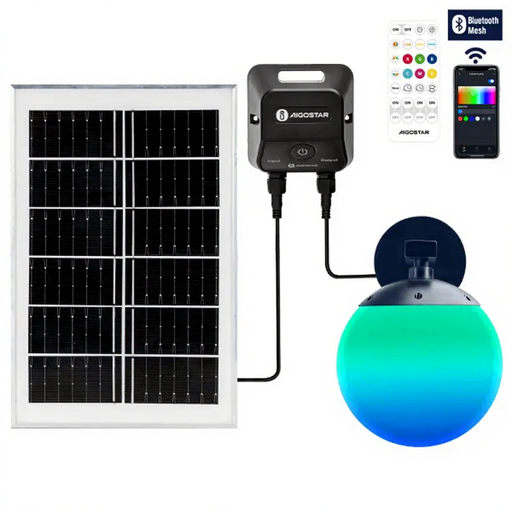
Why This Fits Their Persona: For those who want more than just on/off functionality. This smart lamp lets you adjust the colour and effects via an app. It's ideal for tailoring your garden lighting to any occasion, from a quiet evening to a garden party.
The solar panel is separate from the lamp, connected by a 5-metre cable. This allows you to mount the lamp in a shaded spot and place the panel in direct sunlight, minimising charging issues in winter.
Full control via Bluetooth mesh. You can adjust the colour temperature (RGB+2700K-6500K) and lighting effects, and link up to 200 devices.
We have compiled a complete, up-to-date list of products that meet these selection criteria and local regulations.
Ideally, a solar panel needs at least 4 to 6 hours of direct sunlight per day to fully charge the battery. Therefore, place the lamp or its panel in a south-facing location that is free from shadows cast by trees, buildings, or fences.
Yes, provided you choose a model with an efficient solar panel and a good battery. In winter, the days are shorter and the sunlight is less intense. As a result, the lamp will operate for a shorter duration than in the summer. Models with a garden light with dusk-to-dawn sensor and a motion sensor are especially efficient in winter, as they only turn on when truly needed.
The lifespan depends on the quality of the components. The integrated LED lamp itself often lasts a long time, with manufacturers sometimes claiming 25,000 operating hours or more. The rechargeable battery is usually the component that wears out first. For most models, you can expect a lifespan of several years, depending on usage and weather conditions.
