
Vandaag of morgen in huis

Kwaliteit gegarandeerd

Welkomstaanbiedingen ontgrendelen: GRATIS bezorging | Tot 80% korting | Gratis 30 dagen JoyPlus-proefperiode
Download de app
By: Joybuy Product Recommendation OfficerDate: 17 July 2026
Dark corners around your home, fumbling for the keyhole in the dark, or unexpected visitors in the backyard. These are common inconveniences that are easy to solve. A solar-powered outdoor light with a sensor provides light exactly when you need it, without the hassle of wiring or a rising energy bill.
The market for solar outdoor lighting is vast, and it can be challenging to find a model that truly delivers on its promise. In this article, we'll guide you. We will discuss the key specifications to look out for and highlight several popular choices, enabling you to make an informed decision that suits your needs.
Before you make a choice, it's helpful to understand a few technical specifications. This will help you distinguish marketing jargon from actual performance.
The brightness of a lamp is expressed in lumens (lm). For illuminating a walkway or front door, 300 to 500 lumens is often sufficient. If you want to brightly light a larger area like a driveway or backyard for security, look for models with 1000 lumens or more.
The colour temperature, expressed in Kelvin (K), determines the atmosphere.
A good solar-powered outdoor light with a sensor has two types of sensors:
The IP rating indicates how well the lamp is protected against dust and water. For outdoor use in the UK, IP44 (splash-proof) is the minimum. For locations fully exposed to rain, IP65 (dust-tight and protected against water jets) offers more security.
The main advantage of solar-powered garden lighting is that it is a wireless outdoor light. You don't need an electrician and can place the lamp anywhere the solar panel can catch enough direct sunlight during the day. Pay attention to the quality of the material; plastic and aluminium with a good coating are generally highly resistant to various weather conditions.
Based on the criteria above, we have selected a few models that stand out for their specifications and functionality.

Why it stands out: The Philips Fyns is a solid all-rounder. With 1000 lumens, it provides a powerful beam of light that is more than sufficient for most applications around the house, such as by the shed, front door, or driveway.
Advantages:
motion sensor and a dusk-to-dawn outdoor wall light.Who is this for? Ideal for homeowners looking for a reliable and effective solar-powered LED outdoor light for general use, such as illuminating entrances, garden paths, or the side of the house.
View the Philips Fyns Solar Wall Light
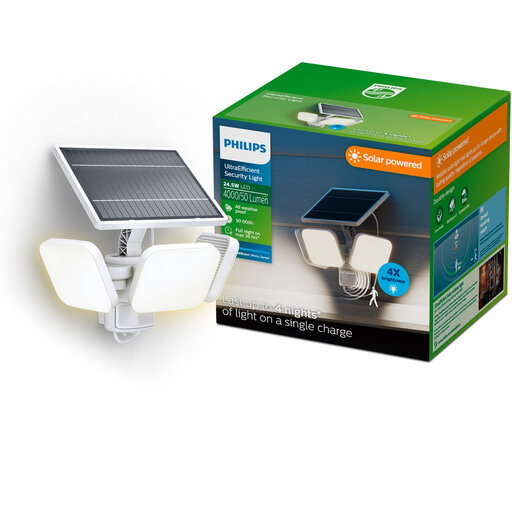
Why it stands out: This lamp is designed for maximum security and visibility. With a very high light output of 4000 lumens and a large detection range, this is a serious outdoor security light.
Advantages:
Who is this for? Perfect for those who want to secure a large driveway, backyard, or the area around a commercial property. The high light output and wide sensor range leave nothing to chance.
View the Philips Zyren Wall Light (5000K)
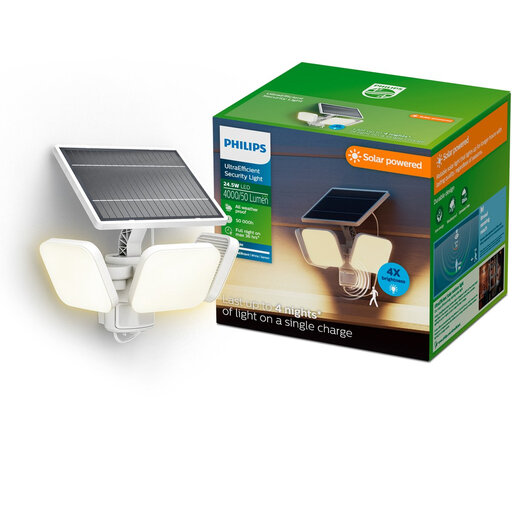
Why it stands out: This model combines the power and range of the Zyren series with a warmer light colour. You get the same security features, but with a more atmospheric light.
Advantages:
Who is this for? For users who want the powerful performance of the Zyren lamp but prefer a warmer, more inviting light colour. Think of a large backyard with a patio or a long, dark driveway next to the house.
View the Philips Zyren Wall Light (3000K)
If the perfect light for your situation isn't here, or if you're looking for a different type of solar outdoor lighting, there are countless options available, from compact shed lights to decorative garden spotlights. Every situation calls for a different solution.
Check out our full range of Outdoor shed lights for more choices.
Yes, but performance may be reduced. Modern solar panels also charge on cloudy days, although this is slower than in direct sunlight. During the dark winter months, the lamp may not stay lit for as long as it does in the summer. An efficient model with a good battery is therefore important.
Place the lamp in a location where the solar panel can receive at least 4-6 hours of direct sunlight during the day. A south-facing installation is ideal in the Northern Hemisphere. Ensure that no shadows from trees, roofs, or other objects fall on the panel.
The LED lamp itself has a very long lifespan, often 25,000 to 50,000 operating hours. The rechargeable battery is the component that will lose capacity over time. With most quality lamps, you can expect a lifespan of several years before the battery performance noticeably decreases.
