
Vandaag of morgen in huis

Kwaliteit gegarandeerd

Welkomstaanbiedingen ontgrendelen: GRATIS bezorging | Tot 80% korting | Gratis 30 dagen JoyPlus-proefperiode
Download de app
A solar outdoor light with a motion sensor can illuminate an entrance, driveway, patio or garden path without needing a cable to the mains. However, many buyers are swayed by a high lumen rating or attractive design, even though the light may not suit the location in practice.
The main problems usually come down to three common pitfalls:
Check the details before you buy and you’ll find a light to suit your garden, patio, balcony, driveway or exterior wall.
Light output is usually measured in lumens. A low lumen output may be suitable for atmospheric solar garden lighting along a path, but not for illuminating a driveway or a dark back door.
Consider which of these uses you have in mind:
The beam angle matters too. A light with several adjustable heads can cover a larger area than a single fixed light. For example, the UME light with 302 LEDs has three light heads and a 270° beam angle. Its stated light output is 3,000 lumens and its colour temperature is 7,000K. Check whether bright, cool light is right for your space; many people prefer a warmer colour temperature for an entrance to their home.
An LED outdoor light with a wide beam isn’t always the best choice for a narrow garden path. A lower-powered light with a more focused beam may be more practical.
An outdoor light with a sensor needs to detect movement in the right place. Check the following:
According to the product information, the UME Solar Outdoor Lights 302 LED has a stated detection range of 60 feet, which is around 18 metres, and a detection angle of 180°. The light has three modes. These specifications may be useful for a large back garden or driveway, but the way it works in practice also depends on the mounting height, temperature and the direction someone approaches the sensor from.
For a solar security light, it’s worth mapping out your route first and considering how the sensor should cover it. A light that detects movement well only from directly in front may be less suitable for a path where people walk past from the side.
The IP rating tells you how well an enclosure is protected against solid particles and water. Each of the two digits has a different meaning.
An IP44 light isn’t designed to be cleaned with a powerful jet of water or placed underwater. An IP65 light shouldn’t be submerged either. So, if you search for a waterproof outdoor light IP44 or waterproof outdoor light IP65, always check what the rating actually means.
Pay attention to the materials too. ABS and polycarbonate are often used for lightweight enclosures. Metal can give a different look, but check that the finish is suitable for long-term outdoor use.
The following models have been selected based on their stated specifications, intended use and installation. Performance claims are presented as product information from the relevant retailer or manufacturer.
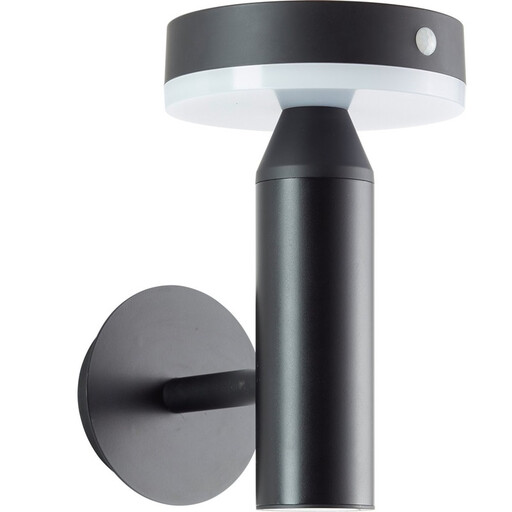
Why it suits this type of buyer: This compact solar wall light is designed for an entrance, balcony, patio or garden path. It doesn’t need wiring, and according to the product information, the motion sensor has a detection angle of 120°.
The IP44 rating makes it clear that this light is designed to withstand splashing water, not direct water jets or immersion. This makes it easier to choose a suitable location in advance.
350 lumens, 4,000K, an integrated battery and a metal/plastic enclosure. The light is dimmable, according to the stated specifications.

Why it suits this type of buyer: This solar outdoor light with a motion sensor is designed for anyone looking for a powerful wall light for an exterior wall, entrance or larger outdoor area. The product information lists 1,000 lumens and two lighting modes.
The stated IP44 rating makes the intended use clear: it’s suitable for splashing water, but not immersion. Also, position the solar panel somewhere it will receive direct sunlight.
1,000 lumens, 3,000K warm white light, a motion sensor and an automatic dusk function, according to the product description.

Why it suits this type of buyer: Its three light heads, stated output of 3,000 lumens and wide coverage are designed for larger areas such as a driveway, garage, garden or patio.
The product information lists IP65, a 180° detection angle and three modes. This makes it easy to assess the protection, range and controls in advance.
302 LEDs, three adjustable heads, a stated output of 3,000 lumens, an 1,800mAh battery and installation without electrical wiring.
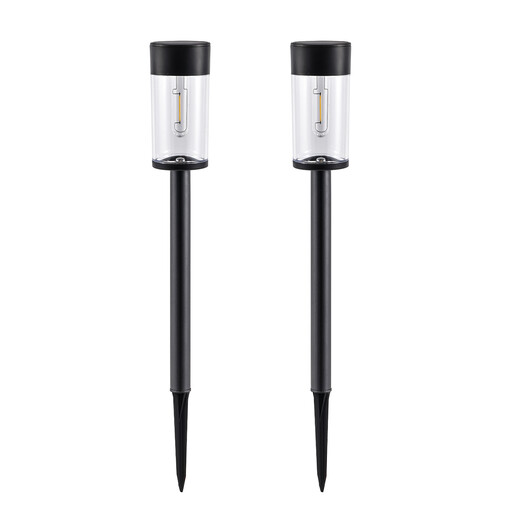
Why it suits this type of buyer: This set is suitable for garden paths, borders, lawn edges and driveways. The ground stakes make it easy to position without cables.
At 10 lumens per light, the output is clearly stated. Expect subtle lighting to mark out a path and create atmosphere, not powerful security lighting for a large driveway.
Set of two, 3,000K warm white light, IP65 according to the product information and automatic operation via a light sensor.
We’ve put together a complete, up-to-date list of products that meet these strict selection criteria and comply with current European safety regulations.
Choose a spot where the panel will get as much direct sunlight as possible during the day. A north-facing wall, dense foliage or a balcony beneath an overhang can limit charging performance. Mount the light securely and point the sensor towards the route you want it to cover.
To help your light last longer:
Yes, the light can work in winter too, but there are fewer hours of sunlight and the light is less intense. Position the panel somewhere as free from shade as possible and keep its surface clean. Operating time can vary by season.
That depends on the battery, electronics, weather conditions and how often it’s used. Product information may give an expected lifespan for the LED, but that isn’t the same as the lifespan of the entire light. Also check the warranty and whether the battery can be replaced.
A solar light doesn’t use electricity from the mains during normal use. The solar panel charges the internal battery during the day. How well it works in practice depends on sunlight, panel position, battery capacity and the lighting mode you choose.
