
Vandaag of morgen in huis

Kwaliteit gegarandeerd

Welkomstaanbiedingen ontgrendelen: GRATIS bezorging | Tot 80% korting | Gratis 30 dagen JoyPlus-proefperiode
Download de app
A solar-powered outdoor light with a motion sensor seems like the perfect solution: no cable clutter, no extra electricity costs, and light exactly when you need it. Whether you're trying to find the keyhole, illuminate a garden path, or deter unwanted visitors, the promise is compelling.
However, not every purchase is a success. Many people fall into the same traps, causing their new light to fail after just a few months. As a Product Recommendation Officer at Joybuy, I see the mistakes that are frequently made. Let's review the three most common purchasing pitfalls so you can avoid them.
garden light with a sensor is to turn on when you approach. A slow or limited sensor defeats this purpose. You want a light that detects motion at a reasonable distance, not one that activates only when you're about to walk into it.To avoid a bad purchase, it's crucial to look beyond the sales pitches. Pay attention to the following objective specifications to find a LED outdoor light with a dusk-to-dawn sensor that truly fits your situation.
The IP (Ingress Protection) rating indicates how well a product is protected against dust and water. This is a critical factor for outdoor lighting.
These two values determine what the light looks and feels like.
solar-powered security light, you'll want to look for 1000 lm or more to properly illuminate a driveway or backyard.The battery's capacity and the solar panel's efficiency determine how long the light can stay on, especially after a cloudy day. Brands like Philips sometimes specify how long a light can operate on a fully charged battery. This is a useful indicator of performance. A larger solar panel and a battery with a higher capacity (expressed in mAh) are generally better, provided the components are well-matched.
Based on these criteria, we have selected a number of products that suit different needs and situations.
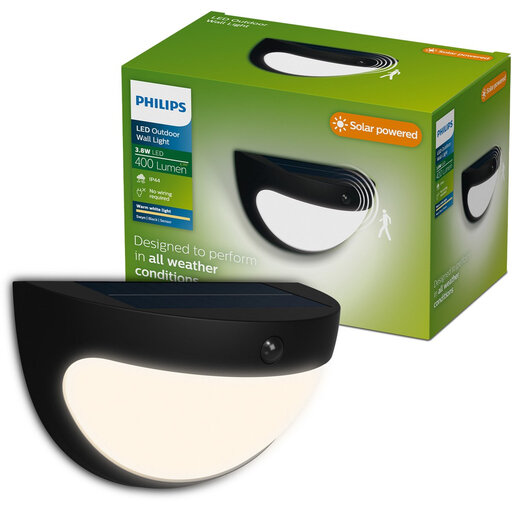
Why This Fits Their Persona: Perfect for those who want to illuminate their garden or patio with atmospheric, warm light, but also want the convenience of a sensor. Its modern design complements many contemporary homes.
This light combines a solid light output (400 lm) with a warm colour (2700K). According to Philips, the lamp is designed for years of performance, with an IP44 rating and a UV-resistant plastic housing suitable for sheltered outdoor spaces.
Offers two light modes ('Auto' and 'On') and runs entirely on solar power, so there are no electricity costs. Installation is simple and wire-free.
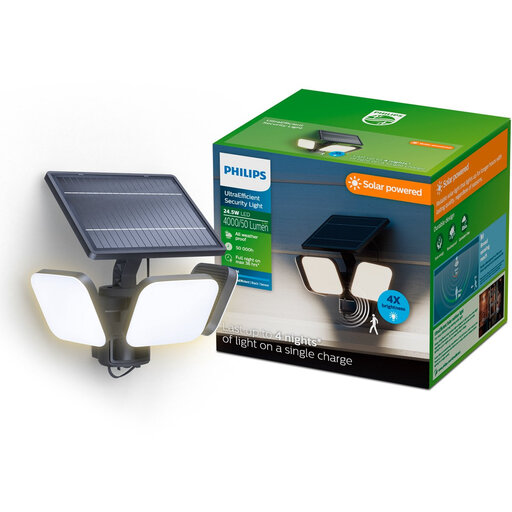
Why This Fits Their Persona: Designed for those who want maximum security and visibility around their home, such as on the driveway or at the back of the house. This light is a true powerhouse for serious illumination.
With a very high light output of 4000 lm and a robust IP65 rating, this lamp is built for performance and durability. According to Philips, the PIR sensor has a wide detection range (up to 16 metres), and the efficient solar technology can provide up to 4 nights of light on a full charge.
Powerful security lighting (5000K daylight) and an adjustable head to aim the light exactly where it's needed. This is a serious `outdoor wall light with sensor` for security.
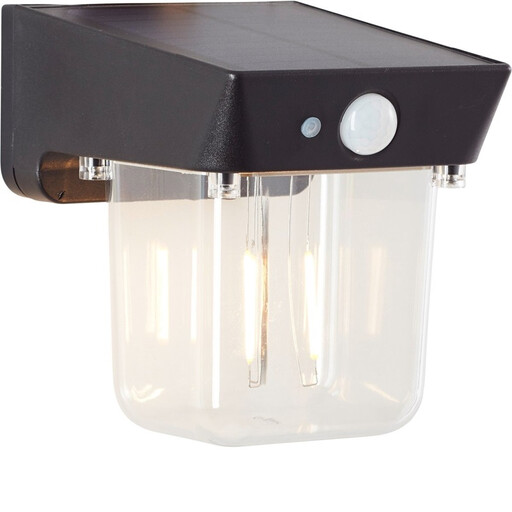
Why This Fits Their Persona: Ideal for anyone seeking a functional, affordable solution for the shed door, balcony, or next to the bins. No-frills, just light when you need it.
Although the light output (180 lm) is modest, it is matched to the battery capacity, ensuring reliable operation. The IP44 rating is sufficient for its intended sheltered locations.
Very simple installation and a warm white light colour (2700K) that is atmospheric. The lamp offers multiple modes via the motion sensor for added flexibility.
We have compiled a complete, up-to-date list of products that meet these selection criteria and current regulations.
Ideally, you should place the light in a location where the solar panel receives at least 6 to 8 hours of direct sunlight per day. This isn't always achievable, especially in autumn and winter. However, a light with an efficient panel and a good battery can also function with less sunlight, although its runtime will be shorter. A south-facing position is typically the most effective.
A dusk-to-dawn sensor (also called a day/night sensor) ensures the light turns on automatically when it gets dark and turns off when it gets light. A motion sensor (PIR sensor) responds to movement. Many solar garden lights combine both: the light is on 'standby' in the dark and only switches to full brightness when motion is detected. This saves energy.
In most modern solar-powered outdoor lights, the LED light source is integrated and not replaceable. This improves water resistance and longevity. The batteries can sometimes be replaced, but this depends on the model. Check the product information to see if the battery is accessible. Generally, the lifespan of the integrated LEDs and batteries is designed to last for several years.
