
Vandaag of morgen in huis

Kwaliteit gegarandeerd

Welkomstaanbiedingen ontgrendelen: GRATIS bezorging | Tot 80% korting | Gratis 30 dagen JoyPlus-proefperiode
Download de app
A solar-powered outdoor light with a motion sensor is a smart choice for anyone looking to combine security, convenience, and sustainability. There's no hassle with cables, no extra energy costs, yet you always have light when it's needed. However, the market is flooded with options, and not every light lives up to its promises. Before making a purchase, it's crucial to know what to look for to avoid disappointment.
As a Joybuy Product Recommendation Officer, I'm here to help you see through the marketing claims. Here are the most common pitfalls and the specifications that truly matter.
Many lights look great at first glance but fail in practice. Watch out for these common issues:
To avoid a bad purchase, it's best to focus on objective, verifiable specifications. These are the three most important factors for a reliable outdoor light.
Brightness, measured in lumens (lm), determines how intensely the light shines. For a garden path, 200-400 lm is often sufficient, but for an effective solar-powered security light, you'll want at least 800-1000 lm.
However, a high lumen count is useless without a powerful battery. The capacity, measured in milliampere-hours (mAh), indicates how long the battery can supply power. A 1000 lm light requires a significantly larger battery than a 300 lm model to last the entire night. Look for a good balance; a high lumen value should always be paired with a high mAh value.
The IP (Ingress Protection) rating indicates how well a device is protected against dust and moisture. This is a crucial specification for garden lighting with a sensor.
A good motion sensor is essential. Pay attention to the following two features:
Not every light is suitable for every situation. Below is a selection of products tailored to different needs and locations.

Why This Fits Their Persona: Ideal for illuminating a back door, shed, or narrow path. This solar wall light offers reliable functionality from a well-known brand without unnecessary complexity.
This light doesn't promise unrealistic brightness. The 1000 lumens is an honest specification that provides bright, functional light. Its IP44 rating is correctly positioned for general outdoor use, not as fully waterproof.
Simple, wire-free installation and a built-in dusk-to-dawn and motion sensor for efficient energy use.
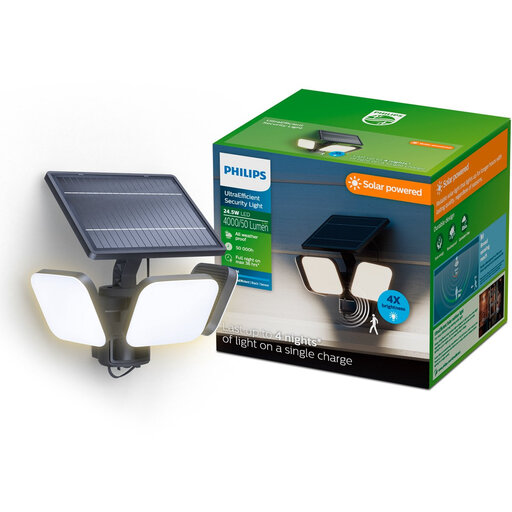
Why This Fits Their Persona: Perfect for securing a long driveway, the side of a house, or a dark corner. Its very high light output and daylight-white light (5000K) ensure maximum visibility.
The IP65 rating guarantees this light can withstand heavy rain. The claim of 4000 lumens is backed by efficient solar technology and a sensor with a specified range (8m direct, 16m lateral), avoiding vague promises.
Extremely powerful light beam and a superior detection range. According to Philips, the light can run for up to 4 nights on a full battery, bypassing the pitfall of a weak battery.
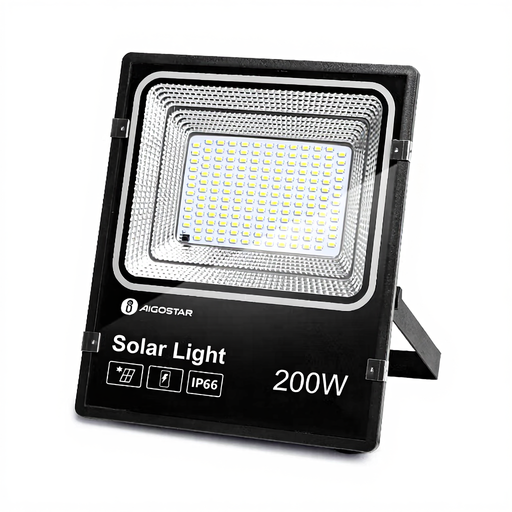
Why This Fits Their Persona: Suitable for illuminating a large yard, parking lot, or commercial property perimeter. This isn't just a regular light; it's a fully-fledged solar-powered floodlight.
This model tackles the problem of underperformance head-on. The specifications are clear: 2000 lumens, a massive 15,000 mAh battery, and an IP66 rating. This is built for serious, long-lasting performance.
The combination of a very large battery capacity and a robust, weather-resistant (IP66) construction ensures powerful illumination, night after night, even over large areas.
We have compiled a complete, up-to-date list of products that fully meet these strict selection criteria and safety regulations.
Winter performance depends heavily on the battery capacity (mAh) and the efficiency of the solar panel. Models with a large battery and a high-quality panel perform better. Some lights, like the Philips Zyren, feature a smart design that the manufacturer claims can provide up to four nights of light on a full charge, making them suitable for the shorter, darker days.
Yes, in most cases. Since no wiring is involved, installation is typically limited to drilling a few holes for the mounting bracket. The most important condition for proper operation is location: ensure the solar panel can receive as much direct sunlight as possible during the day for an optimal charge.
Warm white light (around 3000K) creates a cosy, yellowish glow that is pleasant for ambient lighting. Cool white light (around 5000K) is bright and more closely resembles daylight. For a solar-powered security light, cool white is often preferred because it makes contrasts and details more visible, which enhances security.
