
Vandaag of morgen in huis

Kwaliteit gegarandeerd

Welkomstaanbiedingen ontgrendelen: GRATIS bezorging | Tot 80% korting | Gratis 30 dagen JoyPlus-proefperiode
Download de app
A well-lit driveway or garden not only creates ambiance but also provides a sense of security. A solar-powered outdoor light with a motion sensor seems like the ideal solution: no hassle with cables, no extra energy costs, and light exactly when you need it. However, the search often leads to frustration. Many lights fail to meet expectations, quickly turning your purchase into a disappointment.
Before you make a choice, it's wise to know the most common pitfalls:
To avoid these problems, there are a few specifications you should always check. These determine whether you're buying a functional product or wasting your money.
The effectiveness of solar-powered garden lighting depends on two key figures: light output and water resistance.
A good sensor and a durable battery make the difference between convenience and frustration. A reliable motion sensor has a good range (e.g., 8-10 metres) and a detection angle wide enough for your path or driveway. The dusk-to-dawn sensor ensures the light only activates in the dark, which conserves the battery. The quality of the battery and the solar panel determines whether the light will still function after a series of overcast days.
Based on these criteria, we have selected a few products that suit different needs and situations.

Why This Fits Their Persona: This user doesn't compromise on security. The driveway, backyard, or path alongside the house must be brightly lit to prevent unwanted surprises. Reliability and a powerful beam of light are the top requirements.
With a light output of 1000 lumens, the "candlelight" pitfall is completely avoided. This lamp provides a serious amount of light. The IP44 rating and Philips' build quality offer assurance against the "fair-weather" lamp pitfall.
Very high light output for maximum visibility. Two light modes ('Auto' and 'On') for flexible use. Simple, wireless installation.
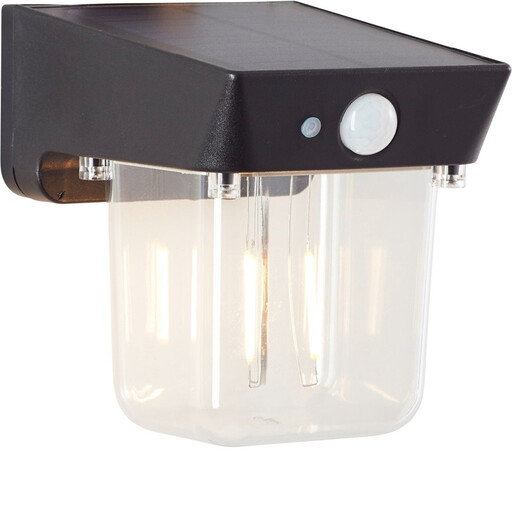
Why This Fits Their Persona: This user is looking for a functional and affordable solution for a specific spot, such as next to the shed door, near the bins, or along a dark garden path. It doesn't need to illuminate the entire garden, but it must provide functional light upon detecting motion.
At 180 lumens, this lamp isn't a powerhouse, but it delivers enough light for targeted applications, thus avoiding the "candlelight" pitfall. The IP44 rating and built-in motion sensor ensure you get a functional and weather-resistant product for its price.
Functional for targeted lighting. Solar-powered with a motion sensor. Attractively priced for basic needs.
We have compiled a complete, up-to-date list of products that meet these selection criteria and comply with current regulations.
Winter performance heavily depends on the quality of the solar panel and the battery capacity. High-quality models, like the Philips Fyns solar wall light, are designed to store energy efficiently and can still function after several overcast days. Cheaper models often struggle with this. Placement in a spot where the light catches the most (indirect) sunlight during the day is crucial for winter performance.
Yes, for most applications, an IP44 water-resistant label is sufficient. It means the housing is protected against splashing water from all directions. This is enough to withstand an average rain shower. For lights directly exposed to downpours or water jets (e.g., next to a sprinkler), a higher IP rating (like IP65) would offer more security, but for a wall light under a small eave, IP44 is the common and reliable standard.
For optimal performance, the solar panel must be able to capture as much daylight as possible. An ideal location is a south-facing wall (in the northern hemisphere) where there is no shade from trees or buildings. Even on cloudy days, a good panel will still charge, but direct sunlight is most effective. Also, ensure the motion sensor has a clear line of sight to the area you want to monitor, without shrubs or other objects blocking detection.
