
Vandaag of morgen in huis

Kwaliteit gegarandeerd

Welkomstaanbiedingen ontgrendelen: GRATIS bezorging | Tot 80% korting | Gratis 30 dagen JoyPlus-proefperiode
Download de app
A solar-powered outdoor light with a motion sensor seems like the ideal solution: no cable clutter, no extra energy costs, and light exactly when you need it. Yet, the purchase often leads to disappointment. A light that fails after a single autumn shower, a sensor that reacts to every leaf blowing past, or a glow so dim it barely illuminates the keyhole.
As a Joybuy Product Recommendation Officer, I see a lot of products come and go. I'm here to help you see through the marketing claims and focus on what really matters. Here are the most common pitfalls and how to avoid them.
Pitfall 1: The promise of extreme brightness. A high lumen count sounds impressive, but it's often misleading. If the battery capacity or solar panel is subpar, the light can't maintain that intensity for long, especially on overcast days.
Pitfall 2: Inadequate weather resistance. Many lights are sold with vague terms like "weather-resistant." Without a clear IP rating, you're buying a product that may not be able to withstand your local climate.
Pitfall 3: An impractical sensor. A sensor with too short a range forces you to walk right up to the wall before the light turns on. An oversensitive sensor, on the other hand, turns your garden into a disco with every gust of wind.
To avoid a bad purchase, it's best to focus on a few verifiable specifications. These determine whether a solar outdoor light with a sensor will perform reliably.
Brightness, measured in lumens (lm), determines how intensely the light shines. More isn't always better; it depends on the purpose.
The colour temperature, in Kelvin (K), sets the mood:
The IP rating indicates how well a light is protected against dust and water. For outdoor use, this is a crucial factor.
A good sensor is what makes the light truly smart. Pay attention to the following two features:
Because it's a wireless outdoor light, the efficiency of the solar panel and battery is essential for reliable performance, especially during the shorter, darker days of the year.
Not everyone needs the same type of light. Below are some recommendations tailored to specific use cases.
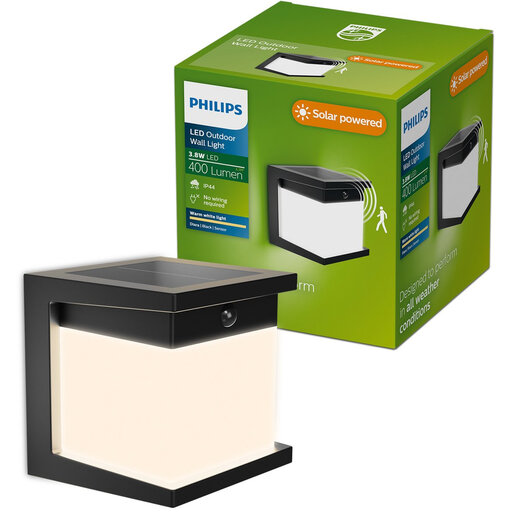
Why This Fits Their Persona: Ideal for those who want to atmospherically light a path, balcony, or seating area without harsh, bright light. Its compact, square design is unobtrusive and modern.
This light doesn't focus on extreme brightness. Its 400 lumens and 2700K warm white colour are specifically designed for ambiance, allowing the battery to be used efficiently for reliable operation.
Atmospheric warm white light. The IP44 rating is sufficient for sheltered installation. Simple, wire-free installation.
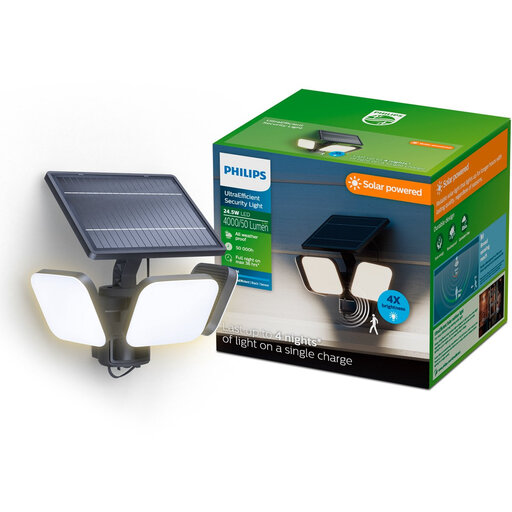
Why This Fits Their Persona: For those seeking maximum visibility and deterrence. Perfect for illuminating a dark driveway, back garden, or the side of a house.
This light bypasses the pitfalls of weather resistance and sensor performance. The IP65 rating makes it suitable for exposed walls, and the sensor has a long range (up to 16 metres).
Very high light output (4000 lm) for maximum visibility. Long detection range and a robust, weather-resistant housing.

Why This Fits Their Persona: A practical choice for those seeking a good balance between functional brightness and efficiency. Suitable for most standard applications, such as near a shed, garage, or front door.
This light offers a solid 1000 lumens, which is a great middle ground: bright enough for security, but not so extreme that it drains the battery quickly. The sensor and IP44 rating are reliable for general use.
Good balance between brightness (1000 lm) and functionality. The 3000K light colour is bright yet still warm. Reliable performance for everyday situations.
We have compiled a complete, up-to-date list of products that meet these selection criteria for reliable performance.
Yes, but performance may be reduced. The shorter days and weaker sunlight mean the battery doesn't charge as much. A light with an efficient solar panel and a quality battery will still function in winter, although its runtime per night may be shorter. Placement in a location that receives maximum direct sunlight (south-facing in the Northern Hemisphere) is crucial.
The IP (Ingress Protection) rating consists of two digits. The first digit (0-6) indicates protection against solid objects and dust. The second digit (0-9) indicates protection against moisture and water. For an outdoor light, the second digit is especially important. IP44 is splash-proof, while IP65 offers protection against water jets and is therefore more resistant to heavy rainfall.
Installation is typically straightforward. You just need to choose a suitable location where the solar panel can receive plenty of sunlight during the day. Most models come with screws and plugs to mount the light on a wall, fence, or post. Since no wiring is required, an electrician is not needed.
