
Vandaag of morgen in huis

Kwaliteit gegarandeerd

Welkomstaanbiedingen ontgrendelen: GRATIS bezorging | Tot 80% korting | Gratis 30 dagen JoyPlus-proefperiode
Download de app
Solar lighting seems like the ideal solution for any garden, balcony, or driveway: no messy cables, no extra electricity costs, and a simple installation. Yet, the purchase often ends in disappointment. A light that goes out after just an hour, a beam so weak you can barely see it, or a fixture that's full of water after the first autumn storm.
As a Joybuy Product Recommendation Officer, I see where things go wrong every day. Many products promise more than they can deliver. To help you avoid a bad buy, we'll pinpoint the common issues and show you what to look for.
Before you invest in sustainable garden lighting, it's important to recognise the most common traps. Sales pitches can make a product seem better than it is.
1. The "ambience light" that barely gives off any light The biggest problem with cheap solar lighting is its low light output. A product is sold as "lighting" but, in practice, functions as little more than a faint glimmer. This is fine if you're only looking for a subtle accent, but useless if you want to illuminate a path or be able to sit outside in the evening. The brightness, expressed in lumens, is often not even mentioned.
2. The battery that's dead after an hour You place the light in the sun all day, but an hour after dusk, the fun is already over. This indicates a combination of an inefficient solar panel and a low-capacity battery. Especially in regions with fewer sunshine hours, a high-quality battery and a good panel are essential for a reliable runtime.
3. The "weather-resistant" light that breaks after one downpour An outdoor light must be able to withstand the elements. Many models are advertised as "waterproof" but fail after a heavy shower, resulting in rust, moisture in the housing, and short circuits. This is due to an inadequate protection rating, which you can check by looking for its IP rating.
To sidestep the pitfalls above, you need to look beyond appearances. These three technical specifications determine whether a solar light is worth its price.
Lumens are the measure of the total amount of visible light a lamp emits. The higher the number, the brighter the light. Match the light output to your purpose:
The IP rating indicates how well a product is protected against dust and moisture. For solar-powered outdoor lighting, this is a crucial factor.
The battery is the engine of your solar light. Its capacity is expressed in milliampere-hours (mAh). A higher mAh value generally means a longer runtime. However, this only works in combination with an efficient solar panel that can sufficiently charge the battery during the day. Some models, particularly powerful spotlights or pendant lights, have a separate solar panel that you can aim at the sunniest spot, while the light itself can hang in the shade.
Based on these criteria, we have selected a number of products that suit specific needs and situations.
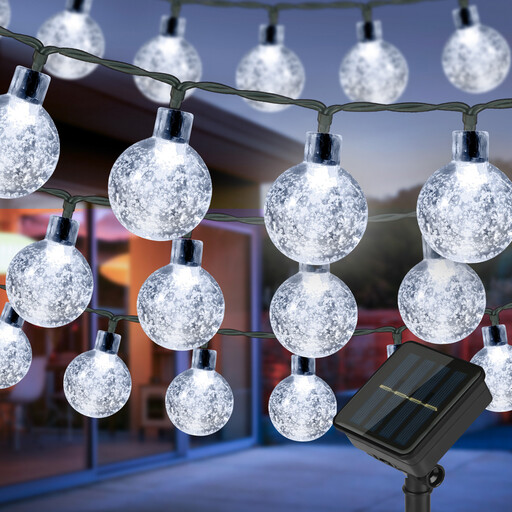
Why This Fits Their Persona: Ideal for anyone wanting to transform a balcony, pergola, or fence into an atmospheric space. The focus is on decoration, not bright illumination, which perfectly matches the desire for a cosy ambience.
This string light is designed for ambience, not high light output. The IP65 rating ensures it survives local downpours, thus avoiding the pitfall of poor weather resistance.
The 11-metre cable provides ample coverage. With 8 different light modes, you can easily adjust the atmosphere. According to the manufacturer VIVREAL, the string has a runtime of 8 to 14 hours after a full charge.

Why This Fits Their Persona: Perfect for safely illuminating a dark driveway, back door, or shed path. This light combines functionality with a sleek design, providing bright light exactly when it's needed.
With a light output of 1000 lumens, this lamp completely solves the problem of weak light. The motion sensor ensures the light only operates at full power when motion is detected, which conserves the battery and maximises runtime.
The combination of a dusk sensor and a motion sensor provides efficient and automated lighting. The IP44 rating makes it suitable for general outdoor use.
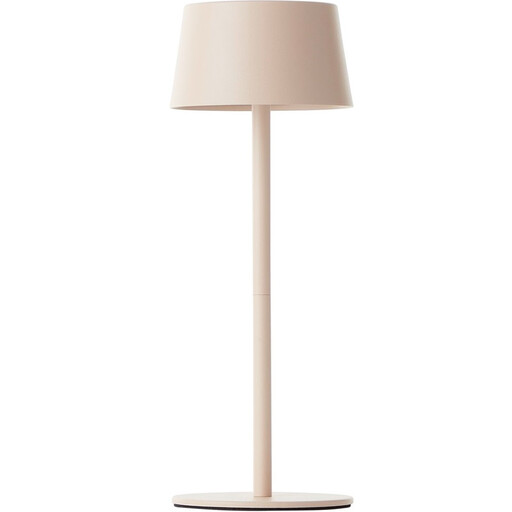
Why This Fits Their Persona: This wireless table lamp is ideal for those who need lighting in various places: on the garden table during dinner, next to the lounge set, or even taken along on a camping trip.
The dual charging option (solar and USB) bypasses the dead battery pitfall. After a few cloudy days, you can simply charge the lamp indoors, ensuring you're never left in the dark.
The lamp is dimmable in 3 steps, allowing you to adjust the light intensity to the situation. The IP44 rating makes it splash-proof and therefore suitable for outdoor use.
We have compiled a complete, up-to-date list of products that fully meet these strict selection criteria and UK regulations.
Yes, but performance is more limited. The shorter days and lower angle of the sun mean the solar panel can generate less energy. As a result, the runtime at night will be shorter than in the summer. For the winter months, it's best to choose a model with a large, efficient solar panel and a high-capacity battery. Lights with a motion sensor or a dimmable setting are also a good choice, as they use the stored energy more efficiently.
Most solar lights need about 6 to 8 hours of direct sunlight to fully charge the battery. The placement of the solar panel is therefore crucial. Ensure the panel is facing south and is not in the shade of trees, walls, or other objects. A clean solar panel also works more efficiently, so wipe it down occasionally with a soft cloth.
The lifespan of a solar light depends on two components. The LED solar light itself has a very long lifespan, often 15,000 to 25,000 operating hours or more. The limiting factor is usually the rechargeable battery. Depending on its quality and usage, the battery's capacity can diminish after 2 to 3 years. In some models, the battery is replaceable, which can significantly extend the life of the lamp.
