
Vandaag of morgen in huis

Kwaliteit gegarandeerd

Welkomstaanbiedingen ontgrendelen: GRATIS bezorging | Tot 80% korting | Gratis 30 dagen JoyPlus-proefperiode
Download de app
Solar-powered garden lighting sounds ideal: no messy cables, no extra costs on your energy bill, and still an attractively lit garden or balcony. In practice, the reality can be more challenging. Many people buy lights that fail after just a few months or produce a glow that instantly ruins any sense of ambiance.
Before you invest in new solar lighting for your outdoor space, it's wise to be aware of a few common pitfalls. This will help you avoid disappointment and prevent you from wasting money.
Fortunately, these problems are easy to avoid if you know what to look for.
Marketing terms can be misleading. Instead, focus on the specifications. Two or three technical details will often tell you everything you need to know about the quality and durability of the lamp.
The IP rating indicates how well a product is protected against dust and water. This is crucial for waterproof garden lights in our climate.
The runtime of a solar lamp depends on two things: the amount of stored energy and the efficiency of its charging.
The light colour determines the atmosphere. This is expressed in Kelvin (K).
Some models, particularly string lights, also offer different light modes (flashing, slow fade, steady on) for extra variety.
Based on these objective criteria, we have selected a few popular choices that suit different needs.
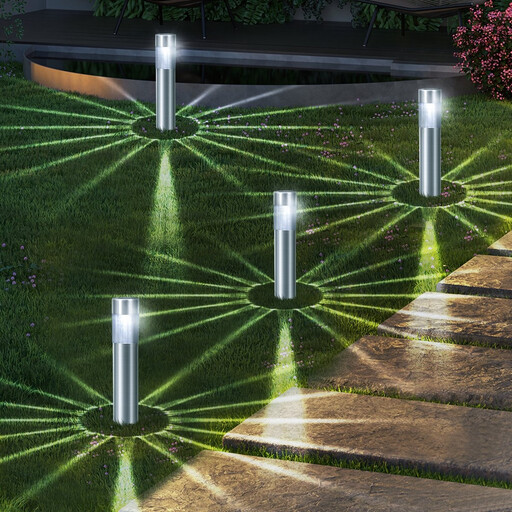
Why it's a match: For those who want to functionally illuminate a garden path, driveway, or border without any fuss. These stake lights are easy to place in the ground and get the job done. The daylight (6500K) ensures clear visibility.
The IP44 rating is an honest specification for this application. It protects against splashing water, which is sufficient for a lamp on a stake, and avoids the false promise of being fully waterproof.
Ease of installation: out of the box, into the ground, and you're done. The automatic on/off sensor handles the rest.
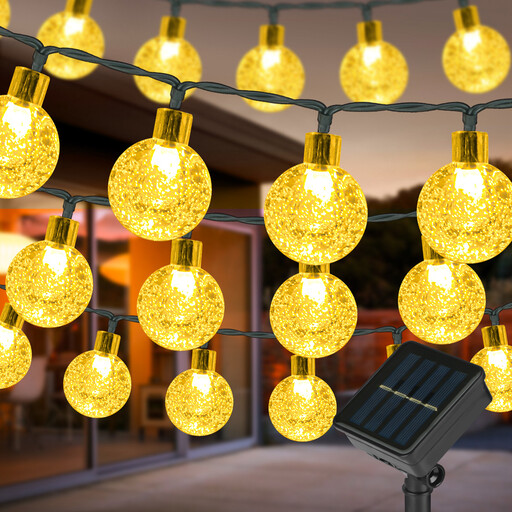
Why it's a match: Ideal for transforming a balcony, patio, or pergola into an atmospheric space. The warm light colour and the 'bubble' design of the bulbs create a cosy, inviting glow.
With an IP65 rating, these string lights are well-equipped to handle tough weather conditions. The combination of an efficient solar panel and warm white light avoids the pitfalls of water damage and sterile lighting.
Instantly creates a warm atmosphere thanks to the warm white light colour and decorative design. The 8 light modes offer added variety.
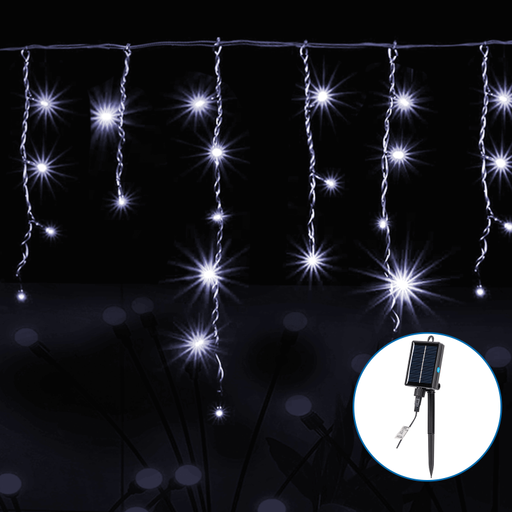
Why it's a match: Perfect for the holidays, a garden party, or anyone looking for unique decoration. These outdoor icicle lights instantly add a festive effect to a roofline, fence, or wall.
This product combines a playful design with robust specifications. The IP65 rating means you can confidently leave it outside all winter. The 8 light modes prevent the lighting from becoming monotonous.
The unique icicle design and 8 different light modes create a dynamic and festive effect that you can't achieve with standard string lights.
We have compiled a complete, up-to-date list of products that meet these selection criteria and current safety standards.
The lifespan depends on two components. The LED bulbs themselves often last a very long time, sometimes 15,000 burning hours or more. The rechargeable battery is usually the part that wears out first. Depending on the quality and usage, a battery can last 1 to 3 years before its capacity noticeably decreases. Keeping the solar panel clean helps to maximise the battery's lifespan.
Yes, but performance is reduced. Modern solar panels can charge even on a cloudy day, but the runtime will be significantly shorter than the advertised hours. During the dark winter months, with fewer hours of sunlight, you can expect the lights to stay on for a shorter period. Models with a larger solar panel and a higher-capacity battery generally perform better in winter.
No, that's the convenience of this type of lighting. Almost every solar-powered outdoor light with a sensor has a built-in light sensor (also known as a dusk-to-dawn sensor). This ensures the lamp charges automatically when it gets light and turns on by itself when it gets dark. Once installed, you don't have to think about it again.
