
Vandaag of morgen in huis

Kwaliteit gegarandeerd

Welkomstaanbiedingen ontgrendelen: GRATIS bezorging | Tot 80% korting | Gratis 30 dagen JoyPlus-proefperiode
Download de app
By Joybuy Product Recommendation Officer, 28 July 2026
Solar garden lighting is a fantastic solution: no hassle with cables, no extra energy costs, and instant atmosphere or security in your garden. But the reality can sometimes be disappointing. You buy a set of lights that only glow dimly after a month, or that are covered in rust after the first autumn storm.
The selection is huge, and not every light is suitable for the local climate. Before you invest in new solar-powered garden lighting, it's wise to know the common pitfalls. This way, you can avoid wasting money on products that fail to deliver on the promise of sustainable and atmospheric light.
Many disappointments can be traced back to a few common misunderstandings about specifications. These are the three areas where things often go wrong:
You don't need to pore over a technical manual to make a good choice. Pay attention to the following three specifications to assess the quality of outdoor solar lights.
The IP (Ingress Protection) rating indicates how well a device is protected against dust and moisture. For outdoor lighting, this is crucial.
These two values determine your light's performance.
The material determines the lifespan and appearance of your solar-powered garden lights.
Not everyone has the same needs. That's why we've highlighted a few popular choices that suit different user profiles.
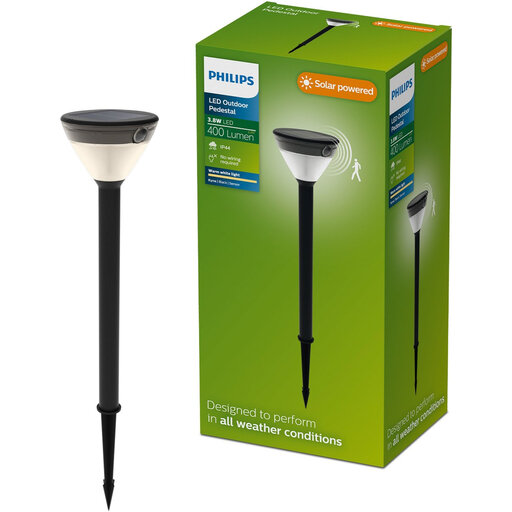
Why This Fits Their Persona: Ideal for those seeking security and functionality. This light illuminates paths and entrances with warm white light and brightens upon detecting motion, ensuring visibility where and when it's needed.
The built-in solar lighting with sensor saves energy, extending the battery life. The IP44 rating and Philips' build quality ensure reliability in wet weather conditions.
Motion and dusk-to-dawn sensors for automatic and efficient operation. According to Philips, the light is made from high-quality, weather-resistant materials.
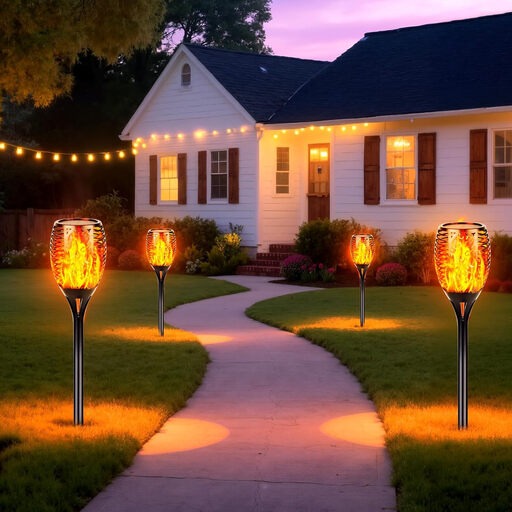
Why This Fits Their Persona: Perfect for those who want to create a unique, warm atmosphere. The flickering light effect of these torches mimics a real flame, ideal for cosy evenings on the patio or as a decorative element in the garden.
These torches have an IP65 rating, meaning they are highly resistant to rain and therefore less likely to fail. The unique design avoids the pitfall of boring, purely functional lighting.
Atmospheric and realistic flame effect. Automatic on/off function and a high waterproof rating for worry-free use.
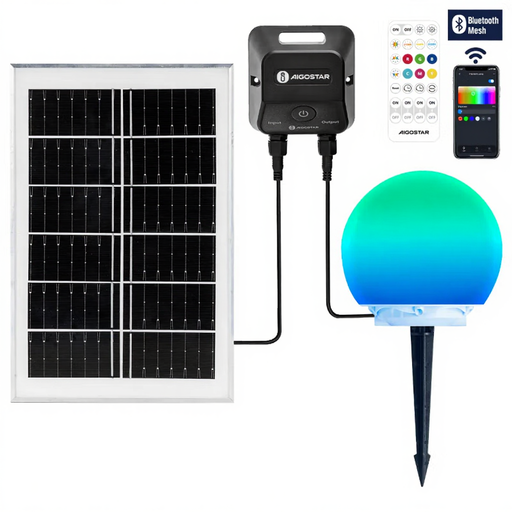
Why This Fits Their Persona: For those who want complete control over their lighting. With Bluetooth Mesh technology, you can set the colour (RGBCCT), brightness, and scenes via an app. Link multiple solar ground lights for a synchronised lighting scheme.
This model bypasses the 'one colour, one mode' limitation. The 4000 mAh lithium battery provides a powerful foundation for the smart features and a long runtime. The IP65 rating guarantees durability.
Full control over colour and brightness via the app. Linkable with over 200 devices for an extensive smart lighting system.
We have compiled a complete, up-to-date list of products that meet these selection criteria and local regulations.
Yes, but performance depends on the quality. In winter, the days are shorter and sunlight is less intense. A model with an efficient solar panel and a high-capacity battery (e.g., 1000 mAh or more) will perform better than a budget light with a small battery (100-300 mAh). The runtime will generally be shorter in winter than in summer.
The lifespan of the solar-powered LED garden light itself is often very long, with specifications reaching up to 15,000 or even 30,000 operating hours. The limiting factor is usually the rechargeable battery. Depending on its quality and usage, a battery may lose capacity after 1 to 3 years and need replacing. On some models, the battery is easy to replace.
The light colour is expressed in Kelvin (K).
