
Vandaag of morgen in huis

Kwaliteit gegarandeerd

Welkomstaanbiedingen ontgrendelen: GRATIS bezorging | Tot 80% korting | Gratis 30 dagen JoyPlus-proefperiode
Download de app
Solar garden lighting seems like the ideal solution: no fussing with cables, no extra electricity costs, and automatic light as soon as it gets dark. Yet, the purchase often leads to disappointment. A light that gives up the ghost after a few rain showers, or a light source that provides less ambiance than a stray firefly.
As a Joybuy Product Recommendation Officer, I see where things go wrong every day. Many products promise more than they deliver. Before you invest in new solar-powered garden lights, let's discuss the 3 most common pitfalls and how to recognise them by looking at the specifications.
To avoid a bad purchase, there are a few technical specifications you should always check. These determine whether a light is suitable for your purpose and the local climate.
The IP (Ingress Protection) rating indicates how well a product is protected against water and dust. This is not a marketing term, but an international standard.
solar LED garden lights in an open garden.solar ground spotlights in the driveway or in unsheltered areas.The performance of solar-powered ambient lighting for the garden depends entirely on the balance between the battery and the solar panel.
solar spike light might only have 40-100 mAh, whereas a more powerful light can have 1000 mAh or more.The look and function of your lighting are determined by the colour and amount of light.
Not everyone has the same needs. That's why we've matched a few products to different user profiles, based on their specifications.
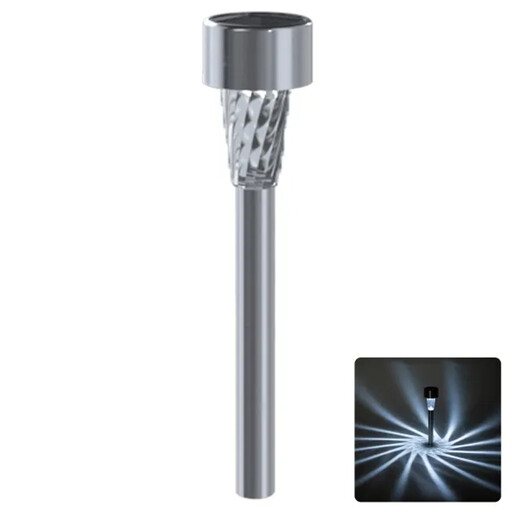
Why it's a match: Ideal for those who want to add ambiance to a border or flower pot affordably. These solar spike lights are easy to install and provide a subtle, decorative light without needing a large budget.
The specifications are honest: a 40 mAh battery with a charging time of 4-6 hours. This sets realistic expectations about the runtime, which is mainly intended for the evening hours, not the entire night.
Simple installation and a sleek stainless steel design. The IP44 rating is sufficient for sheltered spots, which fits the price and intended use.
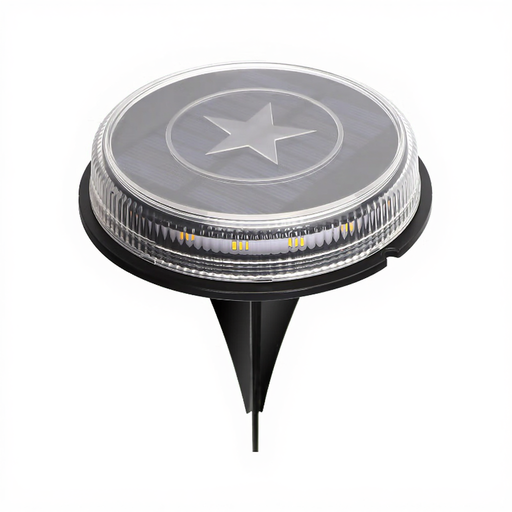
Why it's a match: For those who want to illuminate a driveway, patio, or garden path in a functional and durable way. These solar ground lights are designed to be robust and reliable, even when walked on.
It directly tackles the 'pseudo-waterproof' pitfall with an IP66 rating. This means the light is fully protected against dust and powerful water jets, making it resistant to harsh weather.
The combination of a robust housing, a lithium battery, and a clear light colour (3200K warm light) makes this a reliable choice for functional lighting.
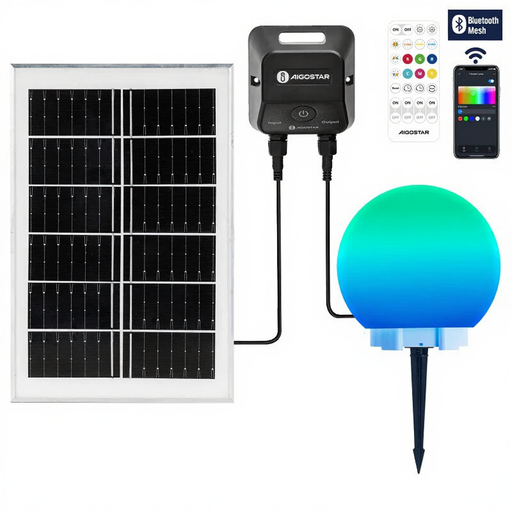
Why it's a match: For those who want complete control over their garden's atmosphere. Perfect for highlighting objects, creating party lighting, or setting up smart routines, all from your phone.
This model bypasses all the pitfalls: an IP65 rating, a powerful 4000 mAh battery with a large, separate solar panel for efficient charging, and a clear light output of 200 lm.
Full control via Bluetooth Mesh. Adjust colours (RGBCCT), dim the light, and connect over 200 lights. This isn't a simple `solar-powered outdoor light with sensor`, but a smart lighting system.
Other popular options like an outdoor solar string light or atmospheric solar torches follow the same principles. Always check the IP rating, battery capacity, and, if possible, the brightness in lumens.
We have compiled a complete, up-to-date list of products that meet these strict selection criteria and local regulations.
Most solar lights need at least 4 to 6 hours of direct sunlight for a full charge. This can be a challenge in some climates. Therefore, always place the solar panel in a south-facing position that is free from shadows cast by trees, fences, or buildings. Some panels (amorphous silicon) perform slightly better in cloudy weather, but direct sunlight remains the key to a long runtime.
The LED bulb itself often lasts a long time, with a specified lifespan of 15,000 hours or more. The weakest link is the rechargeable battery. It typically lasts 1 to 3 years, depending on quality and usage. In most cheaper models, the battery is not replaceable, and you have to replace the entire unit. With more expensive, modular systems, it is sometimes possible to replace the battery.
Yes, but with limitations. In winter, the days are shorter and the sun is lower in the sky, causing the solar panel to generate less energy. This means the runtime in the evening will be significantly shorter than in the summer. Expect the runtime to be halved, or even less. A light that runs for 8 hours in the summer might only last 2 to 4 hours in the winter.
