
Vandaag of morgen in huis

Kwaliteit gegarandeerd

Welkomstaanbiedingen ontgrendelen: GRATIS bezorging | Tot 80% korting | Gratis 30 dagen JoyPlus-proefperiode
Download de app
Solar garden lighting seems like the perfect solution: no messy cables, no extra energy costs, and instant ambiance for your garden or balcony. But in practice, the reality is often more challenging. Many lights fail after just a few months or don't survive the first autumn storm. Before you invest in new outdoor lighting, it's wise to know the common pitfalls.
As a Joybuy Product Recommendation Officer, I see a lot of products come and go. I'm here to help you see through the marketing claims and focus on what really matters, so you can make a purchase you'll enjoy for years to come.
The 3 most common pitfalls of outdoor solar lights:
wireless outdoor lights often use an IP23 classification, which only protects against light drizzle. After a serious shower, the electronics are irrevocably damaged.To avoid the problems mentioned above, there are a few specifications you should always check. These aren't complicated technical details, but practical features that make the difference between a bad buy and a lasting purchase.
IP Rating: The Minimum for Weather Resistance For solar-powered garden lighting in most climates, an IP44 rating is the absolute minimum. This means the light is splash-proof and can withstand a normal rain shower. Is the light in a very exposed location where it will be hit by driving rain? Then consider a higher rating like IP65, which indicates the light is completely dust-tight and protected against water jets.
Battery Capacity (mAh) and Solar Panel The battery's capacity, expressed in milliampere-hours (mAh), determines how long the light can stay on. A higher mAh value generally means a longer runtime. A capacity of 100 mAh is fine for a small ambient light, but for functional path lighting, you'll need more. Also, look at the type of solar panel. Amorphous silicon panels charge slightly better in cloudy weather, while polycrystalline panels are more efficient in direct sunlight.
Light Colour (Kelvin) and Brightness (Lumen) Do you want ambiance or functionality? The light colour, expressed in Kelvin (K), is crucial here. A low value (around 2700K) produces warm white light, ideal for a cosy atmosphere. A high value (around 6500K) gives cool, daylight-like light, which is more suitable for functional outdoor lighting with a sensor along a driveway or path. The brightness, expressed in Lumen (lm), indicates how bright the lamp is. A solar lantern with 10-50 lumens is for ambiance, while a solar spike light for illuminating a path performs better with 100 lumens or more.
Not everyone has the same needs. That's why we've highlighted a few popular choices and matched them to a specific user profile.
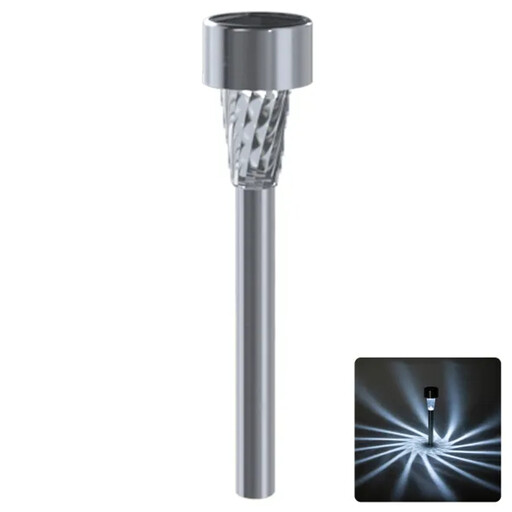
Why it's a match: Ideal for those looking to add ambiance to a balcony or garden border on a small budget. No complex features, just a simple and effective light point that you can stake directly into the ground.
The product information is transparent about its specifications. The IP44 rating is clearly stated, so you know it can withstand a rain shower. The stainless steel construction prevents the light from becoming brittle after one season.
Simple installation and a sleek design at an accessible price. The 6500K light colour provides bright, functional light along a path.
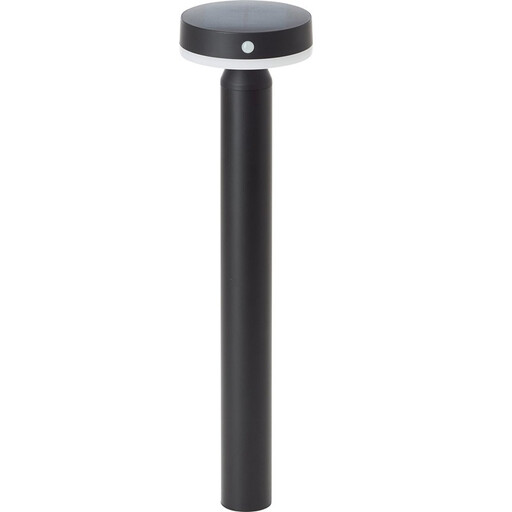
Why it's a match: For those seeking reliable, functional lighting for a driveway, garden path, or dark corner. Safety and performance are the top priorities.
This light is made of metal and plastic, which is more durable than cheap plastic. The built-in motion sensor ensures the light only turns on when needed, significantly extending the battery life, even on overcast days.
The combination of a high light output (350 lumens) and a motion sensor makes this a highly effective and efficient security light. The IP44 rating guarantees reliability in typical regional weather.
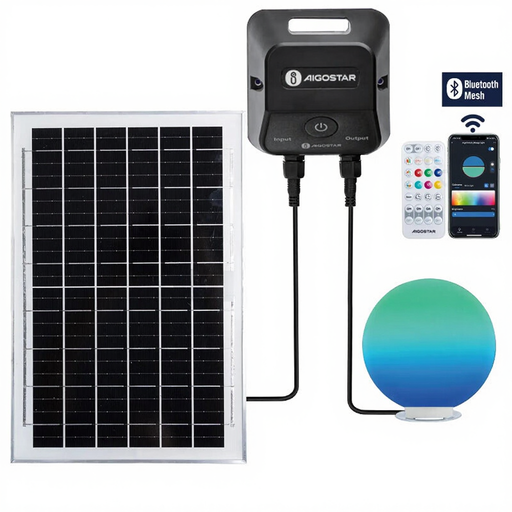
Why it's a match: For those who want more than just a point of light. This smart lamp offers complete control over colour and ambiance via an app, combined with a modern design.
This model bypasses the "weak battery" pitfall with a very powerful 8000 mAh battery and a large, separate solar panel for maximum energy harvesting. This ensures reliable performance, even for a feature-rich smart lamp.
Full control via Bluetooth Mesh (RGBCCT), allowing you to set colours, warmth, and effects. A `sustainable garden lighting` solution that is both functional and a design statement.
We've compiled a complete, up-to-date list of products that meet these selection criteria and current regulations.
Yes, but with limitations. The shorter, darker days mean the battery won't charge as fully. As a result, the runtime will be significantly shorter than in summer, often just a few hours. Place the lights in the sunniest spot you can find, free from the shade of trees or buildings. Models with a motion sensor are especially practical in winter, as they use the stored energy efficiently.
The rechargeable battery in a solar-powered garden light has a lifespan of about 1 to 3 years. This depends on the quality of the battery and the operating conditions. On many models, especially higher-end ones, you can replace the battery yourself (often a standard NiMH AA or AAA type). This is a sustainable way to significantly extend the life of your light.
Most solar LED garden lights with an IP44 rating or higher are designed to stay outside all year and can withstand light frost. The housing protects the electronics. However, during severe or prolonged frost, it may be wise to temporarily bring the lights indoors to maximise battery life. Always check the manufacturer's specifications for the recommended operating temperature.
