
Vandaag of morgen in huis

Kwaliteit gegarandeerd

Welkomstaanbiedingen ontgrendelen: GRATIS bezorging | Tot 80% korting | Gratis 30 dagen JoyPlus-proefperiode
Download de app
Solar-powered garden lighting sounds ideal: no cable clutter, eco-friendly, and automatic light as soon as it gets dark. In practice, the reality is often more challenging. Many lights don't survive the first autumn storm or simply die out after just a few hours. Before you invest in creating atmosphere for your garden, balcony, or patio, it's wise to know what to look for. We'll discuss the three most common pitfalls and how to avoid them.
A common complaint is that solar garden lighting breaks down quickly due to moisture. The term "waterproof" is often used too loosely. A lamp that can survive a light summer shower isn't necessarily resistant to a persistent downpour. The result is corrosion, short-circuiting, and a light that's ready for the bin after just one season.
Packaging often promises a runtime of "8 to 12 hours." These figures are usually based on a perfect summer day with full sun. In regions with variable weather and shorter winter days, the reality is often different. The frustration of a garden path plunging back into darkness by 9 PM is a well-known problem.
Many budget-friendly solar outdoor lights provide more of a dim glow than a functional light source. They might be nice for marking a flowerpot, but they're completely inadequate for lighting a path or creating ambient garden lighting. You end up with a collection of lights that are barely noticeable and add no real value.
To ensure your purchase is a success, there are a few technical specifications you can't ignore. These determine the durability and performance of your led garden lighting.
The IP (Ingress Protection) rating indicates how well a device is protected against dust and moisture. This is arguably the most important specification for outdoor lighting.
solar ground spots or solar garden torches. These lights can withstand a heavy downpour.These two values determine the function and atmosphere of the lighting.
The engine of your solar lamp. A larger battery capacity (expressed in mAh) means the lamp can stay on longer. An efficient solar panel (often monocrystalline silicon) charges faster, even with less direct sunlight. A garden light with a sensor that only turns on with motion helps to significantly extend battery life, especially during the darker months.
Based on these criteria, we have selected a few popular choices that suit different needs and gardens.
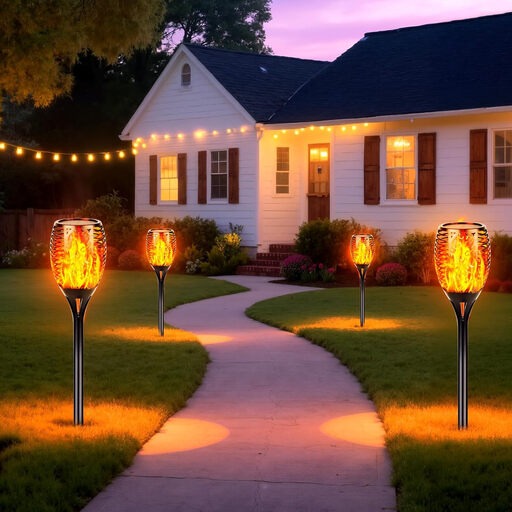
Why This Fits Their Persona: Perfect for those who want to create a warm, vibrant atmosphere. The dancing flame effect of these solar garden torches mimics a real torch, ideal for lining a garden path, near a pond, or on the patio.
With an IP65 rating, this torch is built to withstand harsh weather conditions, avoiding the pitfall of moisture damage. The 96 LEDs provide a full and realistic flame effect, not a weak flicker.
Atmospheric and realistic flame effect without the fire hazard. Automatically turns on and off thanks to the built-in light sensor.
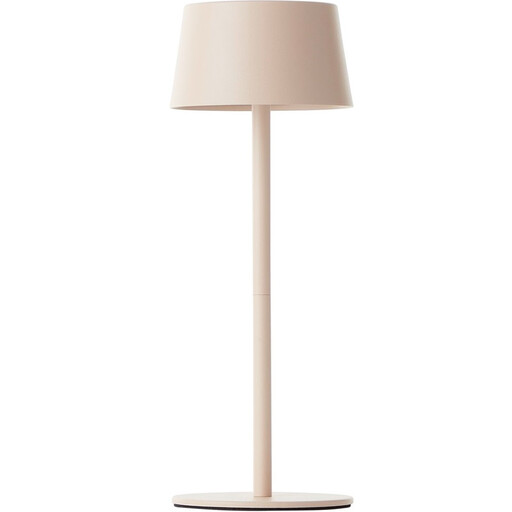
Why This Fits Their Persona: This stylish table lamp offers flexible use on the garden table, balcony, or even indoors. It combines design with functionality and isn't dependent on a fixed spot in the sun.
The hybrid charging function (solar power and USB) is the solution to the pitfall of unrealistic runtimes. Is it a cloudy day? Simply charge it indoors. The dimming function gives you control over brightness and energy consumption.
Flexible charging via solar and USB. Dimmable in 3 steps for the right atmosphere. At 170 lumens, it provides functional light.
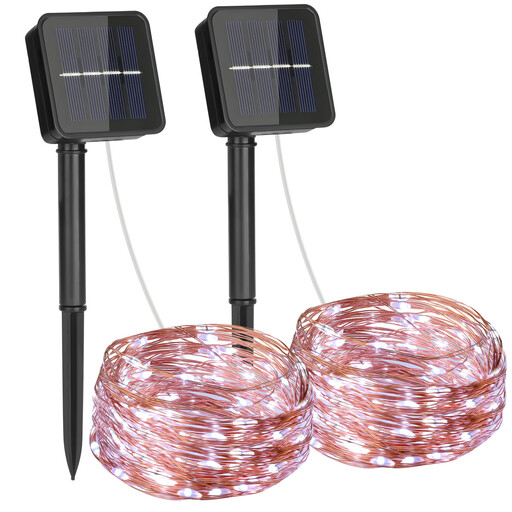
Why This Fits Their Persona: This `solar outdoor string light` is perfect for those who want to get creative. Wrap it around a tree, a fence, or your balcony railing for a magical effect. The copper wire is flexible and easy to shape.
Here too, the IP65 rating is crucial. This string light is designed to stay outside all year round, unlike cheaper alternatives that malfunction after a rain shower. The improved solar panel ensures better charging efficiency.
Set of two 8-meter strings. Offers 8 different light modes (from steady to flashing) and has a memory function.
Didn't find what you were looking for? There are more lighting options that don't rely on the sun, such as low-voltage systems that are safe and easy to install.
The lifespan heavily depends on the quality. The LED bulb itself can last for tens of thousands of hours. The weakest link is usually the rechargeable battery, which can lose capacity after 1 to 3 years (about 500-1000 charge cycles). Products with a high IP rating (like IP65) and a robust housing generally last longer because they are better protected against moisture and corrosion.
Yes, but performance is more limited. Due to shorter days and the lower position of the sun, charging time is reduced, resulting in a shorter runtime in the evening. Models with an efficient solar panel and a large battery perform better. A garden light with a sensor that only turns on with motion is a particularly smart, energy-saving choice for winter.
