
Vandaag of morgen in huis

Kwaliteit gegarandeerd

Welkomstaanbiedingen ontgrendelen: GRATIS bezorging | Tot 80% korting | Gratis 30 dagen JoyPlus-proefperiode
Download de app
Solar garden lighting seems like the ideal solution: sustainable, no cable clutter, and lower energy bills. Yet, many people end up with lights that stop working after a few months, barely provide any light, or can't withstand a heavy downpour. Before you invest in ambience or security for your garden, balcony, or patio, it's wise to know the common pitfalls.
As a Product Recommendation Officer at Joybuy, I see what works and what doesn't on a daily basis. We filter out the marketing fluff and focus on what truly matters. These are the three most common mistakes when purchasing solar-powered outdoor lighting and how to avoid them.
You don't need to pore over a technical manual to make a good choice. Pay attention to these three key points, and you can be confident you're choosing durable outdoor lighting that delivers on its promises.
The IP (Ingress Protection) rating indicates how well a product is protected against dust and moisture. This is a crucial factor for the lifespan of your LED garden lighting.
Don't be misled by vague terms like "bright light." The facts are in the specifications:
The performance of solar-powered outdoor lighting depends entirely on the battery and the solar panel.
Based on these criteria, we have selected a few popular choices that suit different needs and situations.
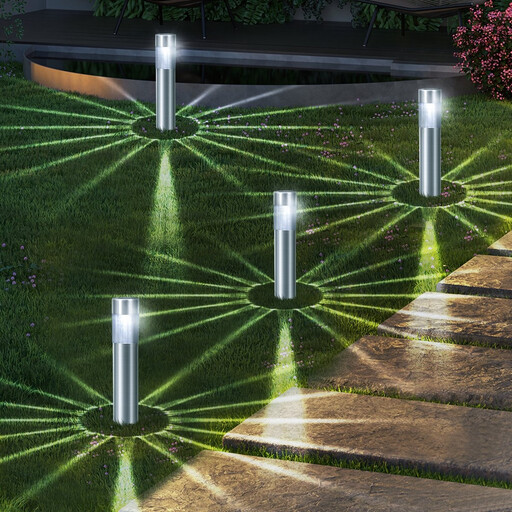
Why This Fits Their Persona: A simple and affordable solution to mark a garden path, border, or flowerbed. No complicated installation—just stake it into the ground and you're done. Ideal for those who want to start with solar lighting without a large investment.
This stake light focuses on marker lighting, not bright illumination. This prevents the disappointment of weak light output. The IP44 rating is sufficient for a relatively sheltered spot in the garden.
Extremely simple installation (stake-and-go) and automatic operation thanks to the built-in dusk-to-dawn sensor. Completely hassle-free.
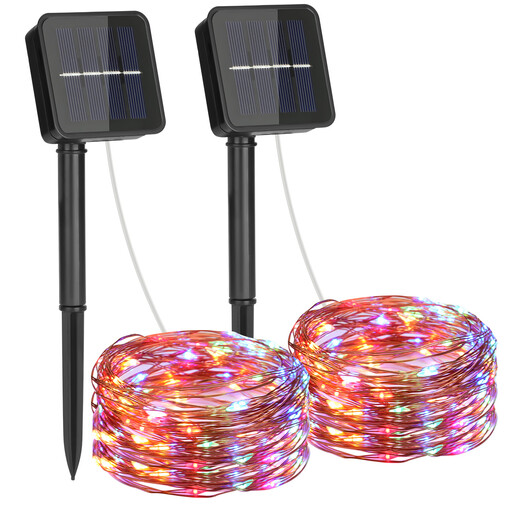
Why This Fits Their Persona: Perfect for those who want to create a cosy, almost magical atmosphere on a balcony, patio, or around a tree. The flexible copper wire is easy to shape, and the 8 lighting modes offer plenty of variety for any occasion.
This outdoor solar string light focuses purely on ambience, not bright functional lighting. The design is specifically intended for outdoor use and is water-resistant, which avoids the pitfall of a short lifespan due to moisture.
You receive two string lights for broad coverage. The 8 lighting modes with a memory function mean you don't have to re-select your favourite setting every day.

Why This Fits Their Persona: Ideal for securely illuminating a driveway, back door, or dark path. The powerful light beam and reliable motion sensor provide light when it's needed and contribute to a sense of security.
This solar wall light with sensor delivers what it promises: a very powerful light beam of 1000 lumens. This avoids the pitfall of light that is too weak for security purposes, a common complaint with cheaper models.
The combination of a high light output and a reliable motion sensor makes this a highly effective security light. Installation is simple, with no wiring hassle.
We have compiled a complete, up-to-date list of products that fully meet these strict selection criteria and safety regulations.
The lifespan depends heavily on the quality. The LED bulbs themselves often last a long time, with a rated lifespan of 15,000 to 25,000 hours. The weakest link is usually the rechargeable battery. With most models, you can expect a battery lifespan of 1 to 3 years. Some higher-quality lights offer the option to replace the battery, which significantly extends the product's lifespan.
Yes, but performance is reduced compared to the summer. The runtime will be shorter due to the shorter days and the lower position of the sun. Models with a larger, more efficient solar panel and a high-capacity battery (mAh) perform noticeably better. It is also important to place the light in a spot where it can capture the maximum amount of (winter) sunlight during the day, ideally facing south and free from shade.
The IP rating indicates the degree of protection against solid particles (first digit) and liquids (second digit). For outdoor lighting, these are the most common values:
