Joybuy Insights

Solar Garden Lighting Buying Guide: How to Avoid a Bad Purchase

Solar garden lighting sounds ideal: no fussing with cables, no extra costs on your energy bill, and a sustainable choice. But in practice, it can be a different story. Many people buy lights that fail after the first serious rain shower or that go out after just a few hours.

As a Joybuy Product Recommendation Officer, I see where things often go wrong. Before you invest in creating ambiance for your garden, balcony, or patio, it's wise to be aware of a few common pitfalls.

  • The "waterproof" lie: A product might be sold as waterproof, but after a heavy downpour, you find water inside. This is often due to a low IP rating that isn't suitable for unsheltered outdoor use.
  • The battery blunder: The lights look beautiful on the packaging, but during the dark winter months, they stop working after just two hours. The cause is usually a combination of an inefficient solar panel and a low-capacity battery.
  • The tea-light effect: You're looking for functional lighting for your garden path but end up with a light source that's barely brighter than a candle. This happens when the light output (measured in lumens) is too low for its intended purpose.

Fortunately, these problems are easy to avoid if you know what to look for.

What to Look For: Key Specifications Explained

To prevent your solar-powered outdoor lighting from becoming a disappointment, there are three technical specifications you must check.

1. Water Resistance: The IP Rating

The IP rating (Ingress Protection) indicates how well a device is protected against dust and moisture. This isn't a marketing term, but an international standard.

  • IP44: Splash-proof. This is sufficient for a light that hangs under a canopy or roof. It can withstand a rain shower but is not resistant to water jets from a garden hose, for example.
  • IP65: Dust-tight and protected against water jets. These lights are fully protected against water jets from any angle. This is the recommended minimum rating for lighting placed in an unsheltered part of the garden, such as solar ground lights.
  • IP67/IP68: Dust-tight and waterproof, even when submerged. This is primarily necessary for lighting placed in or directly next to a pond.

So, always check the IP rating and match it to the location where you plan to install the lighting.

2. Battery Capacity (mAh) and Solar Panel

The performance of solar garden lights depends on the interplay between the solar panel and the battery.

  • Battery Capacity (mAh): The capacity, expressed in milliampere-hours (mAh), is the "fuel tank" of your light. A higher mAh value means the battery can store more energy, resulting in a longer runtime.
  • Solar Panel: The solar panel is the "pump" that fills the tank. A larger and more efficient panel charges the battery faster, even on days with less direct sunlight.

A large battery is of little use if the solar panel is too small or inefficient to fully charge it. Look for a good balance between the two for reliable performance all year round.

3. Light Output (Lumens) and Light Colour

The amount of light and the atmosphere it creates are crucial.

  • Lumens (lm): This indicates the brightness of the light. For ambient lighting, like a solar string light, 50-150 lumens per light is often sufficient. For functionally lighting a path or driveway, you'll need closer to 150-300 lumens.
  • Light Colour (Kelvin and RGB): The colour temperature is expressed in Kelvin (K). Warm white light (around 2700K) creates a cosy atmosphere. Cool white light (around 4000K-6500K) is more functional and modern. RGBCCT means you can set all the colours of the rainbow (RGB) as well as various shades of white (CCT), often via an app. This is a feature of smart garden lighting.

Recommended Products Worth Considering

Not every light is suitable for every situation. Below are a few choices tailored to different needs and users.
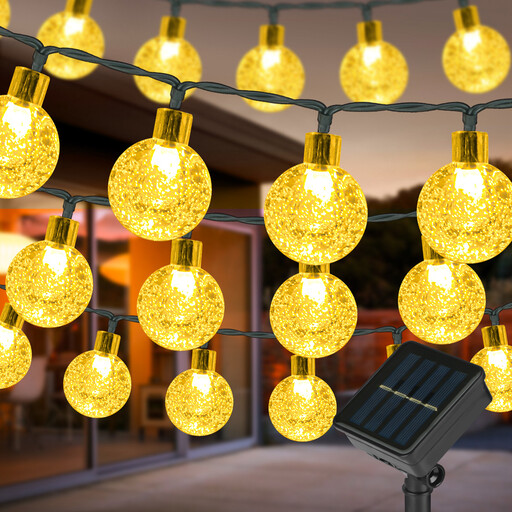
MATCH FOR: The Ambiance Decorator
VIVREAL Solar Bubble Ball String Lights – 7M (23 ft) 50 LEDs Warm White

VIVREAL Solar Bubble Ball String Lights – 7M 50 LEDs Warm White

Why This Fits Their Persona: Ideal for those who want to quickly create a cosy, warm atmosphere on a balcony, under a pergola, or along a fence without any technical knowledge. No fuss, instant results.

How It Avoids the Trap

The IP65 rating ensures this string light can withstand heavy rain. The efficient solar panel charges the battery well, so you won't be left with the 'tea-light effect' or a short runtime.

Key Advantage & Pros

Automatic operation (on at dusk, off at dawn) and 8 different lighting modes to adjust the mood. The warm white glow of the 50 LED bulbs creates an inviting ambiance.
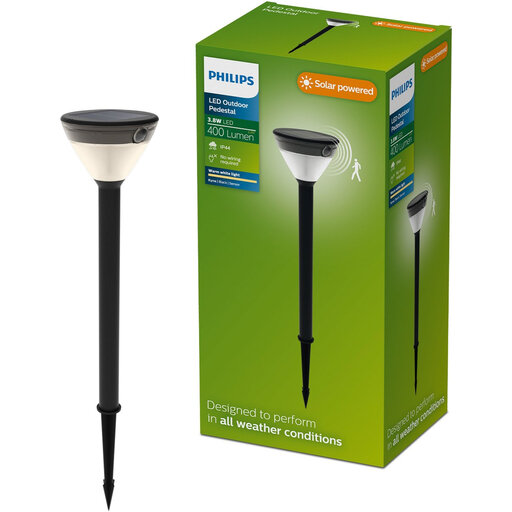
MATCH FOR: The Practical Homeowner
Philips Kyna Solar Socket Bulb - Solar-Powered

Philips Kyna Solar Spike Light with Sensor

Why This Fits Their Persona: For those seeking reliable, functional lighting along a garden path, driveway, or near the back door. Safety and convenience are paramount, without compromising on a stylish design.

How It Avoids the Trap

The built-in motion sensor prevents unnecessary battery drain, counteracting the 'battery blunder'. The light only shines brightly when needed. The IP44 rating and use of UV-resistant plastic ensure durability.

Key Advantage & Pros

Two light modes: a soft base light that brightens upon motion, or completely off until motion is detected. According to Philips, the product is designed for a long lifespan.
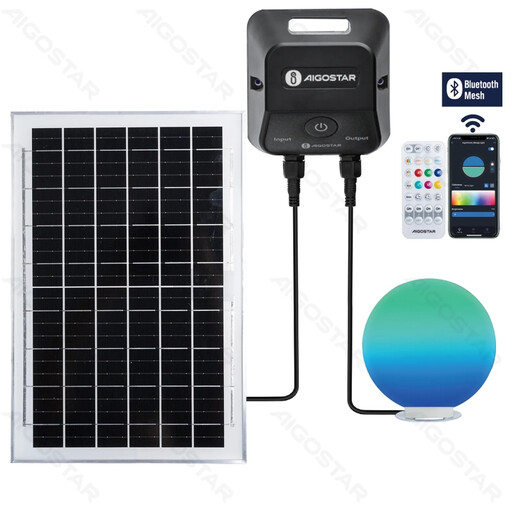
MATCH FOR: The Smart Outdoor Space User
Aigostar Bluetooth Mesh, Smart Solar Ground Light 35W RGBCCT

Aigostar Bluetooth Mesh, Smart Solar Ground Light 35W

Why This Fits Their Persona: For the tech enthusiast who wants complete control. Set colours, brightness, and schedules via an app and make the lighting part of a smart home network.

How It Avoids the Trap

The relatively high power of 35W and the large solar panel tackle the 'tea-light effect'. Smart control via the app allows for efficient energy management, ensuring optimal battery use.

Key Advantage & Pros

Bluetooth Mesh technology lets you connect and simultaneously control over 200 lights. The RGBCCT function gives you complete freedom over colour and white tones for any occasion.

Looking for more options?

We have compiled a complete, up-to-date list of products that fully meet these strict selection criteria and safety regulations.

Frequently Asked Questions

1. Does solar garden lighting work in the winter?

Yes, but the runtime will be shorter than in the summer. Due to shorter days and the lower position of the sun, the solar panel receives less energy. For the winter months, choose a model with an efficient solar panel and a high-capacity battery (mAh). A light with a motion sensor is also a smart choice, as it only consumes energy when needed.

2. How many lumens do I need for my garden?

That depends on your goal.

  • Ambient Lighting: To create a cosy atmosphere on your patio or among plants, 50 to 150 lumens per light point is usually enough.
  • Functional Lighting: To safely illuminate a path, staircase, or entrance, it's better to aim for 150 to 300 lumens.
  • Security Lighting: Lights with a motion sensor that need to illuminate a large area often have 300 lumens or more.

3. How do I maintain my solar-powered garden lights?

Maintenance is minimal, but a few small actions will help keep performance optimal.

  • Clean the solar panel: Regularly wipe the panel with a soft, damp cloth to remove dirt, dust, and bird droppings. A dirty panel charges less efficiently.
  • Check the location: Ensure the solar panel receives as much direct sunlight as possible during the day and is not in the shade of plants, trees, or buildings.
  • Prune overhanging branches: Make sure the lights and panels remain free of leaves and branches.