
Vandaag of morgen in huis

Kwaliteit gegarandeerd

Welkomstaanbiedingen ontgrendelen: GRATIS bezorging | Tot 80% korting | Gratis 30 dagen JoyPlus-proefperiode
Download de app
Solar garden lighting is a practical solution: no messy cables, no extra costs on your energy bill, and a sustainable choice. Yet, the purchase often leads to disappointment. A light that fails after a few cloudy days, or one so dim it's barely noticeable. As a Product Recommendation Officer at Joybuy, I see where things often go wrong. Let's skip the marketing jargon and focus on what really matters.
Before you invest in new outdoor solar lighting, it's wise to know the three most common pitfalls.
To avoid the problems above, you don't need to comb through a technical manual. Pay attention to the following three specifications to make an informed choice for sustainable outdoor lighting.
Lumen (lm) indicates the total amount of light a lamp emits. It's the most reliable indicator of brightness.
The battery's capacity, expressed in milliampere-hours (mAh), determines how long a solar-powered LED garden light can stay lit. A higher mAh value means a longer runtime, but only if the solar panel is powerful enough to fully charge the battery during the day. Look for a good balance. A light with a large battery but a small panel will struggle during overcast autumn months.
The IP rating indicates how well a device is protected against dust and water. For wireless garden lights, this is a crucial factor.
Based on these criteria, we've made a selection that suits different needs and situations.
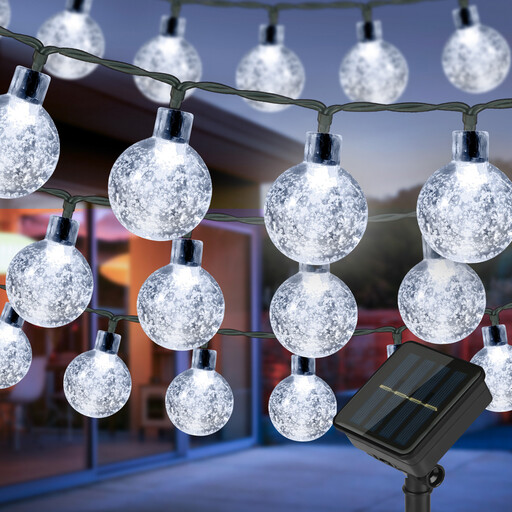
Why This Fits Their Persona: Ideal for those who want to transform a balcony, patio, or pergola into an atmospheric space. The focus here isn't on bright illumination, but on a cosy, decorative glow for long summer evenings.
The IP65 rating makes this string light resistant to heavy downpours, avoiding the "Not-So-Waterproof" pitfall. According to the manufacturer, the runtime is 8-14 hours, which indicates a reasonable battery for ambient lighting.
The 11-metre cable with 60 LED bulbs provides ample coverage. With 8 different lighting modes, you can easily adjust the atmosphere.
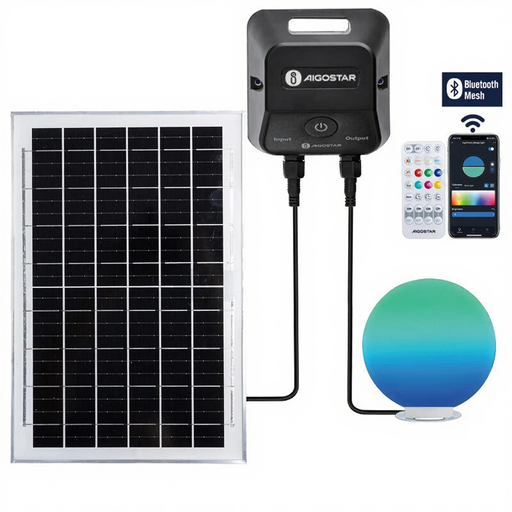
Why This Fits Their Persona: For those who want complete control. This user wants more than just on/off; they want to adjust colours, set scenes, and integrate the lighting into a smart system. This is an example of smart garden lighting.
The substantial 8000 mAh battery and 350-lumen output tackle the "Summer-Only" and "Candlelight Effect" pitfalls. Via the app, you can dim the brightness to save energy on cloudy days.
Full control over colour (RGB) and white tones (CCT) via Bluetooth Mesh. According to Aigostar, you can connect and control more than 200 devices with this system.

Why This Fits Their Persona: This person is looking for a reliable and bright light source for the front or back door, the shed, or along a dark path. Functionality and safety are paramount.
With a light output of 1000 lumens, the "Candlelight Effect" is no issue at all. The built-in motion sensor ensures the powerful light only turns on when needed, conserving the battery for when it matters most.
The combination of high light output and a motion sensor makes this a highly effective security light. The IP44 rating is sufficient for mounting under an eave or on a wall.
Didn't find what you were looking for? There are more types of solar-powered garden lighting that meet our strict selection criteria.
This heavily depends on the quality of the solar panel and the battery capacity. A high-quality light with an efficient panel can still gather enough energy on a completely overcast day for several hours of light, often in a dimmed mode. Cheaper models will have a much harder time and may not turn on at all.
The LED chip itself often lasts a long time, with a lifespan estimated by manufacturers at 15,000 to 30,000 hours of use. The limiting factor is usually the rechargeable battery. Just like the battery in your phone, it has a limited number of charge cycles and typically needs to be replaced after 2 to 3 years for optimal performance. The durability of the housing (dependent on the IP rating) also plays a major role in the overall lifespan.
Yes, in most cases, it is. For solar ground spotlights or stake lights, it's just a matter of pushing the stake into the ground. You can hang a solar string light wherever you like. Wall lights require a few screws in the wall. Since no electrical cables are involved, no technical knowledge is required. The most important thing is to position the solar panel where it can receive as much direct sunlight as possible during the day.
