
Vandaag of morgen in huis

Kwaliteit gegarandeerd

Welkomstaanbiedingen ontgrendelen: GRATIS bezorging | Tot 80% korting | Gratis 30 dagen JoyPlus-proefperiode
Download de app
Solar-powered garden lighting sounds ideal: no fussing with cables, no extra electricity costs, and an eco-friendly choice. Yet, the purchase often leads to disappointment. Lights that give up after a few downpours, a glow that barely illuminates a single paving stone, or a battery that's dead before you've even had a chance to sit outside.
As a Product Recommendation Officer at Joybuy, I see where things go wrong every day. Many products promise more than they can deliver. Before you invest in ambiance or security for your garden, it's wise to know how to avoid the common pitfalls.
Many disappointments can be prevented by looking beyond the marketing hype. Pay special attention to these three points:
To make a good choice, you don't need to read a technical manual. Focus on a few concrete specifications that make the difference between a bad buy and years of enjoyment.
These two specifications are inextricably linked.
A light with high lumens but low mAh will burn brightly, but will drain quickly. A good balance is essential.
The IP (Ingress Protection) rating indicates how well a device is protected against dust and moisture. For LED outdoor lighting, this is one of the most important features.
Durability is also determined by the materials used. Stainless steel (SST) and sturdy ABS plastic last considerably longer than thin, brittle plastic. Also, pay attention to the type of solar panel. Polycrystalline panels generally perform better in direct sunlight, while amorphous panels (often thinner and more flexible) perform slightly better in cloudy weather but typically have lower efficiency.
To help you get started, we have selected a number of products that suit different needs and situations.
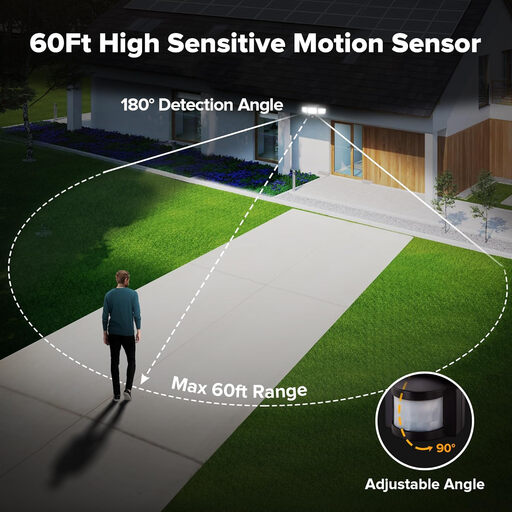
Why This Fits Their Persona: Ideal for those who prioritise security and functionality. This set provides powerful light (3000 lumens per lamp) and a wide motion sensor, perfect for illuminating the driveway, shed, or back entrance as soon as motion is detected.
Tackles the "dim light" pitfall with a very high lumen output. The IP65 rating and robust ABS construction ensure it withstands harsh weather.
Powerful security lighting with a motion sensor and zero installation costs. The three adjustable heads provide a wide 270° illumination angle.
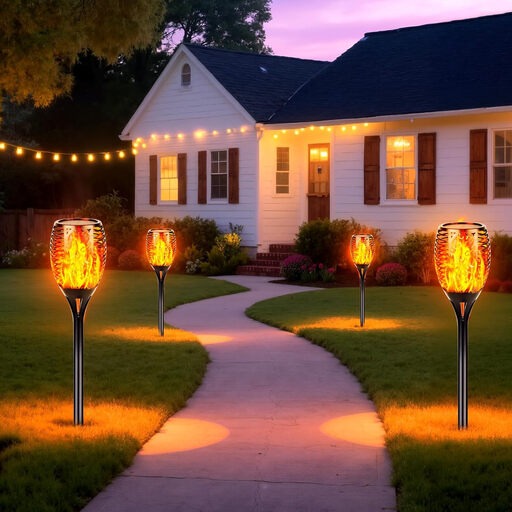
Why This Fits Their Persona: For those who want to transform their garden or balcony into a cozy retreat. These torches mimic a realistic and warm flame effect, perfect for long summer evenings or a welcoming entrance.
These lights are designed for ambiance, not bright illumination, which sets realistic expectations. The IP65 rating ensures they can withstand the elements.
Instantly creates a warm, inviting atmosphere without any fire hazard. The 96 LEDs provide a convincing flickering effect. Easy to stake into the ground.
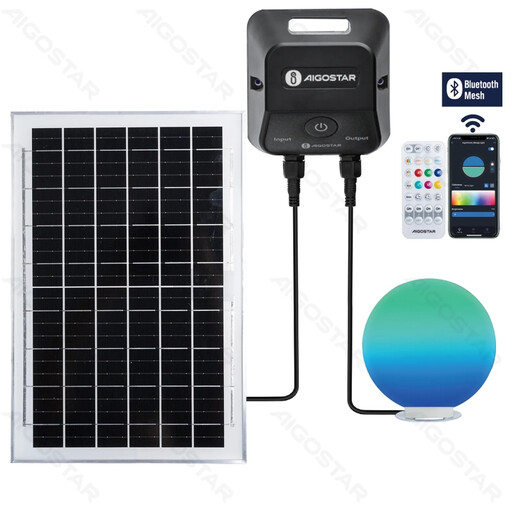
Why This Fits Their Persona: For those who want complete control. This smart garden lighting connects via Bluetooth Mesh and can be controlled with a garden lighting app. Set colours (RGBCCT), brightness, and schedules from your phone.
Bypasses the "clunky smart" trap by using Bluetooth Mesh, which creates a stable local network without relying on your Wi-Fi router. The IP65 rating guarantees durability.
Complete personalisation of your garden lighting. According to the manufacturer, it can control up to 200 devices in one network. The battery life is up to 24 hours.
We have compiled a complete, up-to-date list of products that meet these selection criteria and current regulations.
The runtime in winter is significantly shorter than in summer. Due to the shorter days and the lower position of the sun, the battery doesn't charge as effectively. Expect 2 to 5 hours of runtime on a dark winter day, depending on the quality of the solar panel and the battery capacity. Lights with a motion sensor that only turn on when needed are a more efficient choice in winter.
The IP rating consists of two digits. The first digit (e.g., the '6' in IP65) indicates protection against solid particles like dust. '6' is the highest score and means completely dust-tight. The second digit (the '5' in IP65) indicates protection against moisture. IPx4 is splash-proof, IPx5 is jet-proof (resistant to a jet of water), and IPx7 is immersion-proof. For most garden lights, IP65 is a safe and durable choice.
In many cheaper models, the battery is built-in and not easily replaceable. In higher-quality solar-powered garden lights, the battery (often a standard AA or AAA rechargeable battery) is accessible. Check the product description or manual. Replacing the battery after a few years can significantly extend the life of your light.
