
Vandaag of morgen in huis

Kwaliteit gegarandeerd

Welkomstaanbiedingen ontgrendelen: GRATIS bezorging | Tot 80% korting | Gratis 30 dagen JoyPlus-proefperiode
Download de app
Solar-powered garden lighting sounds ideal: no cable clutter, no extra costs on your energy bill, and an eco-friendly choice. Yet, the purchase often leads to disappointment. Lights that fail after a single downpour, a light output that barely surpasses a tealight, or a battery that's dead before you go to bed.
As a Joybuy Product Recommendation Officer, I see where things often go wrong. Many products promise more than they can deliver. Before you invest in new solar garden lights, it's wise to be aware of the most common pitfalls. This will help you avoid a bad purchase and choose lighting that truly suits your garden and your needs.
A common complaint is that solar lighting quickly breaks down due to wet weather. Manufacturers often use the term "waterproof" too loosely. A lamp that can only survive a light drizzle is not suitable for an exposed spot in the garden. The key is the IP rating. An IP44 classification means the lamp is splash-proof, perfect for a spot under an overhang or on a porch. For an unsheltered location, an IP65 rating or higher is necessary. These lamps are dust-tight and can withstand water jets, ensuring they survive a heavy downpour.
The packaging promises 8 to 12 hours of light, but in reality, the lamp is already dim after three hours. This is due to a mismatch between the battery capacity (expressed in mAh) and the efficiency of the solar panel. A small panel on a cheap lamp cannot possibly charge a large battery, especially on a cloudy day. During the winter, with its short and dark days, many solar lamps underperform. A larger, more efficient solar panel and a battery with a higher capacity are crucial for reliable, long-lasting outdoor lighting.
Many people buy a solar-powered outdoor light with a sensor for security, but end up with a faint glow that won't deter any intruders. The light output is measured in lumens. For ambient lighting in the garden, 10 to 100 lumens per lamp is often sufficient. However, if you want to functionally illuminate a path, driveway, or back door, you'll need at least 300 to 500 lumens. A solar light with a motion sensor can even peak at 1000 lumens or more, providing a bright beam of light when motion is detected.
To make the right choice, focus on a few objective specifications instead of marketing claims.
Based on these criteria, we have selected a number of products that suit different needs and situations.
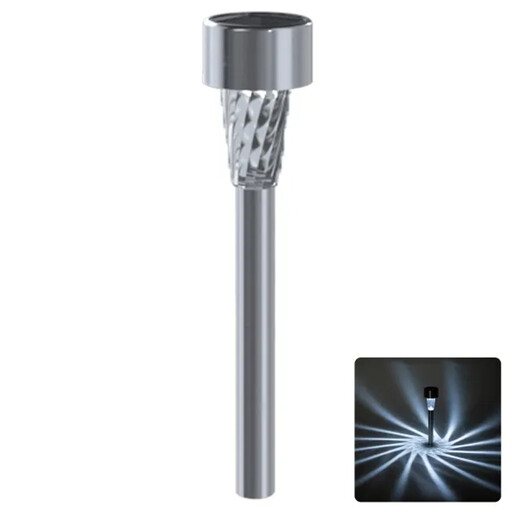
Why This Fits Their Persona: Ideal for those looking to add ambiance to garden paths or flowerbeds in a simple, affordable way. No installation expertise required: just stake them into the ground and you're done.
This is purely an ambient light. Its low light output is intended for decoration, not bright illumination. This sets a realistic expectation that matches its price point. The runtime depends on sunlight, which honestly highlights the limitation of its smaller battery (40 mAh).
Extremely simple installation and an IP44 rating, which is sufficient for most garden locations. The stainless steel design provides a clean, polished look.

Why This Fits Their Persona: Perfect for securing a driveway, back door, or dark corner. The motion sensor provides a powerful beam of light when needed, which has a deterrent effect and saves energy.
With a light output of 1000 lumens, this lamp delivers a serious beam of light, unlike faint decorative lights. Philips provides clear specifications, including two light modes. The IP44 rating is clearly described as weatherproof, suitable for most outdoor applications.
High light output (1000 lm) and a built-in motion sensor for effective security. Simple, wire-free installation.
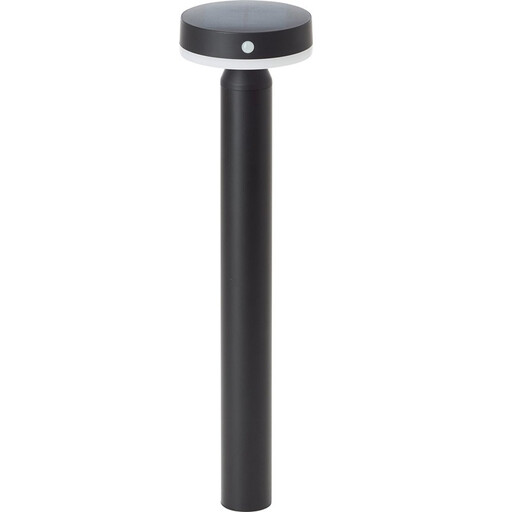
Why This Fits Their Persona: A pedestal light for those who need functional illumination for a garden path or driveway. Its 50 cm height ensures good light distribution across the ground, preventing trips and guiding the way in the dark.
This lamp combines a solid light output (350 lm) with a motion sensor. This prevents it from staying on all night unnecessarily, thus conserving the battery. The metal/plastic construction is sturdier than simple spike lights, and the IP44 rating is appropriate for this application.
A sturdy pedestal light with a motion sensor and a neutral light colour (4000 K) for good visibility. The height provides effective illumination for walkways.
We have compiled a complete, up-to-date list of products that meet these selection criteria and comply with current standards.
The lifespan of the solar-powered LED garden light itself is often long, with specifications reaching up to 15,000 or 25,000 operating hours. The weakest link is usually the rechargeable battery. Its capacity diminishes over time, typically after 1 to 3 years, depending on quality and usage. On some models, you can easily replace the battery yourself, which significantly extends the lamp's lifespan.
Yes, but their performance is noticeably reduced. Due to shorter days, the lower angle of the sun, and frequent cloud cover, the battery doesn't charge as effectively. The runtime will be significantly shorter in winter than in summer. Lights with an efficient, larger solar panel and a high-capacity battery perform better in winter. Models with a motion sensor are also a smart choice, as they only turn on when truly needed, thus conserving energy.
For optimal performance, place the solar panel in a location where it can receive at least 6 to 8 hours of direct sunlight per day. Avoid shade from trees, fences, or buildings. Also, ensure that the lamp's light sensor is not affected by other light sources, such as a streetlight or your neighbour's lighting. This can cause the lamp to 'think' it is still daylight and prevent it from turning on.
