
Artist working on a large sheet
You want to capture your entire pastel artwork and your moving hand in one shot, and have room for two adjustable light sources. The NEEWER set we looked at includes two panels and two softboxes.


If you’re working on a large sheet or struggling with distracting hand shadows, choose two separate, adjustable diffuse lights so you can fine-tune the lighting from different angles. One dimmable COB light with a suitable softbox may be enough for a smaller filming space. However, check the colours and look out for any bands of light in a test video using your own camera and artwork.
You want to capture your entire pastel artwork and your moving hand in one shot, and have room for two adjustable light sources. The NEEWER set we looked at includes two panels and two softboxes.
You want customers to be able to judge the colours of your pastels and paper. Compare a test shot with your artwork under controlled lighting: manufacturers’ stated colour-rendering figures don’t guarantee accurate colours on every screen.
You’re looking for a set-up that fits around your camera, hands and paper. SmallRig describes the RC 60B as portable and gives this version a battery life of 45 minutes at full power and 75 minutes in ECO mode.
A good fit if: you want to film an entire sheet and your moving hand, and aim two light sources independently.
The trade-off: two light stands and lights take up more space; check they won’t get in the way of your drawing movements.
A good fit if: you want to start with one movable key light, or already have a suitable light shaper and sturdy stand.
The trade-off: you may need a second light source or fill light if your hand casts a distracting shadow. Check whether the softbox is included with your chosen light.
A good fit if: you have limited space or can’t always film near a power socket, provided the light can illuminate your entire work area.
The trade-off: check the battery life, mounting options and whether your chosen diffuser is compatible with the exact version.
| Key consideration | What to check before buying | Who is this important for? |
|---|---|---|
| Lighting across the whole artwork | Compare the size of your drawing with the set-up and take a test shot of the entire sheet. | If I want to keep the whole sheet in shot, I look for light that reaches the edges. Around 36% of consumers prioritise even coverage of the work area. |
| Pastel and paper colours | Check the CRI/TLCI and colour temperature stated for the exact model; also assess a test shot with fixed camera settings. | For online shop images, I want the pastels and paper to look true to life. Around 29% of consumers prioritise colour rendering above all else. |
| Hand shadows and bands of light | Film while you draw, then check the footage for shadows and bands using your camera settings. | If I draw while filming, I want to minimise distracting hand shadows and bands of light. Around 21% of consumers prioritise uninterrupted drawing videos. |
| Components and space | Check what’s in the box, the softbox connection, the power supply and the space needed for the stands and camera. | In a small workspace, I want to know which components I’ll need and whether the set-up will fit. Around 14% of consumers prioritise space and the components required. |
A Bowens mount doesn’t automatically mean a softbox is included. The offers we looked at differ in what’s in the box.
Check the exact version and tick off the light, compatible softbox, stand and power supply individually.
Godox states its light output with a standard reflector, while NEEWER gives a panel figure measured at 1 metre. Neither figure automatically shows how evenly your chosen softbox will light your sheet.
Only compare figures measured on the same basis, and assess the whole sheet in a test shot.
Colour figures and flicker claims are manufacturers’ specifications. Canon Europe explains that some LED sources can produce visible bands when used with an electronic shutter.
Make a test video using the same pastels, movements and camera settings as in your final online shop video.
The NL660 set we looked at combines two bi-colour LED panels with two softboxes and two stands. This makes it a good option if you want to light your sheet from both sides.
The SL60IIBi we looked at is a dimmable, mains-powered COB video light with a Bowens mount, for building a softbox set-up separately.
The 100x S we looked at is a bi-colour Bowens light for anyone who wants to choose their light shaper and set-up separately.
The RC 60B we looked at is a portable light with a built-in battery, making it a useful option if your filming location or access to a power socket changes.
The FS-150B we looked at is an adjustable, mains-powered spotlight for a larger, fixed set-up.
This Joybuy pick suits a set-up with one COB key light and a separately chosen Bowens light shaper.
 No image available
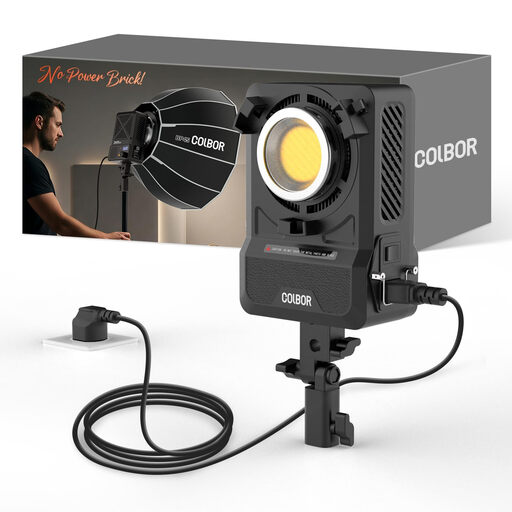
This COB light with a Bowens mount suits a set-up with one key light and a separately chosen light shaper.
As stated in the product name: 200 W, adjustable bi-colour temperature of 2700–7000 K and a built-in power supply design.
The product information lists CRI and TLCI 96+. Check whether the softbox you want and a suitable stand are included with the version you choose.
For filming, choose a continuous light source so your work stays lit while you record. Check whether the softbox is just a light shaper or part of a kit with a continuous light. The NEEWER set and standalone Godox light we looked at are examples of these different set-ups.
Record a test video while actually drawing. If one hand shadow is distracting, aim two separate diffuse lights from different angles, or test whether one light provides enough illumination for your smaller work area. This is set-up advice, not a guarantee of a shadow-free result.
Test the light and camera together before recording for a long time. Canon Europe explains that some LED light sources can cause banding when used with an electronic shutter. Check your camera settings and recorded footage rather than relying solely on a manufacturer’s flicker-free claim.
Check the box contents for the exact version. The NEEWER set we looked at lists softboxes, stands and adapters, while the listed box contents for the amaran 100x S don’t include a softbox. Also check the light shaper’s mount, the power supply and the space needed for the set-up.
Electrical equipment sold in the Netherlands must meet the applicable European safety and conformity requirements, according to Business.gov.nl. EUR-Lex explains that the Low Voltage Directive applies to equipment designed for 50–1000 V AC or 75–1500 V DC. The rules that apply depend on the light and any adapter. A stated supply voltage on its own doesn’t prove that a specific product on offer complies.