
Same-day & Next-day Delivery

Quality Guaranteed

Unlock Your Welcome Offers: FREE Delivery | Up to 80% OFF | Free 30-day JoyPlus trial
Download the APP
An irritated nose, a baby’s skin that quickly turns red, or tissues that tear at the first use: when you’re looking for soft tissues for sensitive skin, you’ll soon come across terms like “lotion”, “natural” and “hypoallergenic”. On their own, though, these words don’t tell you enough.
The right choice depends on how you’ll use them: dry facial cleansing, a cold, nappy changes, wiping hands or personal hygiene. Below are the key points to consider, along with some popular options based on verifiable product specifications.
A lotion layer can feel pleasant when you’re wiping your nose frequently, but always check the ingredients and warnings. A sensitive skin can react differently to fragrances, preservatives or other additives. When in doubt, choose unscented tissues and stop using them if redness or irritation occurs.
Many baby wipes are made from plant-based fibres and are marketed as plastic-free. That doesn’t mean they can go down the toilet. Most baby wipes for sensitive skin belong in the bin. Only products with an explicit flushability claim should be flushed according to the usage instructions. Even then, it’s wise to use only a small amount to prevent blockages.
Compare the number of sheets or wipes per pack, not just the price of the multipack. Also consider the type of product: one lotion tissue, one cotton facial tissue and one wet wipe each serve a different purpose. A stock of 1,200 wipes is practical for a family, but inconvenient if packs dry out after opening.
For dry tissues, 3-ply and 5-ply versions are common choices. More plies can provide greater strength, but don’t automatically indicate softness. Also check the base material:
Lotion tissues are dry tissues with a caring lotion layer. According to the product information from C&S, the lotion formula includes moisturising ingredients and the product is naturally fragrance-free. BC Babycare states that its lotion tissues have a formula with no added fragrances or colourants.
With wet baby wipes, the composition is even more important. Products may consist largely of purified water, but can also contain glycerine, citrate or preservatives. So read the ingredients list and choose a variant that suits your daily use.
A certificate is only relevant if the number and the certifying organisation are clearly stated. BC Babycare, for example, mentions OEKO-TEX certification with number 25.HUS.21538 Hohenstein. Purcotton mentions OEKO-TEX STANDARD 100 for certain cotton tissues.
Also look out for practical information:
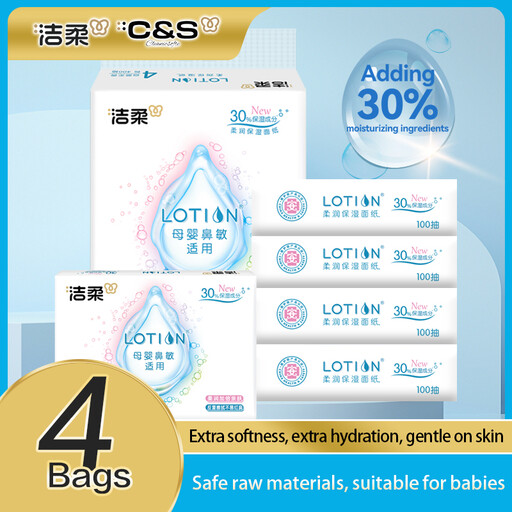
Why this fits the profile: A straightforward pack of four for daily use at home, on the go or during a cold.
The product information states a lotion-enriched formula, 3-ply paper and a naturally fragrance-free composition. The packaging also notes that the tissues must not be flushed.
400 sheets across four packs; made from 100% virgin wood pulp according to the product description.
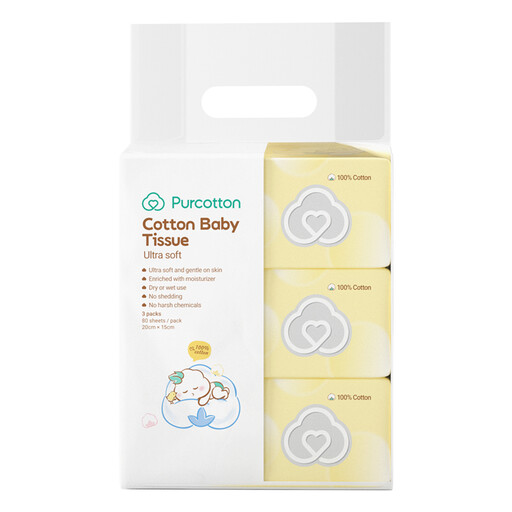
Why this fits the profile: Ideal for families who want one product for dry and wet wiping, facial care and baby care.
According to the product description, the tissue is free from perfume, alcohol, optical brighteners and fabric softeners. The description also mentions use as a dry or wet tissue.
100% cotton; 240 sheets in three packs; according to the product information, the material remains strong when used wet.
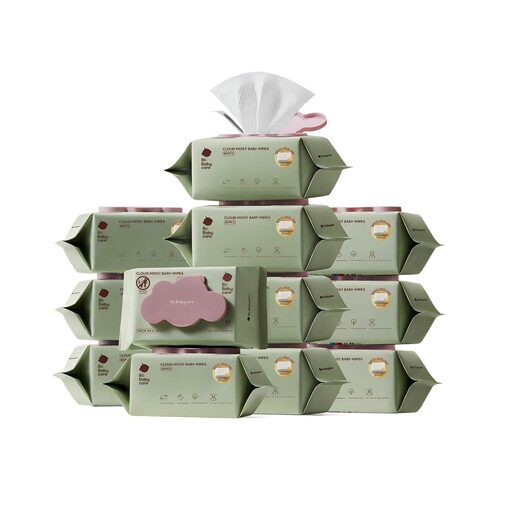
Why this fits the profile: A large stock for families who use wet wipes daily for nappy changes, cleaning hands or on the go.
The product listing mentions 99% purified water, no perfume and OEKO-TEX certification. According to the listing, the wipes are plastic-free and must not be flushed.
960 wipes in total; plant-based fibres; the product information states a thickness three times that of many standard wipes.
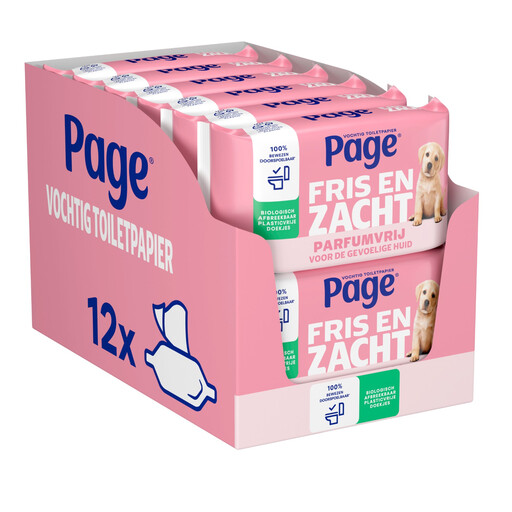
Why this fits the profile: For those who want to use wet toilet wipes after dry toilet paper and who look for fragrance-free options.
According to the product description, this product is fragrance-free, plastic-free and pH-neutral for skin. The manufacturer states it meets INDA/EDANA flushability standards; always follow the packaging and flush small amounts.
456 wipes; made from natural fibres according to the product information; packaging made from recyclable material.
We’ve put together a full, up-to-date list of products that fully meet these strict selection criteria and comply with current European safety regulations.
Lotion tissues can be pleasant when you’re wiping frequently, as they offer a softer touch than standard dry tissues according to the product description. Do check that they are unscented and read the ingredients list. A brand’s product claim is no guarantee that every skin will react the same way.
That depends on the shelf-life information and the packaging. Close the lid or pack after each use and store the wipes in a cool, dry place away from direct sunlight. Don’t use wipes if they have dried out, changed colour or smell different. When in doubt, follow the date and instructions on the packaging.
Plastic-free baby wipes generally contain no synthetic fibres, but the overall environmental impact also depends on raw materials, production, packaging, transport and waste disposal. So dispose of them according to the instructions. Do not flush remains the safe standard, unless the manufacturer explicitly allows it.
