
Vandaag of morgen in huis

Kwaliteit gegarandeerd

Welkomstaanbiedingen ontgrendelen: GRATIS bezorging | Tot 80% korting | Gratis 30 dagen JoyPlus-proefperiode
Download de app
A soft dog bed may seem simple to choose at first glance. Yet many owners are tempted by an attractive plush exterior, only to find that the bed has flattened after a few weeks, is difficult to clean or does not stay in place. A good choice is therefore about more than softness. Size, filling, washability and how the bed fits into your home all matter too.
A fluffy dog bed may feel comfortable, but the outer fabric says little about the support it provides. Check the type of filling and the construction too. PP cotton gives a soft, voluminous feel. A bed with egg-crate foam has a different structure and may be more suitable for a dog that benefits from extra support.
Pay attention to the height as well. A high rim provides somewhere to rest against, but can be awkward for a small dog if the entrance is too high.
The diameter or length shown on the product page does not always match the usable sleeping area. With a donut dog bed, the raised edges take up part of the surface. Measure your dog while it is lying fully stretched out, then add some extra space.
A 60 or 70 cm dog bed for small dogs will usually suit a dog that likes to curl up. A dog bed for large dogs needs more open space, especially if your pet likes to stretch out. Also check that the bed fits in the intended corner, crate or living room.
With many models, only the cover or central cushion is washable. The filling must not be put in the washing machine according to the care instructions. That is not a problem, as long as you know this in advance. Look for:
In practice, a dog bed with a washable cover is often more convenient than one that can only be wiped clean on the outside.
Plush, sherpa and long-pile fabrics feel soft and retain warmth. However, they can also hold on to more hair and dirt. For everyday use, a removable cover is therefore more important than an extra-long pile.
PP filling is light and resilient, but may compress over time. An egg-crate foam layer, such as the one used in certain FUNNYFUZZY models, has a supportive structure according to the product description. Treat the term orthopaedic dog bed as a product specification or design name, rather than a medical promise.
Do not look only at the breed recommendation. Measure your dog:
A cat bed may be suitable for a cat or very small dog, but a large breed needs a sturdier, more spacious surface.
A dog bed with a non-slip base stays in place more effectively on laminate, PVC or tiles. Check that the underside makes full contact with the floor. Non-slip rubber reduces movement, but does not replace placing the bed on a flat, stable surface. Do not put the bed in a high position or directly next to a heat source.

Why it suits this profile: The round shape and 70 cm diameter provide a cosy sleeping space for small to medium-sized dogs that like to curl up.
The product description mentions a removable central cushion, washable parts and rubber non-slip points. Do check the current care label before buying.
70 cm diameter, PP filling, plush fabric and a central cushion with a zip.

Why it suits this profile: This model combines soft sherpa and plush upholstery with egg-crate foam and a raised headrest.
The product information mentions a removable machine-washable cover and a non-slip underside. According to the instructions, the inner core should not be washed.
Egg-crate foam, raised headrest, washable cover and non-slip fabric.
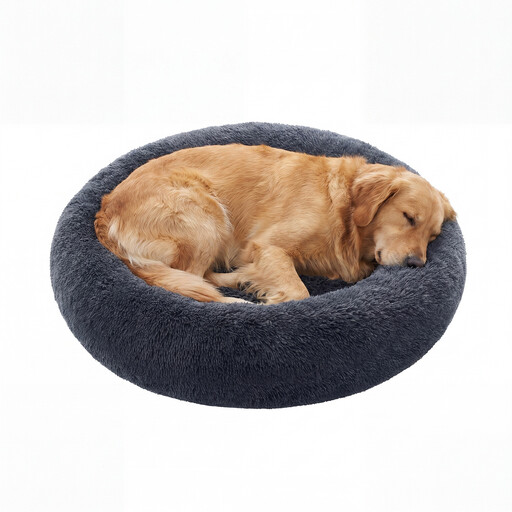
Why it suits this profile: This spacious version is designed for large dogs that need plenty of room to lie down or like to rest fully stretched out.
The specifications mention a large sleeping area, removable cover and rubber non-slip points. Measure the floor space beforehand.
140 cm wide, PP filling, plush material and a removable cover.

Why it suits this profile: The compact size suits cats and small dogs that prefer a snug, round sleeping space.
The product details mention a removable centre section, washable upholstery and rubber non-slip points. The cover should be cared for according to the wash label.
60 cm size, soft long-pile fabric, PP filling and non-slip base.
We have put together a complete, up-to-date list of products that fully meet these strict selection criteria and the applicable European safety regulations.
After unpacking a vacuum-packed bed, gently fluff it up and give it time to regain its shape. Do not use bleach or harsh cleaning products. Wash a removable cover on a gentle programme and follow the drying instructions. Air the inner filling regularly, but only wash it if the manufacturer expressly allows this.
Check every few weeks for loose seams, damaged zips and exposed filling. With dogs that like to chew, supervision during the first use is advisable. Replace a damaged bed to prevent fabric or filling from being swallowed.
Measure your dog from nose to the base of the tail while lying down, then add at least 15 cm. Dogs that sleep stretched out need extra room. With a donut dog bed, bear in mind that the raised rim reduces the effective sleeping area.
That depends on the model. The cover or central cushion is often machine washable, while the inner filling may only be aired or spot-cleaned. Always check the care label and remove the filling before washing a cover.
Its lifespan depends on use, weight, washing and chewing behaviour. Fluffing the bed regularly helps it retain its shape. Check it for wear and replace it when the seams come loose, the filling becomes visible or the base no longer stays stable.
